
On Tuesday, Wall Street experienced a decline as major technology stocks saw a sell-off. This downturn flowed from Asia to the U.S., driven by worries about potential interest rate hikes before the year ends.
The S&P 500 dropped by 0.9%, coming off a period of 11 weekly gains over the last 12, mainly fueled by tech stocks. Meanwhile, the Dow Jones Industrial Average, less impacted by tech fluctuations, fell 8 points, or less than 0.1%, as of 10:42 a.m. Eastern. The Nasdaq composite saw a 1.4% decline.
Asian markets also declined, with South Korea’s Kospi plunging 10% and European stocks showing weakness. Technology companies perturbed the market the most, particularly those with soaring valuations due to the AI technology hype. Notably, Micron Technology plummeted 9.7% and Nvidia by 2.6%. South Korea’s Samsung Electronics saw a 12.3% drop.
SpaceX wavered in early trading but managed a 1.8% increase. This company, focusing on space exploration and AI, had a successful market debut and plans to raise funds through a bond offering for its AI development.
The possibility of interest rate hikes this year has diminished the rise in AI-related stock values. Traders express concern over the potential economic growth slack caused by these higher rates. The Big Tech sector has seen substantial gains, pushing indexes to set records in 2026. Within the S&P 500, technology stocks are up 27% over the past three months and 18% for the year. In Asia, South Korea’s Kospi nearly doubled its value in 2026.
Technology firms have heavily invested in AI. However, the threat of increased rates could limit future spending and investment values. The Federal Reserve indicated at least one rate hike could occur before year-end. Wall Street estimates an 85% likelihood of a rate increase, up from 60% a week prior.
The 10-year Treasury yield fell to 4.49% from 4.51%, and the 2-year yield dropped to 4.20% from 4.24% the previous day. Bond yields remain elevated due to inflation concerns.
Throughout the year, inflation climbed. Tariffs disrupted a potential easing, compounded by the U.S.-Iran conflict escalating energy prices, including gas. This increase raised shipping costs, affecting businesses and households. A June report showed consumer prices rose 4.2% in May from a year earlier, marking a three-year high. Another report, due Thursday, is expected to demonstrate that inflation increased again in May to 4.1%, according to the Fed’s favored metric.
Oil prices have dropped amid U.S.-Iran negotiations. The price for a barrel of U.S. crude decreased 1.7% to $72.60, while Brent crude also fell 1.7% to $76.54. Despite this decrease, prices remain above pre-war levels of around $70 per barrel.
AP Senior Producer Mayuko Ono in Tokyo contributed to this report.
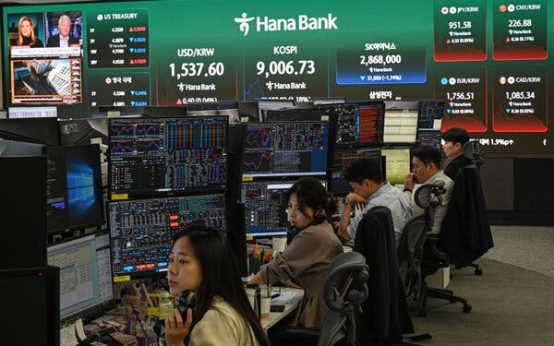 Global Stock Markets Plunge Amid Tech Sell-Off
  U.S. Stocks Decline Amid Federal Reserve Rate Hike Speculation
 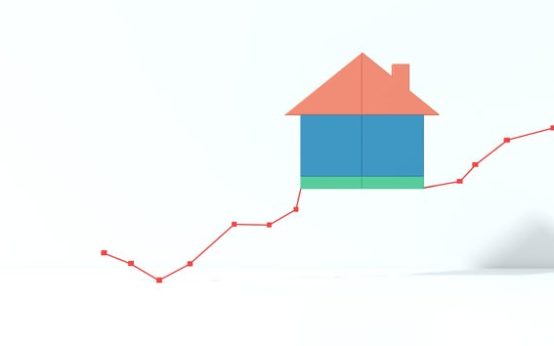 Understanding the Impact of the Fed Rate Pause on Mortgage Rates
 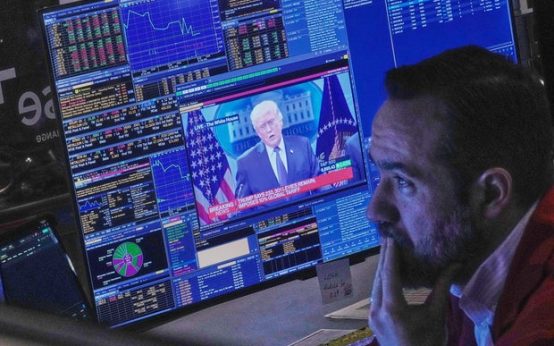 President Trump’s Extensive Stock Trades Raise Ethical Concerns
  SpaceX’s Historic Stock Market Debut
  U.S. Stocks Surge as Trump Calls Off Iran Strike