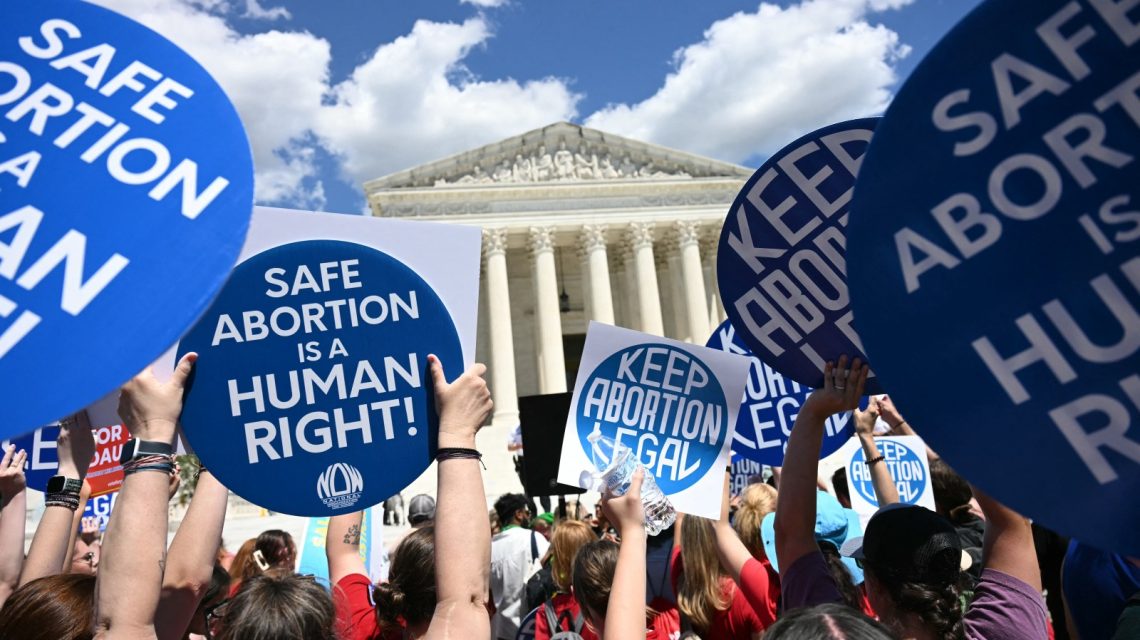
Four years after the U.S. Supreme Court eliminated the constitutional right to abortion, the number of procedures has risen, contrary to many lawmakers’ and advocates’ expectations. Recent estimates from a Guttmacher report indicate that over 1.12 million abortions occurred in the U.S. in 2025. This represents a 21% increase from 2020, the last full year of data before the court’s ruling.
This rise has persisted despite many states enacting stringent restrictions and bans following the decision. The significant judicial shift occurred on June 24, 2022, when the Supreme Court’s ruling in Dobbs v. Jackson Women’s Health Organization overturned Roe v. Wade. This earlier ruling had guaranteed a federal constitutional right to abortion for nearly five decades. With this protection removed, states gained the authority to regulate abortion, leading to a diverse array of laws nationwide.
Abortions Per State
Data from the Society of Family Planning’s WeCount project shows that abortions continue in every U.S. state, including those with strict bans. In states imposing the most rigorous restrictions, telehealth has emerged as a primary means of access. The WeCount data reflects abortions provided by licensed clinicians, albeit acknowledging that individual hospitals and private practices may be underreported.
Despite expectations of a nationwide decline in abortions post-Dobbs, data shows an increase in numbers, even in states with severe bans. Stories like that of Amanda Zurawski, who faced severe complications in Texas due to delayed medical care under new abortion laws, illustrate some of the complex realities women face in these environments.
Reasons Behind the Increase
Several factors contribute to the unexpected rise. Chief among these is the rapid expansion of telehealth and medication abortion, which has transformed access to care. Online clinics and telemedicine providers account for more abortions, facilitating cross-state access despite local bans.
Some states have passed laws to protect and even expand abortion access, creating regional hubs for care. States such as Illinois, North Carolina, Kansas, and New Mexico have experienced increased patient volumes, including those traveling from states with bans. Self-managed abortions also contribute to the rise, though these are difficult to quantify accurately.
Abortion Trends Across Regions
The national rise in abortions masks regional disparities. In states with severe bans, access is limited, forcing patients to travel long distances or navigate legal risks. Meanwhile, providers in states where abortion remains legal report heightened demand as they accommodate patients from across the nation.
Four Years After the Ruling
As lawmakers and advocacy groups reflect on the four years since the Dobbs decision, perspectives vary. While some view the strategy of leaving abortion regulation to states as a failure, others see the ruling as a success in protecting unborn lives. Social media and press releases showcase the ongoing debate and call for action in both directions.
The Path Forward
Data reveals the Dobbs ruling has fundamentally changed abortion access in the U.S., impacting not just the frequency but also the geography and methodology of care. While legal and political debates continue, the evidence highlights a central contradiction: restrictions have shifted, not reduced, the demand for abortion care.
 Senate Blocks Resolution Against Military Action in Iran
  Senate Republicans Reverse War Powers Vote Amid Presidential Pressure
  Senators Propose Plan to Stabilize Social Security
  Controversy Surrounds USPS Mail Ballot Rule and Trump’s Executive Order
  Michigan Court Upholds Voter Privacy Against Federal Requests
  Representative Thomas Kean Jr. Returns to New Jersey Amid Health-Related Absence