As Super Bowl 60 approaches, a pivotal decision awaits New England Patriots’ coach Mike Vrabel who may find himself pondering a fourth-and-short situation in the red zone. This scenario will bring about the age-old debate of whether to rely on traditional play-calling or embrace the analytics-driven approach.
If faced with a similar situation, the Seattle Seahawks’ coach Mike Macdonald has a reputation for often opting to take the points, a decision that goes against the recent tendency in football to go for it on fourth downs. This decision to take the points is a divisive issue in today’s football strategy.
In modern football, more coaches are choosing to take the risk of fourth downs, especially when they are in the opponent’s territory, wagering that the potential benefits of conversion outweigh the dangers of failing. This trend is evident at both the collegiate and professional levels, sparking intense discussions on social media about whether coaches make the right call.
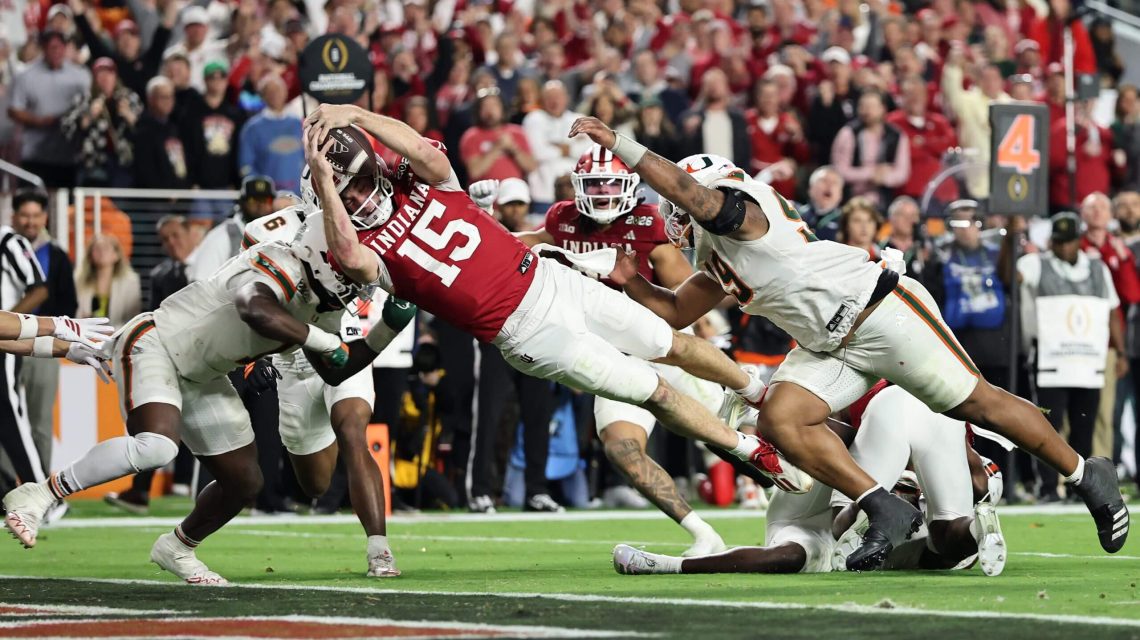
One vivid illustration of the disparities in these critical moments was witnessed when the Denver Broncos were defeated at the AFC Championship Game because coach Sean Payton decided to go for it on fourth-and-1 from the Patriots’ 14-yard line, only to fail. On the contrary, the Indiana Hoosiers, under coach Curt Cignetti, became national champions due in part to his bold decision of a quarterback draw on fourth-and-4 from the Miami’s 12-yard line.
The Hoosiers clinched the title, while the Broncos missed their chance to score later on and ultimately lost by a single field goal.
This scenario underscores the unpredictability involved in these critical play decisions. According to TruMedia, in 2025, NFL teams opted to go for fourth downs nearly 34% of the time when in opponent territory, making it the highest rate so far in the 21st century. Fans and analysts often cite such data to advocate for aggressive strategies.
Despite the analytics shift, former Rams coach Mike Martz expressed skepticism over relying heavily on these data-driven approaches. Martz, known for his offensive prowess with the St. Louis Rams, believes that the analytics-influenced mindset disrupts traditional football strategy by neglecting essential human elements of the game.
The main argument for going for fourth downs is grounded in the math — the increase in win probability through successful conversions vs. the risk of turnover on downs. Notably, NFL rule changes before the 2024 season adjusted kickoff rules, with average starting positions now at the 30-yard line, hinting at risky plays deep in opponent territories yielding opportunities to control field position.
However, Martz emphasizes a core issue: the physical and psychological impact of failing to score after an arduous drive has not been fully accounted for by the statistics. He stresses the psychology of settling for a field goal being lesser damaging to team morale than walking away with zero points after a significant effort.
Statistics back this, as 97% of field-goal attempts within 35 yards are successful. Conversely, fourth-down conversions rate is about 57%, according to data. The difference often fuels frustration among fans when coaches opt for riskier plays.
From 2020 to today, statistics reveal a steady rise in teams going for it on fourth downs in the red zone — from 51% to 57% conversion rates, despite the line to gain increasing over time. Remarkably, the Patriots thrived by converting 83% under Vrabel, while the Seahawks opted rarely for fourth-down attempts, leading the league in red zone field goals.
Martz does concede that certain contexts justify risky plays, typically later in games or with intimate knowledge of opponent strategies. Recalling a moment coaching the Chicago Bears in the 2011 playoffs, he details how a strategic call on third down against the Seahawks led to victory, underscoring his nuanced approach to when analytics plays a role.
Despite Martz’s criticism, analytics in football is likely here to stay as it reflects the impact of heavily invested teams into these data operations. According to Martz, this reliance detracts from the sport’s essence, making the argument that the quality of decision-making should be based on preparation and insight rather than numbers alone.
He suggests that an overreliance on analytics erodes the coach’s role in effective decision-making. He voices a deep nostalgia for a more instinctive approach to such pivotal scenarios within the game.
 Knicks Lead Spurs As Fourth Quarter Begins: A Playoff Showdown
  Knicks Maintain Lead With Strong Third Quarter Play
  Knicks Secure Series Lead in NBA Finals Opener
  Forbes Fuels Marist’s Volleyball Journey
  San Antonio Spurs and New York Knicks Clash in NBA Finals Game 2
  NBA Finals Game 2: Knicks vs. Spurs Updates