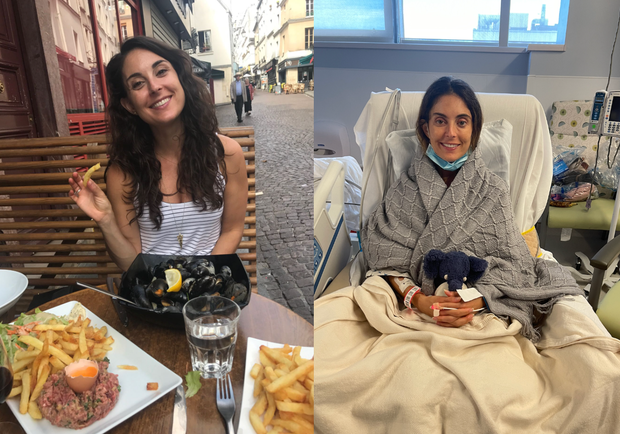
The journey of Becca Valle, a 37-year-old, highlights both the challenges and breakthroughs in treating glioblastoma, a rare brain cancer. Living a fulfilling life, Valle didn’t expect the debilitating headaches that struck her in September 2021. Initially dismissing them as migraines, Valle’s symptoms escalated, leading to an emergency hospital visit where a scan revealed a brain tumor.
Following an exploratory craniotomy, a second surgery confirmed it was glioblastoma. Despite complete removal, Valley, like many patients, required chemotherapy and radiation since this aggressive cancer often leaves remnants beyond surgical reach.
Despite the challenges, clinical trials offer new hope. Valle, facing grim statistics where only 10% survive beyond five years, participated in an innovative trial aimed at improving chemotherapy effectiveness through a focused ultrasound technique.
Dr. Graeme Woodworth, leading the research at the University of Maryland Medical Center, hypothesized that sound waves could temporarily open the blood-brain barrier, typically impermeable to most medications, allowing chemotherapy drugs to penetrate effectively. During the study, participants, including Valle, underwent several focused ultrasound treatments alongside regular monitoring to evaluate the method’s safety and efficacy.
Although the team couldn’t directly track the drug’s movement, follow-up revealed promising findings: about 40% of participants were surviving longer than anticipated. This suggested a ‘survival advantage’ when the focused ultrasound was combined with standard chemotherapy.
Dr. Patrick Wen, from the Dana Farber Cancer Institute, hailed this approach as groundbreaking, advocating for its further exploration with various chemotherapy agents and randomized control groups to refine the data.
While the focused ultrasound technique is under FDA review and not yet widely available, its potential has sparked further research into non-invasive monitoring methods like liquid biopsies.
Four years post-diagnosis and trial participation, Valle showcases an inspiring outcome with no disease evidence. Now 41, she defies typical glioblastoma statistics, attributing her recovery to cutting-edge research and her resilient outlook. Embracing life fully, Valle continues to plan adventures and encourages others to focus on the present rather than worry about uncertain futures.
 Mount Sinai Health System Faces Subpoena on Gender-related Care
  Potential Ebola Outbreak in Central Africa Raises Concerns of Rapid Spread
  Researchers Escorted Out of Diabetes Conference for Criticizing Trump Administration
 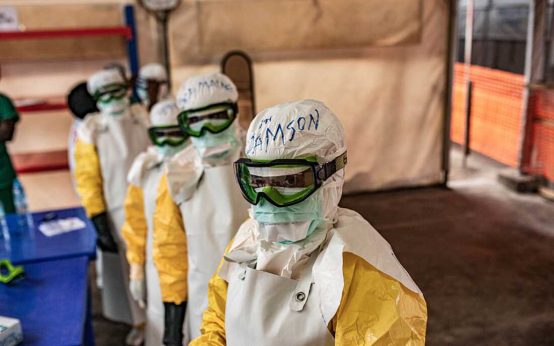 Ebola Outbreak in Africa: A Serious Concern
 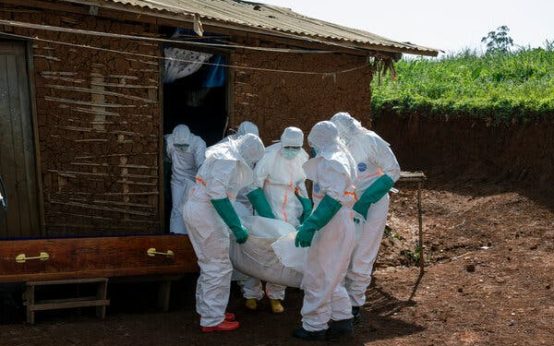 Gold and the Ebola Outbreak in Congo’s Mining Towns
  House Passes Bill for Veterans’ Benefit Increase