Donald Trump often utilizes deadlines as a strategic tool to address some of the world’s most persistent conflicts. Since assuming office, he has pushed for strict timelines to encourage resolutions. For instance, he set deadlines for Hamas concerning U.S.-backed peace plans in Gaza, gave Iran a limited period to agree to a new nuclear deal, and proposed various cutoffs for Ukraine and Russia to achieve a resolution.
In a new move, Ukrainian President Volodymyr Zelenskyy has revealed that Trump is aiming for a resolution to the ongoing conflict in Ukraine by June. Zelenskyy highlighted during a press conference that the U.S. intends to apply pressure on the involved parties to achieve peace by early summer, with a structured schedule to guide the process. However, neither the White House nor Moscow have corroborated this June deadline independently, and the White House has not responded to requests for comments from NBC News.
“They say that they want to do everything by June. And they will do everything to end the war. And they want a clear schedule of all events,” Zelenskyy added.
Experts suggest that merely setting deadlines will not change the underlying issues of a conflict now nearing its fifth year. Key disputes remain unresolved, hindering prior peace efforts.
Throughout his presidency, Trump has continually set timelines for progress in the Ukraine conflict. During his campaign, he promised to conclude the conflict within 24 hours of assuming office, a statement he later downplayed as aspirational. His special envoy for Ukraine, Keith Kellogg, suggested that an agreement could be reached within 100 days, which has yet to materialize.
In the past, Trump has proposed various informal deadlines for advancement, including specific timeframes for Moscow to enter negotiations and timelines for agreement culmination. Nevertheless, these initiatives have not resulted in lasting ceasefire agreements. An August deadline passed without resolution, similarly with a goal for a Thanksgiving agreement. In December, Trump stated that a draft agreement was “close to 95% done.”
Ukraine, Russia, and the U.S. participated in their first trilateral peace talks last month, with further discussions slated for American soil. Although described as constructive, unresolved issues persist, notably the status of eastern Ukraine, where Moscow remains steadfast in its demands. The Kremlin insists that Ukraine must withdraw its military from regions still under its control for any agreement to progress—a condition Ukraine finds unacceptable.
The conflict’s trajectory may change if either side experiences significant pressure, according to Moritz Brake, a senior fellow at the Center for Advanced Security, Strategic and Integration Studies. He suggests that this pressure could potentially destabilize one of the sides, leading to a breakthrough.
“This is what both sides, in probably their own ways, are hoping for,” Brake stated. “With Ukraine aiming to exploit a potential ‘fragmentation of the Russian war effort,’ while Russia hopes to bring Ukraine down on the battlefield.”
Michael Bociurkiw, a nonresident senior fellow at the Atlantic Council’s Eurasia Center, cautions that time is against Ukraine. He points out that territorial integrity remains a critical issue for Zelenskyy, who cannot concede due to the sacrifices already made.
“If Trump is ‘talking about putting pressure on Kyiv in Moscow, it’s the Ukrainians who are likely to be disadvantaged,” Bociurkiw remarked. “A major decision could occur whenever there is a turn of events in Ukraine’s favor, such as acquiring powerful, long-range missiles.”
Keir Giles of Chatham House echoed similar concerns, noting the Trump administration’s hesitance to pressurize Russia. Meanwhile, it has historically exerted coercion on Ukraine. This could end in either Ukraine capitulating due to unsustainable conditions or meaningful pressure causing Russia to end the war.
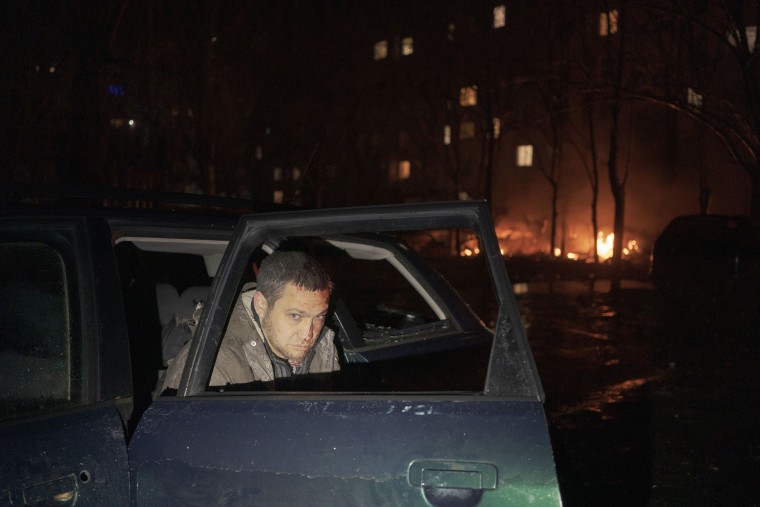
The humanitarian impact in Ukraine continues to be severe, with civilians facing power shortages and facility disruptions due to Russian attacks. Most recently, critical infrastructure, including nuclear power plants, has been affected by strikes. Zelenskyy reported over 400 drones and around 40 missiles being used in overnight assaults, highlighting the ongoing toll of this conflict.
Despite the political maneuvers, Bociurkiw is skeptical about a timely resolution. He sees the continuation of the current state without miraculous breakthroughs on the negotiating table.
 U.S. Military Awaits Pentagon’s Clarification on Troop Levels in Europe
  Potential Ebola Outbreak in Central Africa Raises Concerns of Rapid Spread
  U.S. and Allies Condemn Efforts to Overthrow Bolivian Government
  Pamela Hicks: Cousin, Bridesmaid, and Witness to History
  Latin American Deportees in Congo: Return to Home Countries Amid Challenges
  Controversy Surrounds Stabbing Incident of British Student