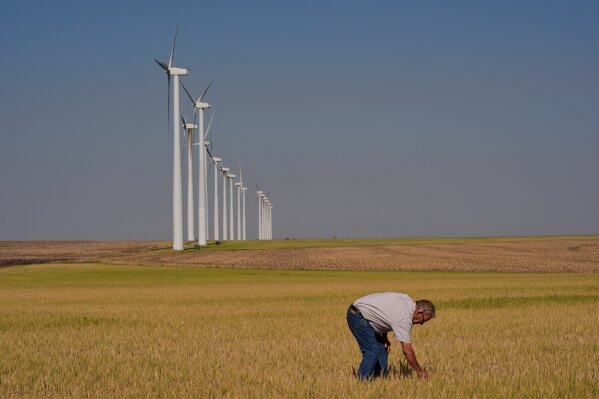
Orville Williams has managed his 2,600-acre farm in Montezuma, Kansas, for decades. Despite past economic challenges and variable drought conditions, the current year stands out for its difficulty. At 76, he notes that recent weather patterns, with their record drought and high temperatures, have severely impacted his wheat yield.
The early months of the year have been marked by drought and erratic temperatures, affecting much of the U.S., particularly the Plains region. These conditions have exacerbated the spread of the wheat streak mosaic virus and barley yellow dwarf virus, further threatening crop potential. Coupled with rising input costs for fertilizer, diesel, and tariffs, farmers like Williams are struggling.
“All in all, it’s not going to be a good year,” Williams stated. USDA reports confirm that growers are facing the smallest wheat crop since 1972, with only 1.56 billion bushels predicted, a 21% decrease from 2025. Kansas, a leading wheat producer, is notably affected. Data show that 58% of the state’s wheat crop is rated “poor” or “very poor” as of May 17. Previous years, such as during the severe drought of 2023, reflect similar challenges.
Agronomist Romulo Lollato from Kansas State highlights the consumer impacts of these agricultural strains. Increased bread prices and potential losses in international markets are concerning outcomes of the wheat shortage. In response, many farmers are considering crop insurance or shifting to other crops to manage risk. However, for Williams, who saw robust irrigation yields last year, this year’s projections of 30 to 40 bushels per acre paint a grim picture.
The unpredictability of weather keeps the costs mounting for farmers. Climatic changes induced by fossil fuel usage complicate agricultural efforts, making crops like wheat difficult to sustain. Increasingly intense weather patterns such as heatwaves in winter and insufficient rainfall further contribute to these hurdles.
The U.S. has lost its competitive edge in the global wheat market to Russia and the EU, with national wheat acreage decreasing due to various factors. This downturn is supported by USDA meteorologist Brad Rippey, who links these declines to challenges like extreme weather.
Despite being the third-largest planted crop in the nation, wheat’s future looks uncertain. The dry climate accelerated crop growth, reducing the harvest quality. Wheat normally produces seed heads by 61% of the season in Kansas; this year, the rate shot up to 86% prematurely, resulting in poorer outcomes.
Outcomes are grim, with only 32.4 million acres planted this year. Harvested acreage fell to 22 million, marking over 32% abandonment. Such high abandonment levels are rare except for cycles like 2022-2023, Rippey noted.
Farmers like Vance Ehmke, facing fields damaged by viruses, and Mike Nickelson, relying heavily on rain, reflect the bleak reality. El Nino may further prolong the harsh conditions with warmer summer predictions. Nickelson, co-farming with his son, questions the viability of farming under these pressures.
The geopolitical climate, notably the war in Iran, has spiked fuel prices, adding to farmers’ woes. Williams drives extensively, noting a $2 increase per diesel gallon from the previous year. Fertilizer costs soared, with urea costing $600 to $700 per ton, compared to $400 previously.
Backup plans for these losses seem limited. Ben Palen, a veteran farmer and consultant, points out the insufficiency of crop insurance and governmental aid. Without feasible alternatives like fallow periods or alternative plantings, options are limited.
It’s a challenging era for farming, with drought-stressed fields becoming more common. As agriculture bears the brunt of diverse pressures, the path forward remains fraught with uncertainty.
 Limited Interest in Arctic National Wildlife Refuge Oil Auction
  Confronting the Truth Behind Sustainability Buzzwords in the Food Industry
  The Aftermath of Santa Rosa Island’s Fire
  Largest Seizure of Illegal Cockroaches in Australia
  Flesh-Eating Fly Returns to the United States Causing Concern
 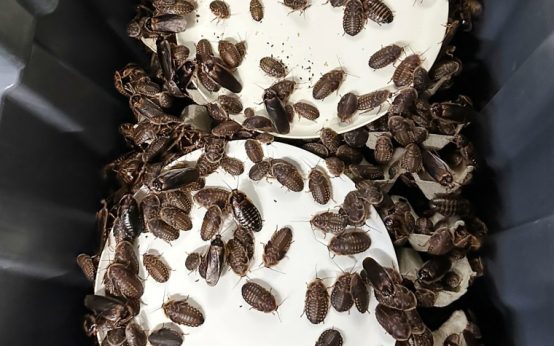 Australia’s Largest Seizure of Exotic Invertebrates: Over 100,000 Cockroaches Confiscated