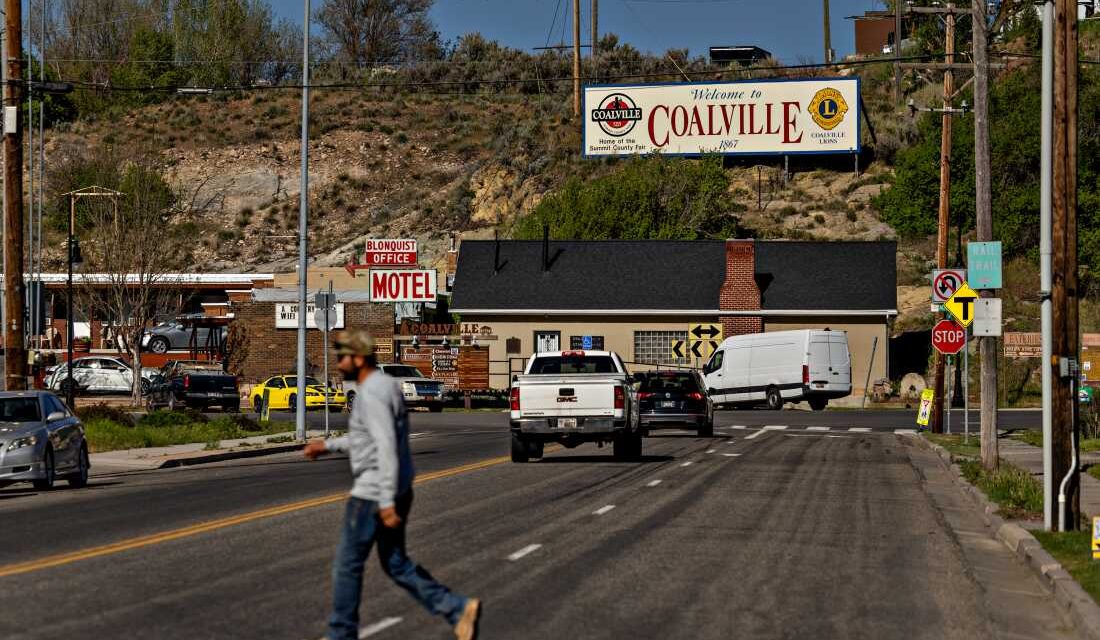
In Utah, communities are uniting to enhance renewable energy on the electric grid. The initiative spans from the largest city to smaller towns like Coalville, setting a model for other U.S. cities to act on climate change independently of federal withdrawal from clean energy efforts.
Since President Trump entered his second term, renewable energy faced obstacles through executive orders favoring the coal industry. Despite this, Utah’s coalition of communities, including Salt Lake City, aims to add more clean energy resources by 2030. Currently, about 75% of Utah’s electricity comes from coal and natural gas.
Renewable Communities Initiative
Utah Renewable Communities, comprising 19 towns, counties, and cities, seeks to generate enough clean electricity for nearly 300,000 homes and businesses. Their strategy involves new solar and wind projects, collaborating with Rocky Mountain Power to incorporate clean energy into the grid.
Coalville, historically tied to coal mining, is transitioning to renewables. Emily Quinton, Summit County’s Sustainability Director, emphasizes the long-term benefits of renewable energy in enhancing reliability and customer costs.
“Clean energy is not just here and now,” said Quinton. “It absolutely is a long-term investment leading to a stronger grid.”
Coal was once central to Coalville; now, the focus shifts towards sustainable energy sources. The collaboration among diverse communities signals actions against fossil fuel dependency.
Political and Economic Climate
State leaders have enacted measures to sustain the coal industry, yet renewables form 22% of Utah’s electricity supply, with the coalition targeting to increase this share. Legislation passed in 2019 facilitated community-utility cooperation for clean energy projects.
Steve Handy, a Republican state representative, stated that diverse energy sources are crucial amid technological advancements requiring more power.
“Utah needs all the power it can get, given the advancements in technology like data centers and artificial intelligence,” said Handy.
Warm winters affecting regions like Park City, prominent for winter sports, stress the urgency for climate action as snow depletion challenges local economy and identity. Residents advocate for reduced pollution contributing to climate change.
Community Engagement
The coalition’s endeavors are acknowledged nationally, with inquiries from other states exploring similar initiatives. Park City showcases residents’ demand for cleaner energy options, fueled by economic sense and existential concerns.
“Instead of just saying, ‘Hey, we held up a sign, but nothing happened,’ we made this change in one of the most conservative states,” said Luke Cartin, Director of Land and Sustainability.
Without this coalition, various renewable projects might not materialize. PacifiCorp, running Rocky Mountain Power, adjusted plans due to federal policies favoring fossil fuels. Political hurdles exist, acknowledging challenges faced in promoting renewable legislation in conservative regions.
Renewables offer competitive energy costs compared to fossil fuels, highlighted by financial insights from Lazard. Successful examples could gradually influence counties, states, and federal decision-making over time.
In Moab, rooftop solar on City Hall signifies early steps into renewable usage, driven by community resolve in remote areas.
“Living in a rural place, if we want something, we go out and find it,” said Alexi Lamm, Sustainability Director in Moab.
The program’s official approval requires local ordinances by June 2, with Rocky Mountain Power enrolling homes in participant communities. Residents can opt out of a nominal monthly fee, with provisions for low-income households.
For rural regions like Castle Valley, renewable transitions depend heavily on coalition support, harboring hopes for cleaner energy adoption for community businesses and residences.
“We can’t solve all the problems,” said Pamela Gibson, Town Council member. “But if we all get together, we can make significant contributions.”
The coalition anticipates announcing its initial clean energy project in the summer, with operations expected by 2030.
 Limited Interest in Arctic National Wildlife Refuge Oil Auction
  Confronting the Truth Behind Sustainability Buzzwords in the Food Industry
  The Aftermath of Santa Rosa Island’s Fire
  Largest Seizure of Illegal Cockroaches in Australia
  Flesh-Eating Fly Returns to the United States Causing Concern
  Australia’s Largest Seizure of Exotic Invertebrates: Over 100,000 Cockroaches Confiscated