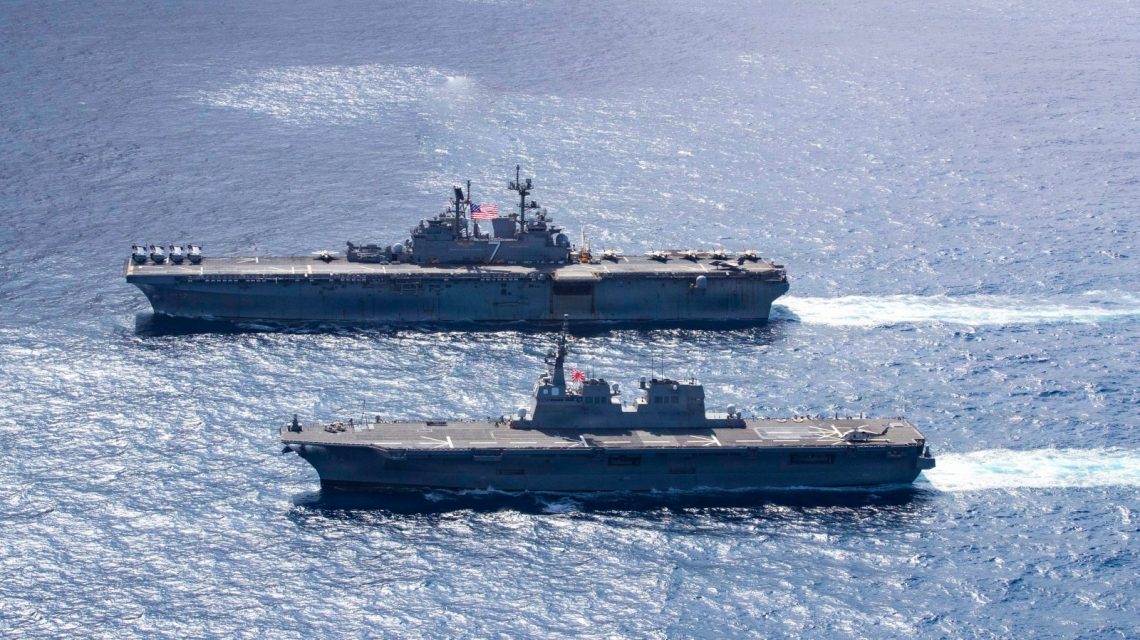
Beijing has imposed restrictions on the export of crucial minerals to Japan, aiming to pressure the U.S. ally to reverse its trajectory towards remilitarization, as described by the Chinese Foreign Ministry. In January, China’s commerce ministry implemented tighter controls on exporting goods with potential military uses to Japan, targeting ‘dual-use’ items for military end users. This move followed statements by Japanese Prime Minister Sanae Takaichi connecting Japan’s security with Taiwan, claimed by Beijing.
China intensified these restrictions twice in February. Though no comprehensive list has been published, the items include rare earth elements and other critical minerals vital for advanced technologies. Foreign Ministry spokesperson Mao Ning stated that China’s ban aims to halt Japan’s remilitarization and nuclear ambitions.
“China, in accordance with laws and regulations, prohibits the export of dual-use items for Japanese military users and military uses, with the aim of stopping Japan’s remilitarization and nuclear ambitions,” said Mao Ning during a news conference.
Japanese Prime Minister Takaichi emphasized the link between Japan’s security and Taiwan’s stability, suggesting a Chinese blockade of Taiwan could trigger a defense response from Japan’s Self-Defense Forces. China considers Taiwan a rebellious province and has not dismissed potential use of force for unification.
China’s measures against Japan followed aggressive rhetoric, accusing Tokyo of reverting to militarism of the 1930s and 1940s. Gracelin Baskaran and Meredith Schwartz of the Critical Minerals Security Program highlighted that these restrictions exemplify economic statecraft as a core deterrence tool, influencing allied behavior and crisis dynamics via supply-chain leverage.
Japan’s Defense Developments
Japan’s Self-Defense Forces focus primarily on defending the homeland due to the country’s pacifist postwar constitution. Nevertheless, leaders like former Prime Minister Shinzo Abe, and now Takaichi, have worked to enhance military capabilities, citing China’s military growth and threats to Taiwan.
Japan’s defense budget is projected to reach 2% of GDP, aligning with NATO standards. Additionally, restrictions on defense exports were relaxed to permit sales of lethal weaponry to friendly nations, albeit with individual approvals.
Chinese President Xi Jinping expressed concerns about Japan’s defense expansion during discussions with U.S. President Donald Trump. The U.S., however, reaffirmed its strong alliance with Japan, highlighting its strategic importance in Asia.
Japan supports around 54,000 U.S. troops at 15 major bases, acting as a critical partner in the First Island Chain, a strategic line of defense against potential China-related conflicts.
Chief Cabinet Secretary Minoru Kihara remarked, “Japan has a minimum defense capability to protect Japan, and what is mentioned by China is not true. In the postwar period, Japan has been a peace-oriented country. That stance will remain the same.”
The Philippines’ President, Ferdinand Marcos Jr., is expected to visit Tokyo, marking an important diplomatic engagement. Discussions will likely address defense and energy security amid tensions involving China and global energy concerns stemming from the Iran war.
China’s Rare Earth Influence
China dominates the rare earth market, controlling over 90% of global production of specialized alloys necessary for various modern technologies. Japanese manufacturers handle a small portion yet rely on Chinese supplies for specific heavy rare earth elements.
Recent customs data revealed no February exports of significant items like gallium or heavy rare earths terbium and dysprosium, only minor shipments of yttrium oxide. China strategically leverages this dominance as seen with previous export restrictions post-U.S. tariff increases and after a diplomatic spat with Japan in 2010.
Japanese official Ryosei Akazawa attended an APEC meeting in Suzhou, becoming the highest-ranking Japanese delegate to China since the export dispute, though substantive discussions appear missing. Chief Cabinet Secretary Minoru Kihara noted the brief encounter between Akazawa and Chinese Commerce Minister Wang Wentao but withheld details.
 U.S. Military Awaits Pentagon’s Clarification on Troop Levels in Europe
  Potential Ebola Outbreak in Central Africa Raises Concerns of Rapid Spread
  U.S. and Allies Condemn Efforts to Overthrow Bolivian Government
  Pamela Hicks: Cousin, Bridesmaid, and Witness to History
  Latin American Deportees in Congo: Return to Home Countries Amid Challenges
  Controversy Surrounds Stabbing Incident of British Student