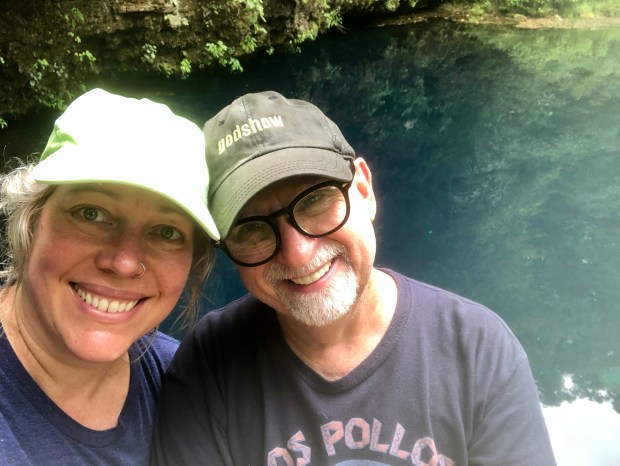
The passing of Tim O’Malley on May 11 at age 68 from natural causes brought a wave of emotions across the city. Known for his humor, O’Malley was celebrated as a performer and a teacher at The Second City. However, his legacy extends beyond humor, as he used personal experiences to motivate and support others.
Pamela Staker, a visual artist and O’Malley’s partner, reflected on their relationship, saying, “We met in 2005 and built a life together as ‘life partners’ without needing a wedding.” Their connection was apparent in their playful interactions and deep affection. Staker described O’Malley as protective, loyal, and loving, qualities that defined their bond through tough times. She noted his humor but cherished his tenderness and vulnerability, which deeply affected her.
O’Malley grew up in Beverly as the tenth of eleven children of Thomas Aloysius and Mary Frances O’Malley. He discovered acting at Southern Illinois University before becoming part of The Second City touring company in 1986. Later, he joined the resident company with talents like Bonnie Hunt, Tim Meadows, Bob Odenkirk, and Chris Farley.
His dreams of stardom faded due to addiction. O’Malley recalled how his career setbacks fueled his substance abuse. After leaving Second City in 1993, he lived with his father and continued drinking and drug use. Encouraged by family, he entered a 90-day program at Gateway Foundation, achieving sobriety by 1996. He began teaching at The Second City Training Center, affecting generations through his work.
In 2003, O’Malley wrote and performed “Godshow,” an autobiographical play staged at Second City and other venues. The play won audiences and is available on YouTube. In 2012, he started a unique program at Gateway using improv for therapy, named “Immediacy in Effective Communication.” The program helped men with challenging pasts. O’Malley found fulfillment in the impact he had on their lives, saying he often stayed in contact with them.
O’Malley also sought to support friends like Chris Farley, who had become a film star while O’Malley recovered from addiction. In Farley’s final days, he called O’Malley daily. Just before Farley’s overdose death on Dec. 17, 1997, O’Malley had invited him to a recovery meeting. Reflecting on Farley’s death, O’Malley highlighted the widespread nature of addiction, stressing it affects all professions and not just celebrities. He emphasized the unseen tragedies of everyday individuals battling addiction.
 NASCAR Community Mourns the Loss of Kyle Busch
  Persistence in Investigations: Encouragement and Challenges
  Support Pours in for Airport Worker After Viral Video
  Challenges of Reentry After Years in Prison
  YouTuber Sparks Debate Over Abortion Rights and Down Syndrome
  Significant Events in Chicago on June 5