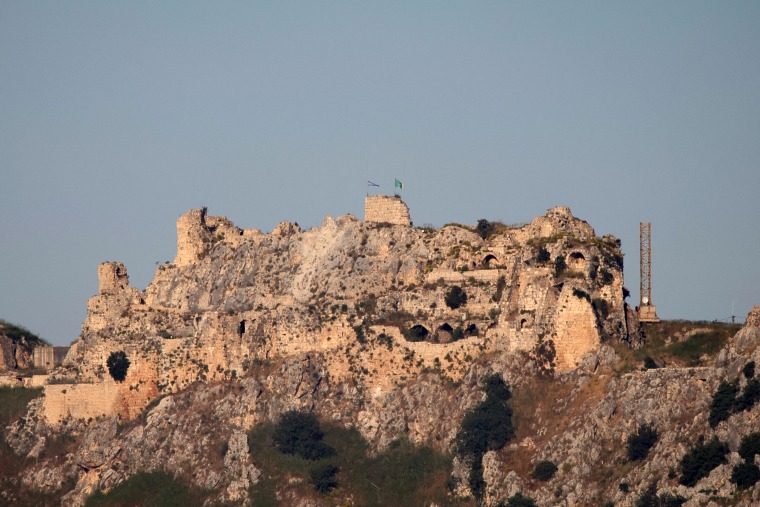
Israeli forces have crossed the Litani River, capturing Beaufort Ridge in Lebanon. This action represents Israel’s most significant incursion into Lebanon in 26 years. Beaufort Ridge, a historical site with a medieval castle, was seized after days of intense fighting in southern Lebanon. Prime Minister Benjamin Netanyahu has stated he is intensifying operations in the region, despite a nominal ceasefire agreed upon in April.
The Israeli Defense Minister, Israel Katz, announced on Sunday that the Israeli flag once again flies over Beaufort Ridge. Katz stated the soldiers will remain there as part of a security zone in Lebanon, emphasizing Israel’s goal to eliminate Hezbollah. The group has historically operated in southern Lebanon, near the border with Israel.
The capture of the strategic site occurred amid efforts to create peace between Israel and Lebanon. The two countries’ officials met in Washington to discuss the ceasefire’s implementation. However, both parties accuse each other of violating it. UNESCO expressed deep concern over Israeli military actions near Beaufort Castle, a site designated for the highest level of legal protection.
The Litani River serves as a de facto boundary, with Israeli forces dominating areas to its south. The Israeli military has targeted bridges over the river, claiming they were used by Hezbollah for smuggling weapons and moving fighters.
Some voices in Israel, particularly among ultra-nationalists, support permanent control of the area south of the Litani. Calls for occupation intensified, with Finance Minister Bezalel Smotrich suggesting the capture of Beaufort Ridge corrects historical errors. Fawaz Gerges, a professor at the London School of Economics, warned that such actions risk Israel involvement in a prolonged conflict in Lebanon.
Israeli prime minister Netanyahu highlighted the progress of the military operations on his visit to the northern border. He announced that Israeli forces had advanced positions and are striking Hezbollah strongholds in Beirut and the Bekaa Valley.
Israel’s National Security Minister Itamar Ben Gvir urged Netanyahu to extend military actions, including targeting parts of Beirut. The conflict, described as one of the most intense involving Iran and Israel, has displaced over 1.2 million people in Lebanon. More than 3,350 Lebanese have been killed, while Israeli losses include 25 soldiers and two civilians.
Lebanese Prime Minister Nawaf Salam condemned the Israeli strikes, saying they amount to collective punishment. Amidst this violence, U.S. and Iran are negotiating a ceasefire, but tensions in Lebanon pose a significant obstacle to any agreement. A senior Arab mediator indicated that while a deal was reached, both sides have delayed finalizing it.
U.S. Defense Secretary Pete Hegseth mentioned President Trump’s patience in making a comprehensive deal with Iran aimed at preventing its nuclear armament. However, experts like Gerges caution that Israel’s military actions in Lebanon could jeopardize diplomatic efforts between the U.S. and Iran.
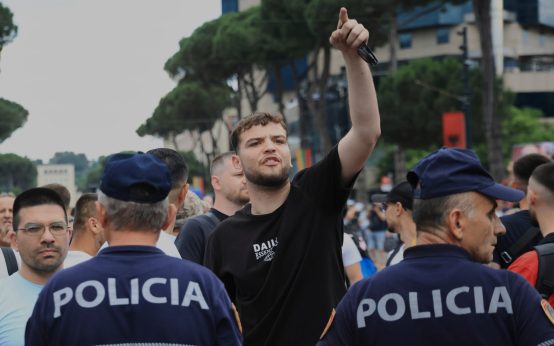 Protests Erupt in Albania Over Resort Development
 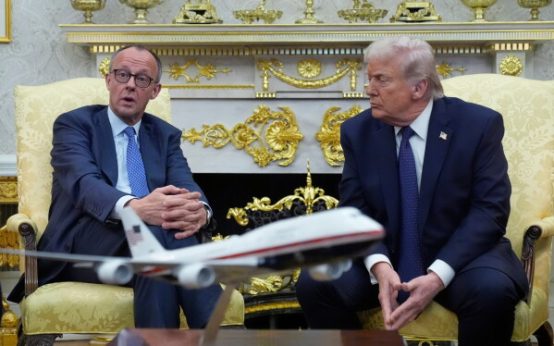 Clarity Sought on U.S. Troop Levels in Europe Amid Policy Changes
  U.S. Military Awaits Pentagon’s Clarification on Troop Levels in Europe
  Potential Ebola Outbreak in Central Africa Raises Concerns of Rapid Spread
 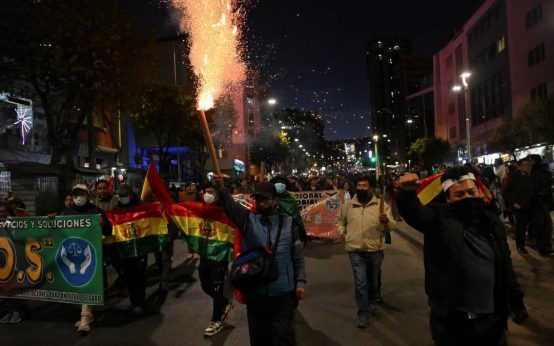 U.S. and Allies Condemn Efforts to Overthrow Bolivian Government
  Pamela Hicks: Cousin, Bridesmaid, and Witness to History