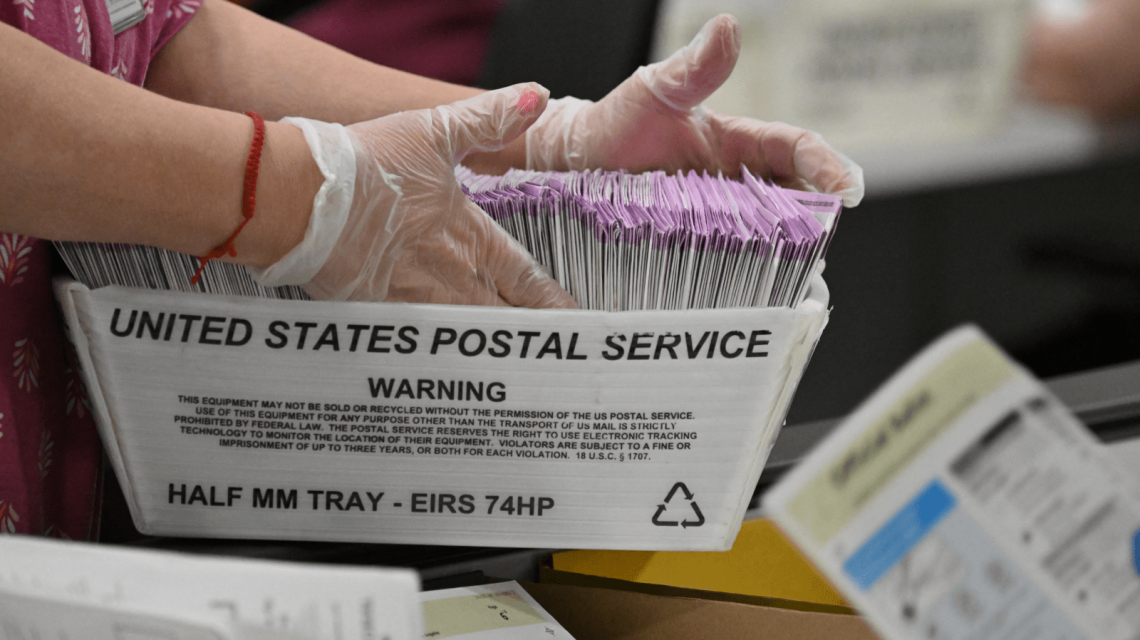
A group of states primarily using mail voting are at the center of a debate that could impact millions of mail ballots this fall. Proposed U.S. Postal Service (USPS) rules linked to President Donald Trump’s March 31, 2026, executive order on election administration are at the heart of this contention. These rules require states to provide detailed mail voter lists, potentially halting ballot deliveries for non-compliance.
In the 2024 election, more than 48 million Americans voted by mail, making up about one-third of all voters. With the 2026 midterms approaching, officials caution that the proposed changes risk disrupting voting processes, especially in states where mail voting is the primary method. Twenty-three Democratic-led states and Washington, D.C., are pursuing legal action, and a federal appeals court could rule this summer as states prepare for the midterms.
Key Provisions of the Executive Order
The March executive order, known as “Ensuring Citizenship Verification and Integrity in Federal Elections,” marks a federal push to oversee elections, a move the President claims is essential to prevent alleged voter fraud. Notable provisions include the Department of Homeland Security compiling a list of voting-age citizens, requiring USPS to mail ballots only to verified voters, and using tracking systems with unique barcodes.
The Constitution places election administration largely in the hands of states and Congress, not the President.
An Unprecedented Role for USPS
The USPS proposal transforms the agency from a neutral mail carrier into an active election participant. States would need to submit names, addresses, and ballot barcodes for all mail voters. USPS could return or reject mailings not aligning with new standards, a significant shift from its historical role of delivering election mail purely based on postage, not voter eligibility.
The American Civil Liberties Union (ACLU) warns that this proposal risks turning USPS into a decision-maker about who votes by mail, contrary to constitutional provisions.
The proposed rules would place USPS in a gatekeeping role, requiring it to verify voters against state-submitted lists before mailing ballots. This plan includes a new digital system for voter enrollment and ballot tracking. Election experts highlight concerns around USPS’s capacity to manage such a dramatic operational change.
States Most Affected
The proposed changes affect states heavily reliant on mail voting, such as California, Oregon, Washington, and Colorado, where mail voting is standard practice. In these locations, USPS performs a critical role akin to traditional polling stations. A disruption in mail delivery could significantly impact voter participation. This proposal requires compliance with new federal data demands, which some states resist, fearing state autonomy erosion.
The lawsuit led by a coalition of states challenges whether the President has the authority to enforce such measures. A decision from the D.C. Circuit Court of Appeals is expected soon, potentially shaping the future of mail voting. Legal experts suggest the outcome could redefine federal involvement in elections, particularly if courts agree to enforce USPS ballot delivery conditions.
Implementation Challenges
The feasibility of USPS implementing this proposal remains uncertain. It involves developing a new digital voter-list portal and enhanced ballot tracking, technologies not yet in place. Previous USPS performance shows reliability in mail delivery, but critics question its preparedness for expanded duties under proposed changes without assured funding or infrastructure.
The upcoming court ruling will dictate immediate proceedings. Key considerations include USPS launching the voter-list portal, DHS publishing citizenship lists, and states’ compliance with federal data requests. The resolution could alter the landscape of mail voting just before upcoming elections, affecting millions of voters nationwide.
 California Election Laws Challenged in Shasta County
  Trump Shifts Focus to Ending Russia-Ukraine Conflict After Iran Deal
  JD Vance Sparks Discussion on 2028 Presidential Race
  Bobby Pulido’s Congressional Campaign Challenges
  Iran’s Narrative of Victory Post-War Agreement
  Concerns Over Election Security and Federal Involvement Escalate