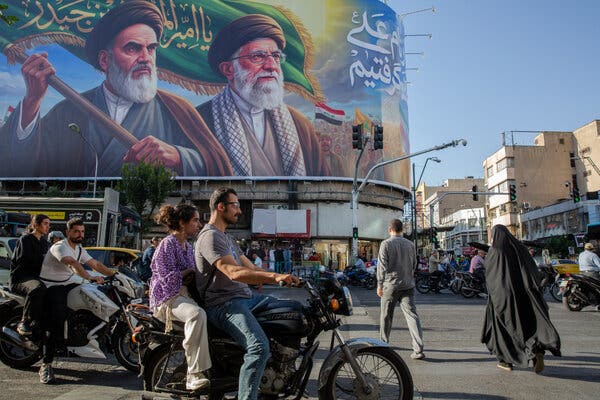
In the aftermath of a preliminary agreement between Iran and the United States to halt hostilities, Iranian leaders from various political factions have declared the accord a victory. This narrative presents Iran as resilient against a more formidable adversary, despite the immense losses suffered during the conflict.
Tehran has lost numerous high-ranking political and military figures, witnessed substantial damage to its ballistic missile reserves, and faced further strain on an already struggling economy due to a naval blockade. Still, Iranian leaders frame the agreement as a crucial stride towards what they term as ‘final victory.’
Mohammad Bagher Ghalibaf, the speaker of the Iranian Parliament and a pivotal figure in the negotiation process, has publicly echoed this sentiment. He described the deal as a significant step forward for the nation on social media.
“Iran has taken a major step toward final victory,” – Mohammad Bagher Ghalibaf.
As the agreement edged closer, Sadegh Amoli Larijani, who chairs a significant advisory council monitoring the government’s activities, praised the Iranian people’s ‘renewed spirit of resistance.’ He emphasized the defeat of U.S.-Israeli plans aimed at overthrowing the Islamic republic.
These declarations are likely intended to forge a united national front while counteracting dissent from hard-line groups opposing the accord. These groups see the agreement as a betrayal of those lost in the conflict. Despite potential divisions, Iranian leaders argue that the agreement falls short of U.S. President Trump’s initial ambitions for absolute victory and unconditional surrender from Iran.
 JD Vance Sparks Discussion on 2028 Presidential Race
  Bobby Pulido’s Congressional Campaign Challenges
  Concerns Over Election Security and Federal Involvement Escalate
  Senator Lindsey Graham and UFC CEO Dana White Criticize Fighter Josh Hokit for Comments on Michelle Obama
  G7 Summit Focuses on Russia-Ukraine Conflict as Trump and Zelenskyy Set to Meet
  Senators Seek Clarity on US-Iran Agreement