
Chicago’s Austin neighborhood often appears in statistics related to crime and poverty. These challenges are significant. Yet, a different Austin exists, characterized by residents who contribute to community development. This is the Austin that Rev. Dollie Sherman has been nurturing for decades.
Sherman has lived in Chicago’s West Side for nearly 50 years. Her journey began with summer gatherings, school supply initiatives, and informal community bonding on the 600 block of Lorel Avenue. These efforts evolved into the Vessels Unto Honor block club, a grassroots organization focused on beautification, youth engagement, and resident support for over a decade.
“The block club has helped turn our block into a community,” Sherman stated. “We’re not just waiting for somebody else to come along; we’re building it ourselves.” Sherman’s leadership reflects a growing movement in Chicago, where residents and organizations address challenges unsolved by government.
Linda Williams manages a free library box on Lorel Avenue, illustrating local commitment to community service.
This commitment was evident during Memorial Day weekend, when the 600 block hosted the Center for Poverty Solutions’ inaugural community job fair. Nearly a dozen employers engaged with residents, connecting them to potential jobs. Such opportunities might have been otherwise unavailable.
Today, the block is seen as safe and clean, thanks to community involvement, showing that block club leadership can change both physical spaces and social culture. The career fair had immediate impacts: over a dozen job offers were extended and 50 individuals secured interviews for full-time positions.
More importantly, this event highlighted an often-overlooked message about poverty and public safety: when people have opportunities, they excel. “If our youth engage in productive activities, it helps avoid crime,” Sherman explained. “It also benefits them.”
Work offers more than income. Meaningful employment delivers stability, purpose, and self-respect. Over 97% of Chicagoans with full-time jobs live above the poverty line, and 80% in part-time roles do too. In contrast, only 68% of non-working individuals stay above this threshold.
Employment enables families to thrive, young people to see future possibilities, and communities to build social ties that make them safer and more successful. Sherman has long assisted young people facing homelessness or unstable situations in finding work pathways. “Many youths are homeless, staying with friends,” Sherman noted. “But they come here and leave with something tangible after a day’s work. They feel better about themselves.”
No single job fair can eradicate poverty or crime entirely, but each career opportunity enhances self-reliance. Every young person choosing work over the streets marks a triumph, reducing crime risks. Leaders like Sherman fortify the foundation for safer neighborhoods.
Sherman’s understanding predates the Center for Poverty Solutions’ presence on Lorel Avenue. This is a crucial point for policymakers, philanthropists, and community leaders to learn from: reducing poverty and enhancing public safety are interconnected missions. By creating opportunities for work and self-sufficiency, communities improve economically and renew hope. Hope, nurtured one block at a time, drives neighborhood transformation.
Eddie Kornegay, Ph.D., leads the Center for Poverty Solutions, backed by the Illinois Policy Institute.
Submit a letter, up to 400 words, to the editor or email [email protected].
 103-Year-Old Golfer Bob Walls Continues to Impress
  Caring for Senior Dogs: A Journey of Love and Lessons
  Return of Astronaut Chris Williams: A Journey Home
 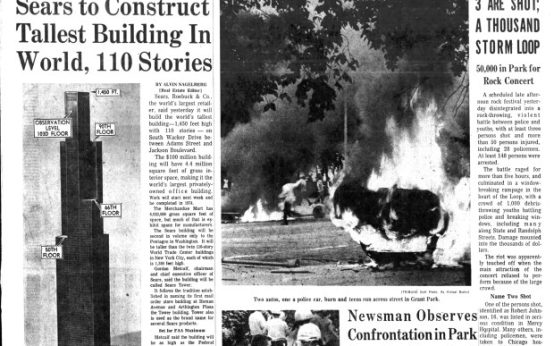 Historical Events in Chicago Area
  Sophie Cunningham’s Influence on Female Athletes’ Advocacy
  Riley’s Journey with Poland-Moebius Syndrome: A Mother’s Perspective