
NASA is actively moving towards establishing a permanent human presence on the moon. The agency detailed plans for a Moon Base near the lunar South Pole, aiming to achieve a sustained human presence. This phase, the third and final one, envisions living and working on the Moon as a reality.
NASA is working with various partners to advance lunar exploration, securing contracts for lunar terrain vehicles and delivery systems. Recently, in June, three companies were selected to land four missions on the moon by late 2028.
Future Lunar Settlements
Experts suggest that future lunar cities may differ significantly from Earth’s skyscrapers. George Sowers, from the Colorado School of Mines, considers the concept feasible. He notes that constructing tall structures on the moon is easier with lunar materials, as there are no hurricanes, high winds, or earthquakes to affect these structures.
Hao Chen, from Stevens Institute of Technology, envisions lunar skyscrapers as functional habitats. Using local materials, such as processed lunar regolith, a skyscraper could be a modular system, focusing on life support features like pressure containment, oxygen supplies, and radiation shielding.
The moon’s lower gravity allows for innovative structural designs. Nevertheless, buildings must serve as life-support systems, safeguarding against the harsh environment.
Cities on the Moon Would Go Underground
Despite the benefits of constructing tall buildings, experts believe lunar cities will likely be underground. Sowers predicts settlements in lava tubes due to the moon’s radiation exposure. These tubes, larger than Earth’s because of lower gravity, could offer natural protection from radiation.
Architect Scott Specht supports this view, suggesting underground facilities using lunar caves for safe habitation. The lava tubes provide stable temperatures and radiation shielding, critical for lunar living.
Nathan Silvernail, from Plantd, suggests that future moon habitats will rely on processed regolith for construction and nuclear power for maintaining atmosphere and energy.
Building in these lava tubes involves minimal adaptations. Solar panels on the surface, along with pressurized modules inside, could create a livable space.
Impact on Earth Architecture
The architectural innovations needed for lunar survival might influence building techniques on Earth. Hao Chen indicates these designs could revolutionize sustainable architecture, treating buildings as closed-loop ecosystems.
Specht believes lunar architecture may teach vital design lessons. Since a lunar habitat lacks exterior views, architects would need to focus on the interior environment. This concept could refocus architectural practices on Earth to consider internal living spaces more critically.
For architecture or design-related stories, Newsweek invites you to share your experiences via their contact email.
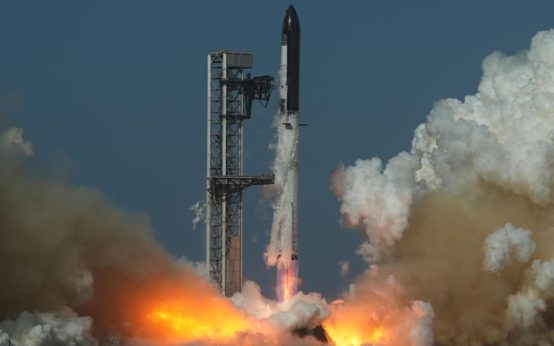 SpaceX’s 13th Super Heavy-Starship Launch Achieves Milestones Despite Challenges
  SpaceX Aborts Starship Launch Due to Engine Issues
  Potentially Habitable Exoplanet LHS 1140b Discovered with Atmosphere
  Psychological Challenges of Long-Term Lunar Living
  Reflecting on NASA’s Role in SpaceX’s Success
  Urgent Rescue Mission for NASA Telescope Delayed