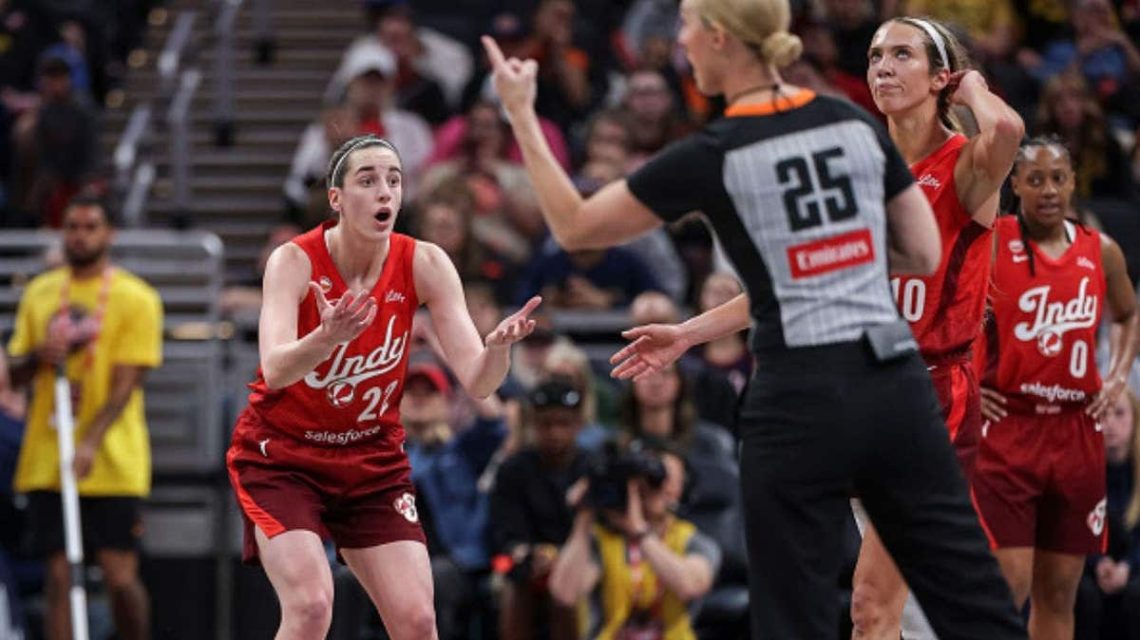
Few athletes have entered the professional sports arena with as much hype and attention as Caitlin Clark. A true standout, she has captivated audiences not only on the court but off it as well. As a former star of the Iowa Hawkeyes, she broke numerous scoring records and turned women’s basketball into a prominent national sport. Since joining the WNBA in 2024, she has continued to set records, cementing her place as a leading force in the league.
Clark’s skill as a playmaker is evident. In her first season, she led the league in assists and established a new single-season record with 337 assists, surpassing the previous rookie record of 224. She achieved multiple triple-doubles in a single season as a rookie, and she quickly became the fastest player in WNBA history to record 1,000 career points and 500 assists, breaking Sue Bird’s previous record. Her games are now frequently held in NBA arenas due to high demand, and she has even surpassed LeBron James in jersey sales. This has contributed to a significant rise in the WNBA’s revenue and viewership.
However, Clark’s unrivaled achievements come with a drawback—turnovers. Her penchant for turning the ball over remains a chief concern. During a recent game against the Golden State Valkyries, Clark committed two critical turnovers in the final minutes and led her team with five turnovers overall, despite being the top scorer. This highlights a persistent issue in her game.
In her rookie season in 2024, Clark set a dubious record with 223 turnovers, the highest in a single WNBA season. The previous record stood at 137. Clark’s aggressive play style, while making her an exceptional talent, also contributes to this flaw. At Iowa, she often took on both scoring and facilitating responsibilities, attempting daring passes that many wouldn’t try. Upon facing more advanced opponents and intricate defensive strategies in the WNBA, these mistakes became more apparent. Adding to her challenge is the fact that teammates sometimes drop her passes, which inflates her turnover numbers through no fault of her own.
Many experts defend Clark by comparing her turnovers to those of accomplished players like Sue Bird, Diana Taurasi, Alyssa Thomas, LeBron James, and Luka Dončić, all known for high turnover rates. They argue that such figures are inevitable for players who handle so much of their team’s offensive workload. Despite the errors, Clark’s assists and scoring opportunities often outweigh her mistakes. Her offensive influence is clear, as evidenced by the Indiana Fever outscoring opponents by 32 points with Clark on the court early in the 2026 season. Her passing, shooting range, and ability to open up scoring opportunities for teammates remain assets.
The challenge for Clark is to balance her aggressive style with minimizing unforced errors. As her career advances, her efficiency will come under scrutiny if turnovers continue to overshadow her performance. Presently, she leads the league in turnovers, averaging 5.2 per game, with Angel Reese close behind at 4.8. Her future legacy will depend on whether she can reduce these mistakes while maintaining her offensive prowess. If she succeeds, Clark could be remembered as one of the greatest offensive players in basketball history. If not, turnovers might remain a blemish on an otherwise remarkable career.
 Chicago Cubs Struggle Despite Brief Optimism After Rally
  Knicks Fans Rally Across the Nation for NBA Finals Glory
  FIFA World Cup 2026: Enhanced Security Measures for Drone Activity
  Samantha Busch Expresses Gratitude Following Kyle Busch’s Passing
  Trump’s Attendance at NBA Finals Sparks Mixed Reactions
  Weekend Sports Highlights and NIL Debate