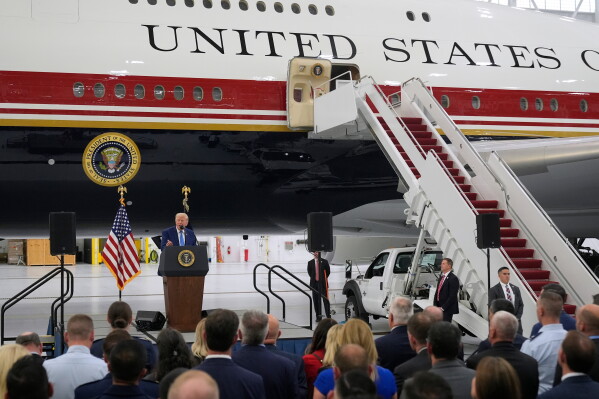
As people gathered throughout the United States to celebrate Juneteenth, former President Barack Obama and former First Lady Michelle Obama welcomed the first visitors to their presidential center. Located on a sprawling campus on the South Side of Chicago, the center honors the nation’s first Black president and aims to inspire change within communities. This aligns with the spirit of Juneteenth, which celebrates the end of slavery in America.
Juneteenth commemorates June 19, 1865, when Union troops arrived in Galveston, Texas, at the conclusion of the Civil War, with an order declaring all enslaved individuals in the state free with ‘absolute equality.’ This occurred two and a half years after the Emancipation Proclamation had declared freedom for enslaved people in the southern United States.
“Juneteenth represents not only the commemoration of the end of slavery but also a continued struggle for absolute equality and that ideal in American life.” – W. Caleb McDaniel, Rice University Professor and Pulitzer Prize-winning author of ‘Sweet Taste of Liberty.’
The Inauguration of the Obama Presidential Center
The grand opening of the Obama Presidential Center featured several days of events following a star-studded dedication ceremony. On the center’s first public day, the Obamas greeted visitors and read to children. The center represents a symbolic convergence of legacy and liberation as the nation grapples with political divisions and renewed questions about racial progress, particularly after the Supreme Court weakened the Voting Rights Act.
The nearly 20-acre site includes a museum with a life-sized replica of the Oval Office, a garden designed by Michelle Obama, professional-level basketball courts, picnic areas, and a new branch of the Chicago Public Library. Interactive exhibits focus on Obama’s campaigns, significant moments of his presidency, and life in the White House. The center expects to draw up to 1 million visitors annually and encourages personal reflection as well. Museum Director Louise Bernard stated the aim is to ‘invite people to take change home, however they define change, both small and large.’
The History and Significance of Juneteenth
This is the fifth year since former President Joe Biden — who was Obama’s Vice President — declared Juneteenth a federal holiday. Celebrations, which began in Texas, hold a rich history in the Black community in the United States, typically involving picnics and gatherings. Juneteenth, a blend of ‘June’ and ‘nineteenth,’ marks the day Major General Gordon Granger and his troops arrived at the Texas port city with the freedom declaration via General Order No. 3.
While the Emancipation Proclamation declared freedom for all enslaved people in rebel Confederate states, it took the Union’s victory to enforce it. ‘It truly required the force of arms and the success of the United States armies to enforce the Emancipation Proclamation,’ explained McDaniel. Six months after Granger’s arrival, the 13th Amendment was ratified, abolishing slavery nationwide.
Nationwide Celebrations and Legacy
This year, numerous celebrations occurred across the birthplace of Juneteenth in Galveston with an all-day park gathering, music, fireworks, a parade, and a religious ceremony at a historic Black church. Houston also held events, including musical performances and a domino tournament at Emancipation Park, founded in 1872 by formerly enslaved men.
Cities across the United States announced events over the long weekend, including a parade in Atlanta, a cycling event in Los Angeles, and a festival in Martha’s Vineyard. Several cities hosted walks named after Opal Lee, the Texan woman instrumental in making Juneteenth a federal holiday. Participants walked 2.5 miles, symbolizing the two and a half years it took to enforce the Emancipation Proclamation in Texas. Known as the ‘grandmother of Juneteenth,’ Lee turns 100 this year.
Reflection on Ongoing Struggles
Black Texans embraced Granger’s arrival date as a celebration, even as the Ku Klux Klan had formed in Texas by 1868. By the 1880s, it was challenging to find a community in Texas where African Americans did not observe it, noted McDaniel. ‘They turned it into a community celebration, transforming it into a celebration not only of freedom but also of community empowerment and institution building,’ he added.
Corey D.B. Walker, Dean of the School of Theology at Wake Forest University, remarked that the festival offers a way to acknowledge the country’s ‘complex history’ and the meaning of being an American citizen, especially amid efforts by Donald Trump’s administration to undermine how Black history is retold. ‘I think it really reminds people of the importance of understanding a fuller and more robust representation of our country’s history and the many contributions of so many people who have contributed to America’s experiment with democracy,’ he stated.
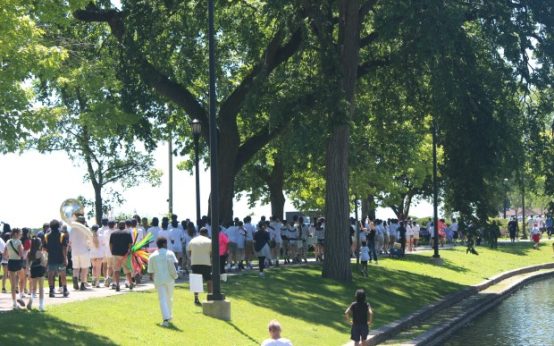 Evanston Celebrates Juneteenth at Arrington Lagoon
  Central Park Horse Carriage Rides Suspended for Safety Review
  Palestino Soccer Academy Offers Refuge Through Sport
  Spencer Leak Jr.: A Life of Service and Compassion
 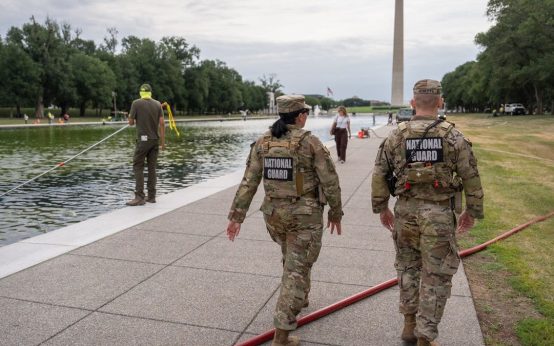 Vandalism and Algae Issues Arise at Lincoln Memorial Reflecting Pool
 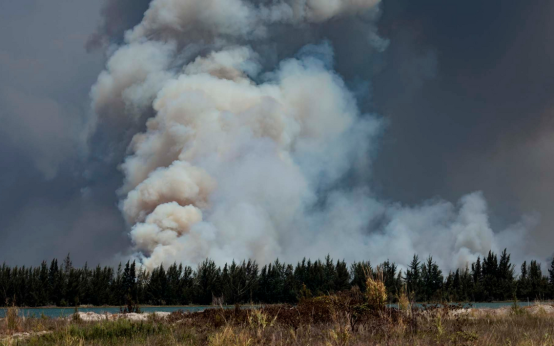 Wildfires Continue to Burn in Miami-Dade, Affecting Air Quality and Travel