The World Cup, inaugurated recently in Mexico City, is an ambitious event that aims to make history. With 48 teams competing in 104 matches across 16 North American cities, the scale of the tournament is unparalleled. However, this ambition has brought not only excitement but also substantial challenges.
It’s been 33 years since North America last hosted the World Cup. The tournament’s return has led to intricate planning over eight years, sparking more anxiety than enthusiasm. The event opened with Mexico versus South Africa at Estadio Azteca, but controversy shrouds the competition’s start and threatens its legacy.
“I view this World Cup as the most politically combustible World Cup in recent history,” stated Jules Boykoff, a political science professor with expertise in sports politics. “We’re in uncharted territory in many ways.”
Relations among hosting countries have been strained by U.S. policies, including tariffs and border security disagreements. Travel bans have blocked potential visitors, staff, and officials from entering the U.S., while fears of immigration enforcement have deterred others from attending.
The tournament’s geopolitical tension is further heightened by U.S.-Iran relations. Iran’s missile and drone attacks on World Cup participants Qatar, Jordan, and Saudi Arabia exacerbate the issue. Iranian journalists were denied visas to cover games in the U.S., forcing changes to Iran’s training base.
Immigration detentions of players and journalists from Senegal, Uzbekistan, and Iraq reflect ongoing difficulties. Even Omar Artan, a renowned Somali referee, faced challenges entering the U.S.
Ticket pricing and distribution issues have prompted investigations into FIFA practices. Attorneys general in New York and New Jersey have raised concerns, while other states hosting matches are posing questions. Public interest struggles as a Yougov.com poll showed 54% of Americans are uninterested and nearly 60% won’t watch the tournament.
“People are just in a bad mood,” Boykoff noted. “It’s a tough time.”
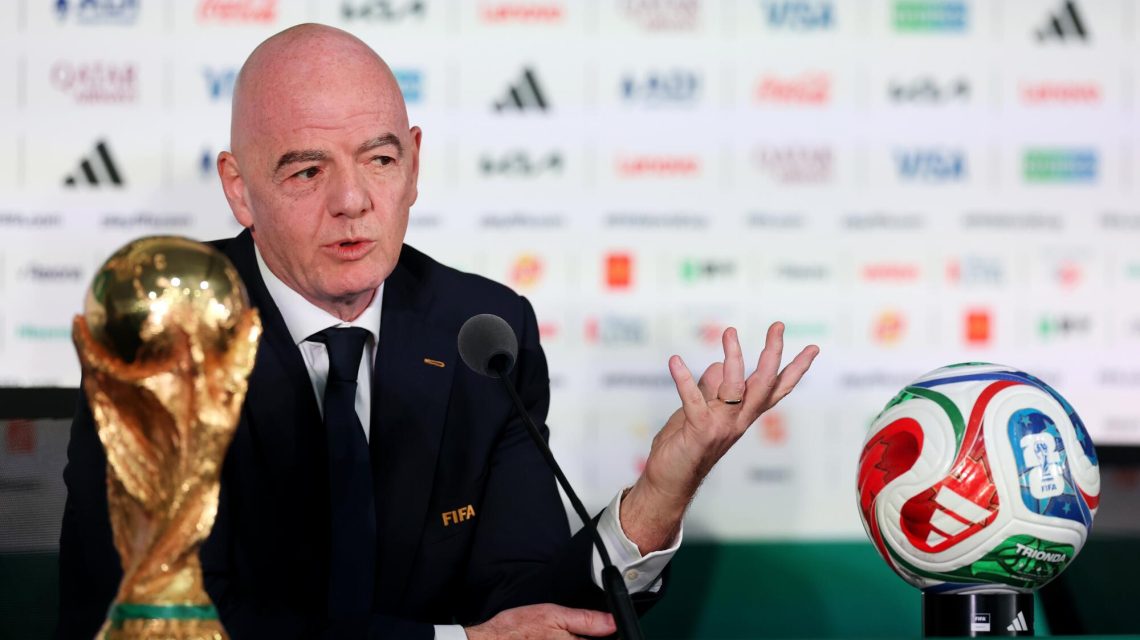
Despite challenges, FIFA president Gianni Infantino remains hopeful, projecting significant revenue and TV ratings. “The World Cup should be understood as both a global sporting celebration and a major commercial enterprise,” stated Steve Georgakis, a sports studies lecturer.
Expectations are high with the presence of iconic players like Argentina’s Lionel Messi and Portugal’s Cristiano Ronaldo, alongside emerging talents such as Erling Haaland and Lamine Yamal.
While geopolitical and logistical hurdles persist, historic World Cups like those in 1974 Germany and 1978 Argentina illustrate sports’ power to overshadow controversy with memorable play, driven by engaging football narratives.
The success of this World Cup hinges on compelling on-field performance. Factors influencing its legacy include hot weather, ticket policies, and geopolitical tension. “Ultimately, the success of the World Cup will be judged by what happens on the field,” Georgakis concluded.
 Inspired Team USA Performance and the Impact on Soccer in America
  US Men’s National Team Faces Paraguay in World Cup Opener
  New York’s Sports Rollercoaster in 1994
  The Changing Role of Sports in Politics
  New York Mayor’s Soccer Fandom Shines During World Cup
  Haitian Soccer Team Returns to World Cup Amid National Struggles