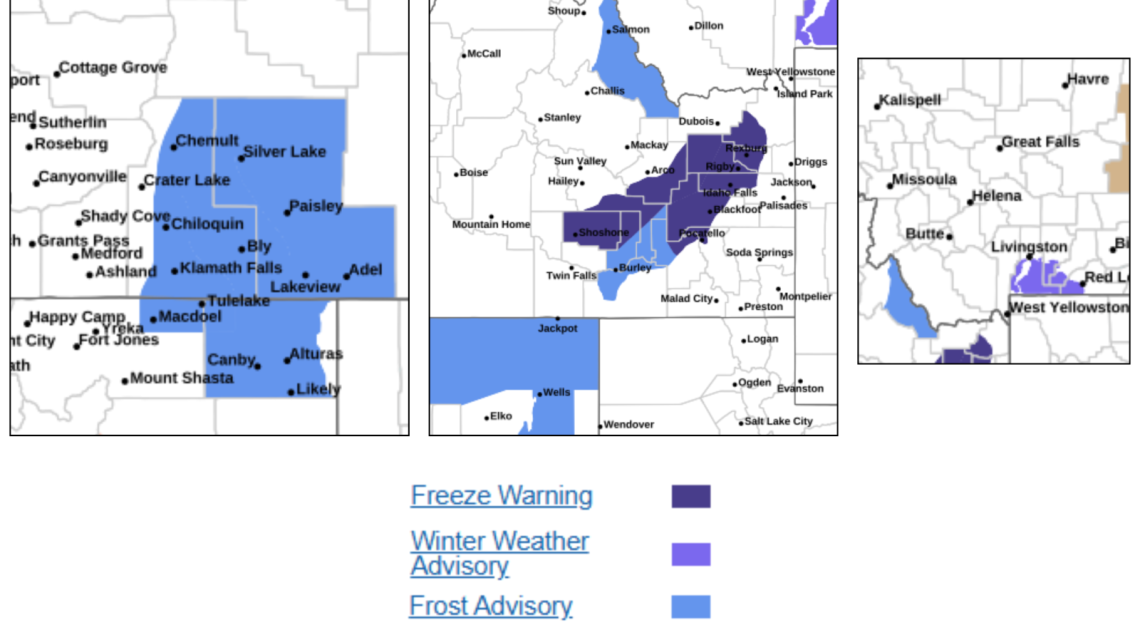
An uncharacteristic cold spell is affecting the western United States, leading to snow, frost, and freezing temperatures across several states. The National Weather Service (NWS) has issued alerts in at least five states.
Weather Alerts Across States
Regions including Idaho, Montana, Oregon, California, and Nevada face winter weather and frost risks. These conditions are more typical of early spring or winter.
Montana
The Absaroka and Beartooth Mountains are under a Winter Weather Advisory until Thursday morning. Light snow and winds up to 35 mph are expected on the Beartooth Highway.
Idaho
Parts of the eastern Magic Valley, Snake River Plain, and nearby areas have frost advisories and freeze warnings, with temperatures between 28 F and 32 F.
Oregon and Northern California
Frost advisories are in effect until Thursday morning for the Klamath Basin and Modoc County, with lows of 33 F expected and colder pockets likely reaching freezing temperatures.
Nevada
Northern and south central Elko County face frost advisories, with temperatures between 33 F and 37 F.
Western Montana (Lemhi County)
Temperatures might dip to 30 F, posing a frost risk.
Most advisories expire between early and mid-morning Thursday as temperatures rise post-sunrise.
Conditions and Impacts
The NWS warns of widespread frost formation, with freezing conditions predicted overnight.
These conditions could harm crops and outdoor plants and pose risks to outdoor plumbing.
Snowfall at higher elevations may lead to travel issues on mountain passes like the Beartooth Highway, causing slippery roads and reduced visibility.
Reasons for the Unusual Weather
June usually offers mild to warm nights in the interior west. Areas like southern Idaho, northern Nevada, and eastern Oregon typically stay well above freezing, supporting growth for plants and crops. Snow in June on the Beartooth Highway is notable, potentially disrupting tourist travel.
Weather experts describe this phenomenon as a cold air outbreak, where a cold air mass moves southward atypically.
Resident Precautions
The NWS advises residents to:
- Cover or bring in sensitive plants
- Safeguard outdoor plumbing and irrigation systems
- Be cautious when traveling through snowy mountainous areas
To summarize, despite it being June, parts of the western United States are experiencing a temporary return to winter-like weather. This highlights the region’s changing conditions during transitional seasons.
 Missouri Plane Crash Claims Lives of Experienced Skydivers
  Bipartisan Group Prepares L.A. Concert for America’s 250th Anniversary
  Six-Figure Salary Now Low-Income in Orange County, California
  Supreme Court to Decide on Six-Person Juries in Criminal Cases
  Trump Administration Targets Birth Tourism with Visa Enforcement
  U.S. Economic Challenges Amid Iran Conflict