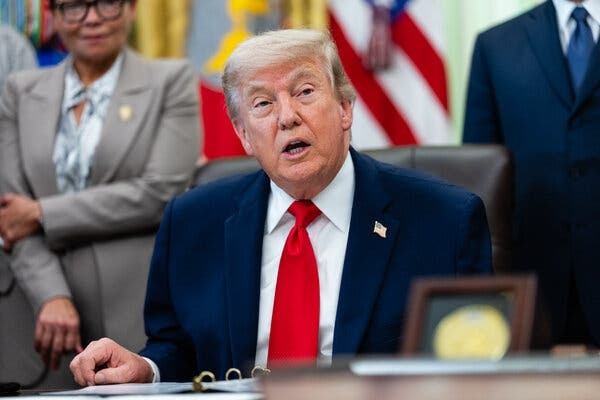
The United States and Iran have signed a framework agreement intended to bring an end to the war, though the full details of the agreement remain undisclosed.
The conflict with Iran, which appears to be concluding, has significantly impacted the U.S. economy.
President Trump’s announcement of a preliminary deal on Monday hinted at halting the Middle Eastern fighting. However, the economic disruptions, including high prices, are expected to persist.
Initially, Mr. Trump suggested his intervention would quickly resolve, forecasting minimal economic disturbance and a swift recovery. However, the war extended beyond three months, introducing financial challenges likely to endure into the next year.
Although oil prices have begun to decrease, fuel expenses might not revert to prewar rates instantly. Consumers may face prolonged high gas costs, with AAA reporting the national average gas price at over $4 per gallon, which is $1 more than the previous year despite being lower than mid-war peaks.
Global energy and shipping issues are starting to improve as the Strait of Hormuz, a key passage between the Persian Gulf and the Gulf of Oman, reopens. Despite this, the shipping congestion won’t resolve immediately, and goods like fertilizer may remain scarce. Analysts predict this shortage could cause food prices to rise for some time after the conflict concludes.
In May, after three months of warfare, inflation surged to its highest rate in three years, as price hikes surpassed wage gains. This contrast sharply with Mr. Trump’s assurances of a steady economy and temporary wartime effects. He had previously assured Americans of a significant drop in gasoline and oil prices once an agreement between the nations was reached.
The administration’s ability to fulfill this promise poses a substantial economic challenge and political risk, with an increasingly discontent populace preparing for the midterm elections.
 Six-Figure Salary Now Low-Income in Orange County, California
  Lawmakers Seek Clarity on U.S.-Iran Deal
  Todd Lyons Joins Defense Contractor After Leading ICE
  Supreme Court to Decide on Six-Person Juries in Criminal Cases
  Controversy Surrounds Nicholas Kristof’s Work at The New York Times
  Trump Administration Targets Birth Tourism with Visa Enforcement