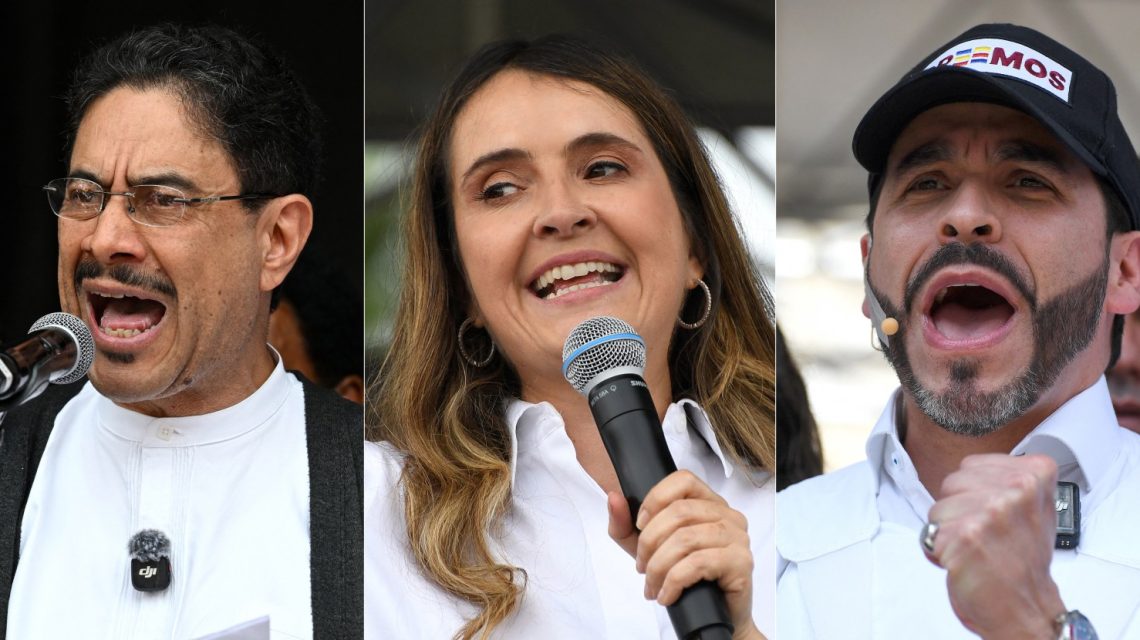
Four years after Gustavo Petro became Colombia’s first left-wing president, the Colombian electorate faces a crucial choice: continue Petro’s political agenda or shift power to a formidable hard-right contender. The leading figures in this pivotal election are Ivan Cepeda, Petro’s designated successor, and Abelardo De La Espriella, a lawyer and political outsider who has rapidly gained prominence as the foremost right-wing candidate in Colombia.
The Right-Wing Surge
De La Espriella’s campaign mirrors a familiar pattern across the Americas: anti-establishment rhetoric, vigorous social media engagement, and pledges to enhance security while opposing the left. Dubbed “The Tiger,” he exhibits a style akin to that of U.S. President Donald Trump, along with right-wing populists such as Javier Milei, Jair Bolsonaro, and Nayib Bukele.
The upcoming election exposes Colombia’s profound divisions. Petro’s tenure leaves behind approval ratings that highlight a nation almost evenly split between supporters and detractors. Gimena Sanchez of the Washington Office on Latin America’s Andes program told Newsweek, “There is fatigue with the traditional left-right divide. People are disillusioned with both and desire something different.”
De La Espriella’s rise taps into this disillusionment, focusing less on detailed policy proposals and more on dismantling Petro’s political framework. His agenda includes reducing government size, expanding prisons, implementing a tougher security strategy inspired by Nayib Bukele, and promoting strong nationalist rhetoric.
“De La Espriella is a right-wing populist who sensed and is capitalizing on the widespread anti-establishment sentiment in Colombia,” stated Michael Shifter, senior fellow at the Inter-American Dialogue. “His campaign centers on emotional appeals and lacks detailed policies.”
Political Dynamics and Election Forecast
Ivan Cepeda, a seasoned left-wing senator and Petro’s preferred heir, remains a formidable contender, leading most polls and anticipated to advance to a runoff. Furthermore, De La Espriella contends with Paloma Valencia, the mainstream conservative choice endorsed by former president Alvaro Uribe. However, Valencia has witnessed a decline in support.
Initial polling showed De La Espriella polling at meager levels in March 2025, but he quickly gained traction. By November, his support had increased to 14 percent, and by January, he tied with Cepeda at approximately 27 percent. In the last week of the campaign, he garnered around 30 percent of the vote, trailing Cepeda, who held 37 percent.
Former Foreign Affairs Minister Julio Paredes emphasized the significance of security for Colombians, mentioning, “We are facing a framework of narco-terrorism.” Some polls suggest Cepeda holds a slight lead in a potential runoff, but others indicate an unpredictable, tightly contested race. Even with a potential defeat for De La Espriella, experts warn that the forces propelling his rise are unlikely to disappear.
“The populism that began with Gustavo Petro will continue, this time from the right,” Shifter mentioned.
The Outsider Lawyer
De La Espriella, a corporate lawyer, has orchestrated a rapid ascent in Colombian politics, portraying himself as a challenger to the establishment, similar to Milei and Bukele. His campaign focuses more on emotional appeal rather than detailed policy frameworks. His legal background has proved controversial, though, as he has represented both high-profile clients and some of Colombia’s most notorious figures, including paramilitary leaders responsible for numerous deaths.
De La Espriella rejects criticism, stressing that providing legal representation should not be equated with endorsing a client’s actions.
Colombia’s Relationship with Washington
Historically, Colombia was a crucial ally for Washington, especially regarding security cooperation under Plan Colombia. Yet, this partnership has weakened over time. Under Petro, coca cultivation in Colombia significantly increased, drawing severe repercussions from Washington. In September 2025, the Trump administration removed Colombia’s drug certification, blaming Petro’s government for unprecedented cocaine production levels.
Both De La Espriella and Valencia have pledged to mend relations with Washington, advocating a stringent security approach and a renewed Plan Colombia addressing organized crime and border security.
Challenges in a Conservative Strategy
Critics point out potential risks in a hard-right security strategy. Gimena Sanchez highlighted the “false positives” scandal, where military forces wrongfully killed civilians as part of security operations in previous campaigns. She argues that such approaches exacerbate violence and overlook underlying factors driving illicit economies, such as inequality and lack of opportunities.
Sanchez believes massive incarceration and military crackdowns fail to address deeper problems in rural regions, emphasizing the insufficiency of basic services provided by the government.
Colombia’s Foreign Policy and Venezuela
The next Colombian president faces the challenge of managing the 1,400-mile border with Venezuela, a vital aspect of foreign policy. This area remains a focus of drug trafficking, armed groups, and migration, requiring cooperation with Venezuela.
Julio Paredes, former foreign service official, remarked, “We cannot fight these groups alone. Cooperation with Venezuela becomes inevitable.” Yet, altering its approach towards Venezuela will also depend on Washington’s stand on Caracas.
According to Sandra Borda, Colombia’s dependence on the U.S. complicates its relationship with Venezuela, influenced by American policy dynamics. Borda suggested that a diversification of Colombia’s foreign policy may be necessary since the U.S. is no longer the steadfast partner it once was.
 Pentagon Reduces Recognized Religious Affiliations
  U.S. Military Awaits Pentagon’s Clarification on Troop Levels in Europe
  Xavier Becerra Advances in California Governor Race
  Graham Platner’s Campaign Amid Controversy
  South Carolina GOP Primary Heats Up as Trump Endorses Evette
  Potential Ebola Outbreak in Central Africa Raises Concerns of Rapid Spread