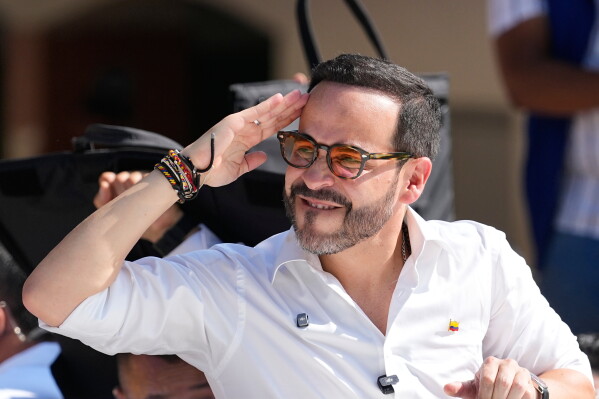
In the first round of Colombia’s presidential election, tough-on-crime lawyer Abelardo de la Espriella and peace advocate Iván Cepeda emerged as the leading candidates. Both are set to compete in a runoff election later in June.
Election Results
Abelardo de la Espriella, known as “El Tigre,” is a newcomer who has aligned himself with U.S. President Donald Trump, advocating for a strict approach to criminal groups. He received almost 44% of the votes but did not achieve the 50% threshold required for outright victory. Iván Cepeda, a progressive senator and ally of Colombia’s outgoing President Gustavo Petro, garnered just under 41%.
The current President Gustavo Petro has challenged the election results, claiming without evidence that outside influences manipulated them. Paloma Valencia, a centrist candidate, received under 7% of the votes.
Voter Sentiment and Political Climate
Despite leading in polls throughout the campaign, Cepeda found himself in a close race with de la Espriella. The outcome suggests a challenging runoff for Cepeda, as de la Espriella is likely to attract Valencia’s supporters.
De la Espriella celebrated at his campaign headquarters in Barranquilla, claiming the chance to “change the history of Colombia.” Voter sentiment across Latin America reflects a shift away from leaders with progressive policies toward candidates advocating strong security measures.
Impact of U.S. Influence
The Trump administration’s aggressive stance in Latin America has increased pressure on countries such as Colombia to crack down on crime. This election underscores contrasting visions for peace in a nation with a lengthy history of conflict.
Cepeda aims to extend Petro’s progressive agenda and seek peace with armed groups, contrasting sharply with Trump’s perspective for the region. Conversely, de la Espriella supports a hardline approach similar to El Salvador’s President Nayib Bukele, proposing the construction of 10 mega-prisons.
“Today’s election isn’t just important for us, it’s important for all of Latin America,” stated Juan Acevedo, a Colombian sociologist.
A Referendum on Petro’s Policies
Ten years after Colombia’s historic peace deal with the FARC, this election serves as a referendum on Petro’s policies. The decade-old agreement brought hope for peace, but violence has resurfaced, partly due to armed groups expanding during negotiations with Petro’s administration.
Recent increases in drone strikes and armed attacks have plagued the election, including the tragic assassination of Miguel Uribe Turbay, a presidential hopeful. Nevertheless, Cepeda and Petro maintain significant support, having advocated for progressive advances like an increased minimum wage.
Public Perspectives
Opinions among Colombian voters diverge on how to tackle violence. Maria Eugenia, a seamstress in Bogotá, supports de la Espriella’s tough stance, despite acknowledging the potential human cost. She criticized negotiations with armed groups as rewarding criminal behavior.
On the other hand, Juan Acevedo expressed concern that a security crackdown could regress Colombia to a cycle of violence. Although he noted failures in Petro’s reform efforts, he supports continued attempts to change the approach to the country’s violence.
“The danger here is that we return to the times where the only way to solve our problems is with bullets and more war,” he asserted.
 Latin American Deportees in Congo: Return to Home Countries Amid Challenges
  Controversy Surrounds Stabbing Incident of British Student
  Royal Cottages and Controversies: Financial and Legal Revelations
  Oak Lawn Librarian Supports Library Projects in Zimbabwe
  World Cup Anticipation: US Men’s National Team and Norway’s Viking-Themed Campaign
  Family Searches for Missing Auburn Student in Japan After Disagreement Over AI