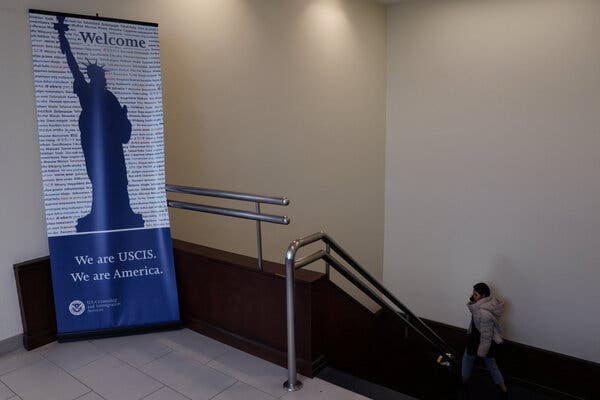
Immigrants, along with their advocates and lawyers, are trying to understand a new rule from the Trump administration. This rule necessitates that people be in their native countries to apply for a green card.
On Friday, the U.S. Citizenship and Immigration Services (USCIS), which oversees the green card system, announced that individuals already in the U.S. would only be granted permanent residence under “extraordinary circumstances.” Otherwise, applicants must apply at an American consulate in their home country.
Immigration lawyers and advocacy groups expressed concerns over the weekend, noting that this change could decrease green card applications. In 2024, 1.4 million green cards were issued; over 800,000 recipients were in the United States and had their immigration status modified during the process.
Charles Kuck, an immigration lawyer and former president of the American Immigration Lawyers Association, highlighted the impact on those married to U.S. citizens seeking permanent residence. These individuals usually need to resolve their immigration status while staying in the U.S. “This is an attempt to slow immigration,” Kuck stated. “It’s meant to make immigration so unpleasant that you return home.”
Zach Kahler, a USCIS spokesman, mentioned that the policy aims to close a loophole. This loophole allows immigrants to remain in the U.S. illegally after being denied residency.
 Justice Department Withdraws Plan for $1.8 Billion Fund
  Democratic Concerns Grow Ahead of Maine Senate Primary
  Latin American Deportees in Congo: Return to Home Countries Amid Challenges
  Federal Judge Invalidates Trump-Era Immigration Policy
  Debate Over White House Ballroom Construction
  Scrutiny Surrounds Graham Platner Amid Maine Senate Primary