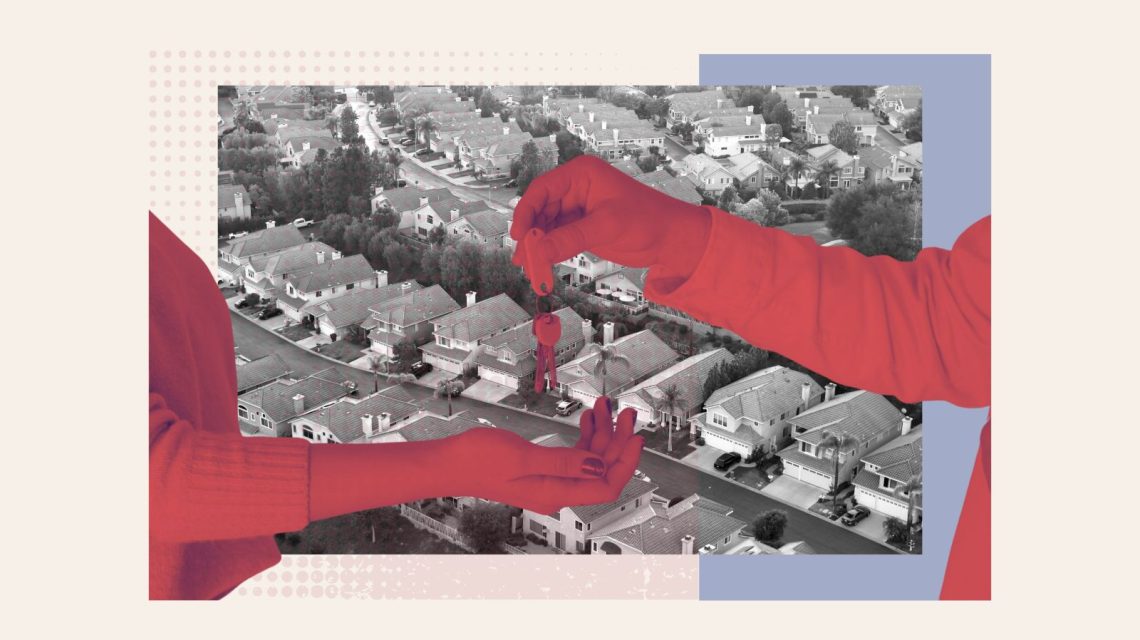
In several states across the U.S., private home sales are not recorded publicly, impacting property tax assessments. This secrecy could help some property owners reduce their tax bills, potentially increasing taxes for others. Typically, home sales help determine a property’s value, which informs property tax calculations. Yet, in states prioritizing sellers’ privacy, these details remain hidden.
Impact on Transparency and Fairness
According to experts, when home sales occur privately in nondisclosure states, issues of transparency and fairness surface. Owners with access to undisclosed sale details might exploit this knowledge to lower taxes. Assaf Harpaz from the University of Georgia School of Law notes that property taxes are based on assessed value, relying on various methods and data. A lack of transparency occurs with private sales, affecting assessments due to fewer available data points.
Challenges for Tax Assessors
Private listings are permissible nationwide and overseen by the National Association of Realtors (NAR). In most states, sale details become public after a transaction. However, about 12 states keep final sale prices confidential. This situation creates ‘asymmetry,’ where one party holds more information than the other, particularly in cases of off-market property sales. Harpaz explains that individuals with access to insider information could manipulate assessments to their benefit.
Sergio Garate from Emory University studied the effects of this knowledge imbalance, finding that it significantly affects homeowners and buyers in nondisclosure states. Without transaction prices and public listings, assessors depend on past assessments, comparable sales, and property details, which complicates valuations and increases errors.
Real-Life Implications
The disparities in information availability have real impacts. Property owners might challenge high assessments but lack incentives to contest low ones. This can lead to underassessment, reducing tax obligations. Garate’s research indicates nondisclosure states face higher appraisal bias and mortgage default rates among financially constrained buyers.
In states like New Mexico, where full nondisclosure was standard until 2004, a partial disclosure law later led to a 4% rise in tax revenue, adding about $1.09 million annually. Prior laws had suppressed property tax revenue due to ineffective taxation of high-value homes. Such scenarios result in tax shifts, where some properties bear more tax burden if others are undervalued.
 Understanding the Benefits of Home Equity Loans in the Current Market
  Is a Home Warranty Worth It for You?
  Understanding Home Warranty Coverage for Central Air Conditioning Systems
  U.S. Home Sales Gain Momentum with Fastest Pace Since December
  California’s New Housing Law Targets Urban Density Near Transit
  Advantages of Homebuying in June