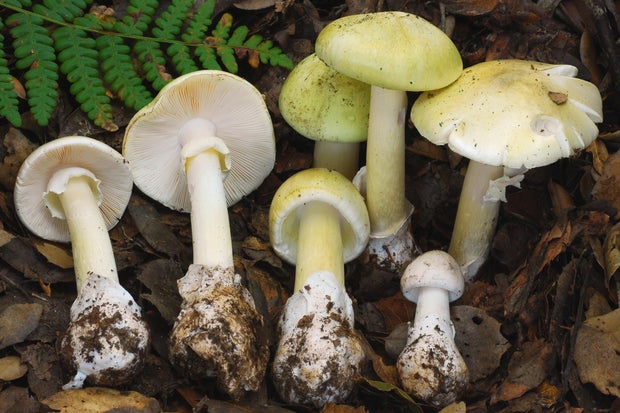
In an alarming development, four individuals in California have died, and three others required liver transplants after consuming the highly toxic death cap mushrooms, following an unusually rainy winter that has led to a surge in their growth. The California Department of Public Health reported over three dozen cases of poisoning by these mushrooms since November 18.
These poisonings have led to acute liver injuries and, in many cases, liver failure, with several patients needing intensive care. The affected individuals range from a mere 19 months to 67 years old, highlighting the indiscriminate nature of the toxin. In light of these incidents, health authorities strongly advise against foraging for mushrooms this year due to the high risk of confusing death caps with non-toxic varieties.
The death cap mushroom is among the deadliest globally, belonging to a small category of fungi containing amatoxins. These toxins are responsible for approximately 90% of fatal mushroom poisonings worldwide. Death caps are frequently found in city parks and forested areas, typically under oak trees.
Dr. Craig Smollin, medical director for the San Francisco Division of the California Poison Control System, noted that the usual number of death cap poisonings ranges from two to five per year. However, the occurrence of nearly 40 cases this year is unprecedented.
The main thing this year is just the magnitude, the number of people ingesting this mushroom. Having almost 40 is very unusual.
Experts attribute a ‘super bloom’ of death caps to the warm fall temperatures combined with early seasonal rains. They caution that even a small portion of this mushroom can be lethal, and the color or preparation method does not mitigate its fatal toxins.
Laura Marcelino, from Salinas in Northern California, recounted her family’s experience to the San Francisco Chronicle. Mistaking the death caps for edible mushrooms resembling those from Oaxaca, Mexico, both she and her husband suffered severe symptoms after consuming them. Her husband required a liver transplant, underscoring the deadly potential of the death cap.
Initial symptoms of death cap poisoning may include stomach cramps, nausea, diarrhea, and vomiting within 24 hours, which can quickly progress to severe liver damage. Importantly, early symptoms may appear to subside temporarily, only for dangerous liver complications to develop later.
Clusters of death cap mushrooms have been documented in several locations across Northern California and the Central Coast, including the Monterey and San Francisco Bay areas. In response, the public health department has expanded multilingual warnings, as many affected individuals speak Spanish, Mixteco, or Mandarin Chinese.
Because death caps resemble many harmless mushroom species, health officials emphasize the difficulty of identification for non-experts. The mushroom’s appearance changes as it matures, misleading even those with some experience.
Experts strongly advise supervising children and pets outdoors and sourcing mushrooms only from reputable sellers. Immediate medical attention is crucial if a poisonous mushroom is ingested or suspected.
The U.S. Poison Centers reported a 40% increase in mushroom exposure cases, not limited to death caps, compared to the same period last year. While not all exposures lead to poisonings, the trend is concerning.
In emergencies or for inquiries regarding mushroom poisoning, individuals can contact U.S. Poison Control Centers at 1-800-222-1222 or visit PoisonHelp.org.
 Researchers Escorted Out of Diabetes Conference for Criticizing Trump Administration
  Ebola Outbreak in Africa: A Serious Concern
  Gold and the Ebola Outbreak in Congo’s Mining Towns
  House Passes Bill for Veterans’ Benefit Increase
  Gene Editing in Human Embryos at Columbia University
  Melinda French Gates Commits $215 Million for Global Women’s Health