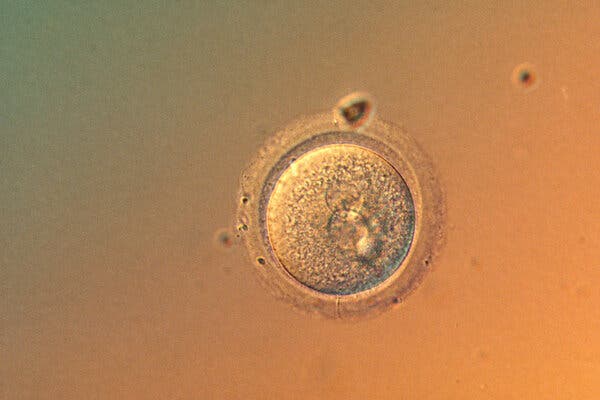
Researchers at Columbia University have achieved a breakthrough in gene editing, demonstrating unprecedented precision in altering the DNA of early human embryos. This advancement has the potential to pave the way for tailoring specific characteristics in babies.
The prospect of engineered embryos has sparked significant debate over the years. On one side, this technology could allow parents to address genetic mutations responsible for diseases. On the other, it raises ethical concerns, reminiscent of eugenics, about selecting preferred traits.
Dieter Egli, a geneticist at Columbia University who spearheaded the research, emphasized the need for public discourse on the potential benefits and ethical implications of altering embryonic DNA.
As a scientist, you can provide the data for discussion, but then essentially there you stop and let others take over,
he stated.
The team utilized a sophisticated method known as base editing. This technique allows for precise replacement of individual genetic letters in DNA sequences, unlike the previous CRISPR method which often led to unwanted damage.
Despite these advancements, Dr. Egli urged caution, noting that many questions remain unanswered regarding possible side effects. We’re not saying this is going to be used tomorrow in the clinics,
he added.
The study conducted by Dr. Egli and his team has been shared online and is currently undergoing peer review for possible publication in a scientific journal.
 Ebola Outbreak in Africa: A Serious Concern
  Flesh-Eating Fly Returns to the United States Causing Concern
  Gold and the Ebola Outbreak in Congo’s Mining Towns
  Australia’s Largest Seizure of Exotic Invertebrates: Over 100,000 Cockroaches Confiscated
  House Passes Bill for Veterans’ Benefit Increase
  Melinda French Gates Commits $215 Million for Global Women’s Health