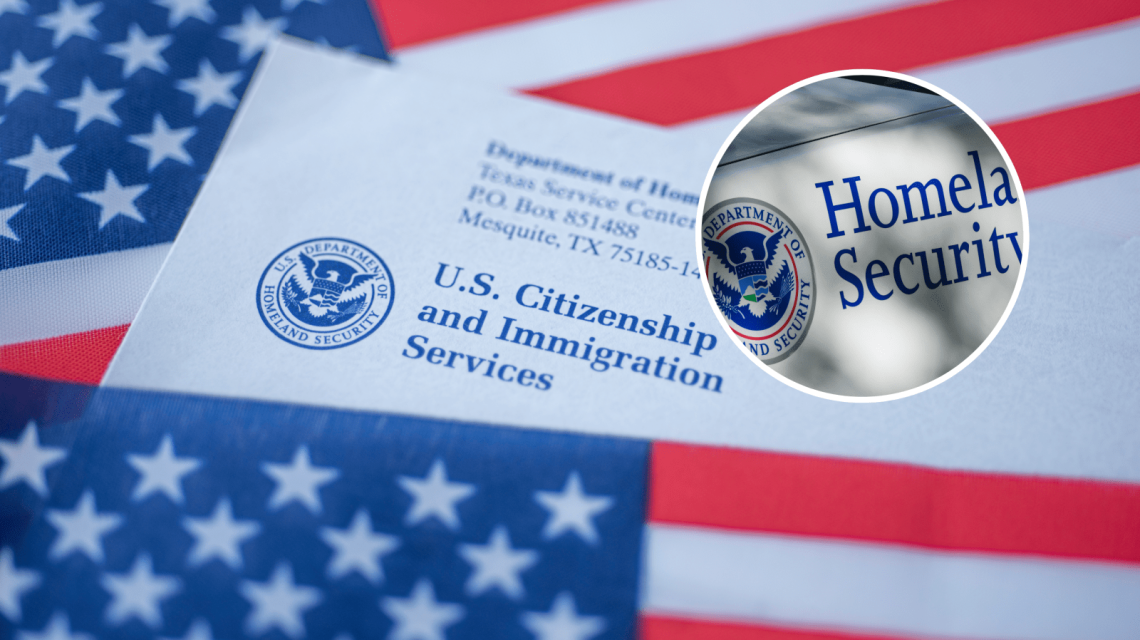
The Department of Homeland Security (DHS) has clarified recent changes in immigration policy, confirming that most green card applicants will not need to leave the country while their applications are processed. This comes after a U.S. Citizenship and Immigration Services (USCIS) news release caused confusion, suggesting applicants might have to return to their home countries unless in ‘extraordinary’ cases.
DHS Provides Clarification
DHS officials stated that the policy update is a clarification, reinforcing the discretionary authority immigration officers have always held. Officers will continue to make individual assessments on whether applicants must leave the U.S. or can stay during the processing period.
A DHS spokesperson highlighted, ‘This was just a reminder to officers of their discretionary authority, which has always existed on a case-by-case basis,’ as reported by The New York Times.
Despite the clarification, confusion remains among applicants and legal representatives. Concerns have been raised about potential disruptions, with some applicants encountering new questions during interviews.
Adjustment of Status in Focus
For years, the ‘adjustment of status’ process has allowed immigrants to apply for permanent residency within the U.S. without needing to leave. This pathway is crucial for family-based applicants, who form the largest segment of green card seekers.
Officials clarified that previous announcements did not represent a significant policy shift but reaffirmed existing practices where officers may require applicants to complete the process abroad based on individual circumstances. However, DHS has not specified criteria for when applicants must leave, leaving decisions largely to officers.
Uncertainty and Mixed Reactions
The lack of detailed information on the application of the policy has led to mixed experiences among green card applicants. Some lawyers report conflicting accounts, complicating legal advice. Attorney Elissa Taub mentioned seeing ‘conflicting’ practices, whereas Angelo Paparelli noted applicants being questioned about not applying from abroad.
The changes could disproportionately affect applicants from certain countries, adding to the concerns of potential disruptions. Both applicants and employers face a challenging landscape with decisions heavily reliant on individual officers.
Potential Impacts and Future Steps
Critics argue that the administration might be attempting to manage backlash from the initial announcement. Benjamin Johnson, executive director of the American Immigration Lawyers Association, suggested that the uncertainty complicates potential legal challenges.
Business groups express worries over the impact on employers. Neil Bradley from the U.S. Chamber of Commerce emphasized potential disruptions, advocating for a stronger legal immigration system.
The ongoing uncertainty means that applications could yield varying results, leaving both applicants and employers in a state of ambiguity about how policies will affect them.
 Justice Department Withdraws Plan for $1.8 Billion Fund
  Democratic Concerns Grow Ahead of Maine Senate Primary
  Latin American Deportees in Congo: Return to Home Countries Amid Challenges
  Federal Judge Invalidates Trump-Era Immigration Policy
  Debate Over White House Ballroom Construction
  Scrutiny Surrounds Graham Platner Amid Maine Senate Primary