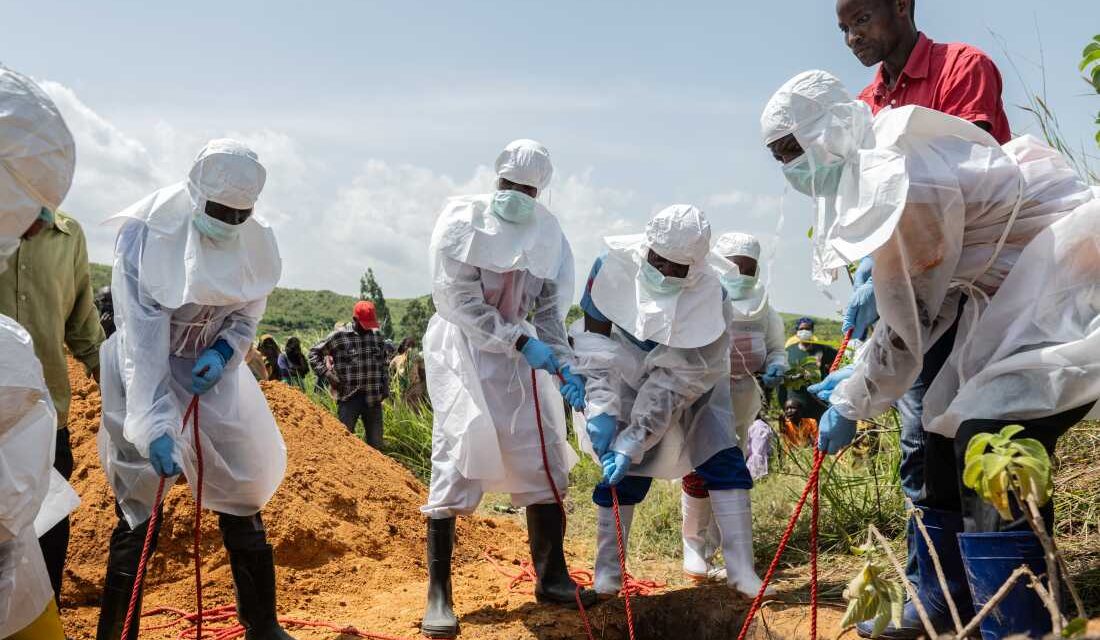
Health workers in the Democratic Republic of Congo are racing to control an Ebola outbreak. The disease has likely killed over 200 people and threatens to spread across borders. As of Saturday, Congolese authorities reported 867 suspected cases and 204 deaths. They declared the outbreak on May 15, and cases have emerged across a vast area larger than Florida. Neighboring Uganda has also confirmed five cases.
On Friday, the World Health Organization raised the national risk level to “very high.” WHO’s Abdirahman Mahamud highlighted the virus’s potential for rapid spread. Ebola causes symptoms such as vomiting, fever, and sometimes bleeding. It can take weeks to manifest and is often fatal.
Congolese health workers, UN staff, and aid agencies quickly mobilized after the outbreak’s confirmation. However, Ebola might have been spreading for weeks or months before detection. This late discovery complicates containment efforts. The first known case was in Bunia, Ituri province, involving a nurse who showed symptoms on April 24. The nurse was buried in Mongbwalu, Ituri, where unexplained deaths occurred in April, including four health workers’ deaths within a week. Panic ensued, fueled by rumors attributing the deaths to supernatural causes.
Three Red Cross volunteers handling infected bodies died from suspected Ebola. Delays in identifying the outbreak partly stemmed from a rare virus species, Bundibugyo, unlike the more common Zaire species, which has a vaccine. Congo’s National Institute for Biomedical Research confirmed this distinction.
The virus knows no borders, it knows no race, it knows no tribe. The virus affects us all. – Roger Kamba, Congo’s Health Minister
Aid workers established Ebola treatment centers in eastern Congo over a week after the outbreak declaration. However, U.S. aid cuts hinder response efforts. Health Minister Roger Kamba sought more funding, emphasizing the virus’s indiscriminate nature. Congo, one of the world’s poorest countries, faces significant challenges in combating the disease. Over 80% of its population lives on $3 a day or less. Armed group violence and poor infrastructure further complicate the response.
Ituri, the outbreak’s epicenter, frequently experiences attacks by groups like the Codeco and the Islamic State-aligned ADF. Remote towns like Mongbwalu and Rwampara, pivotal outbreak zones, are rough mining communities with cramped and unsanitary living conditions. Health responders encounter trust issues within the community. Gabriela Arenas from the IFRC Africa Region noted mixed reactions, with some seeking protection and others suspicious, believing Ebola is fabricated.
Recently, residents have attacked health clinics and treatment centers in Mongbwalu and Rwampara. In some instances, they set fire to medical tents. Confirmed Ebola cases have spread to North Kivu and South Kivu provinces, areas influenced by Rwanda-backed M23 rebels, complicating response efforts. There are concerns of virus transmission to other countries. Eastern Congo’s economy is closely tied to Uganda, Rwanda, and Burundi. Major cities in the region are near national borders.
Uganda, sharing a land border with Ituri, is addressing its own smaller Ebola outbreak. Two Congolese infected individuals traveled to Uganda, which recorded three additional cases, including Ugandan nationals who contacted the travelers. Uganda has suspended flights to and from Congo and restricted land border crossings to prevent further spread.
 U.S. Military Awaits Pentagon’s Clarification on Troop Levels in Europe
  Potential Ebola Outbreak in Central Africa Raises Concerns of Rapid Spread
  U.S. and Allies Condemn Efforts to Overthrow Bolivian Government
  Pamela Hicks: Cousin, Bridesmaid, and Witness to History
  Researchers Escorted Out of Diabetes Conference for Criticizing Trump Administration
  Latin American Deportees in Congo: Return to Home Countries Amid Challenges