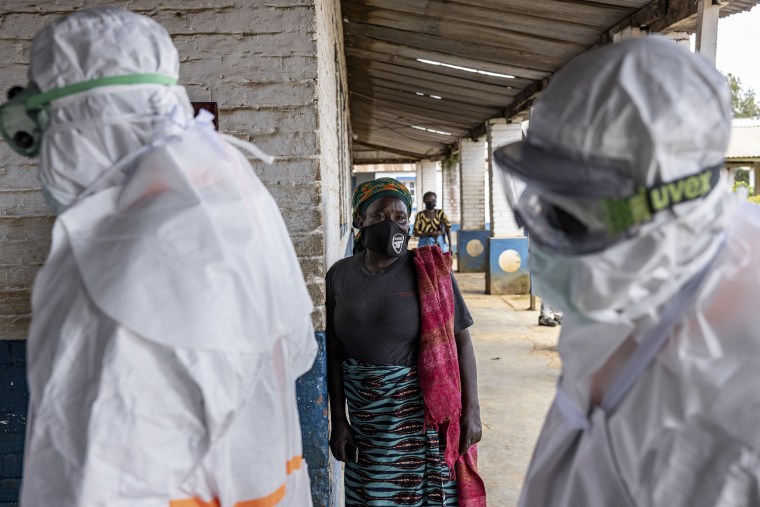
The early cases of the Ebola outbreak in the Democratic Republic of the Congo included a healthcare worker whose family opted for home care instead of hospital treatment. Rose Tchwenko, Congo’s country director at Mercy Corps, noted that the family perceived the illness as linked to traditional practices or witchcraft, relying heavily on non-medical caregivers, including religious leaders and community figures.
This decision led to a traditional burial for the man, which likely spread the virus to others. The man’s wife also contracted Ebola, indicating the dangers of misinformation and local customs.
Tchwenko emphasized the prevalence of false beliefs about Ebola, alongside suspicions regarding humanitarian workers and government interventions. In Rwampara, protests erupted as locals were prohibited from reclaiming bodies for burial, resulting in a hospital tent fire. During burial preparations, bodies retain infectiousness, which can contribute to transmission.
Healthcare professionals and aid organizations face misinformation and logistical challenges in controlling the outbreak, which the World Health Organization reported as having 750 cases and 177 deaths as of last Friday. Previous outbreaks were identified quickly, but the current outbreak’s undetected Bundibugyo strain complicated diagnosis via standard Ebola tests, which initially returned negative results despite patient fatalities.
Alan Gonzalez from Doctors Without Borders noted that testing now requires samples to be sent to a lab in Kinshasa, delaying results. Immediate isolation is practiced for suspected cases, even without positive test results, but the absence of a vaccine for Bundibugyo limits intervention options.
Ky Luu, president of International Medical Corps, pointed out that unlike Zaire strain outbreaks with preventive vaccines, Bundibugyo necessitates basic response strategies such as contact tracing and isolation of potentially infected individuals.
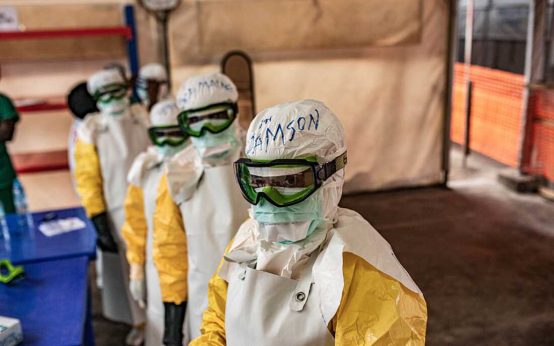
The outbreak’s severity parallels the deadliest Ebola occurrence from 2014-2016, with over 28,000 cases and 11,000 deaths. In response, USA’s State Department committed $23 million, supporting International Medical Corps’ efforts, which include establishing new facilities, screening units, and procuring essential supplies like gowns and gloves.
Greg Ramm from Save the Children highlighted shortages of disinfectants and protective gear, linking this to reduced humanitarian assistance compared to two years prior. Additionally, the conflict-ridden region—comprising areas under rebel and government control—poses access and surveillance challenges due to the presence of approximately 100 armed groups.
The congestion, population density, and prolonged conflict further complicate the response effort, presenting significant logistical hurdles according to Luu.
 Pamela Hicks: Cousin, Bridesmaid, and Witness to History
  Researchers Escorted Out of Diabetes Conference for Criticizing Trump Administration
  Latin American Deportees in Congo: Return to Home Countries Amid Challenges
  Ebola Outbreak in Africa: A Serious Concern
  Controversy Surrounds Stabbing Incident of British Student
  Royal Cottages and Controversies: Financial and Legal Revelations