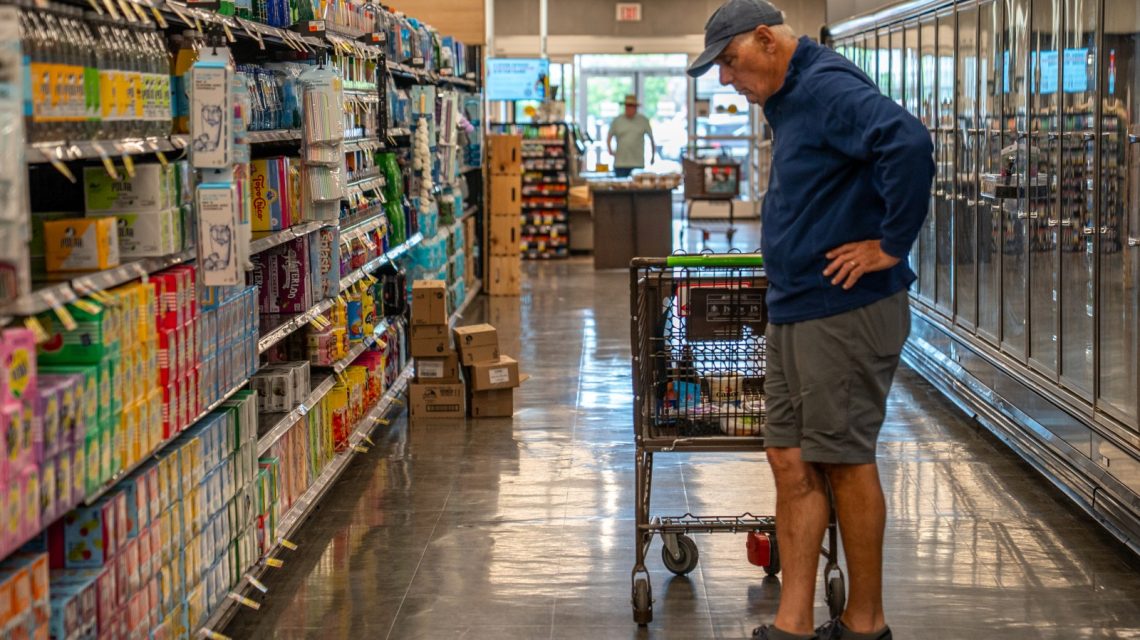
The U.S. economy has demonstrated unexpected strength despite external challenges. Consumer spending remains strong and employment reports have consistently exceeded expectations. Analysts, including Sharmin Mossavar-Rahmani of Goldman Sachs, express surprise at the country’s ability to withstand economic challenges. Mark Zandi, chief economist at Moody’s Analytics, highlighted the economy’s resilience against higher tariffs and geopolitical tensions.
Fuel prices have surged by 40% since February 28, impacting inflation. The Department of Labor noted this increase pushed inflation to its highest since April 2023. Despite rising inflation, robust consumer spending contributed to job additions, with 172,000 jobs created in May following gains of 179,000 and 214,000 in preceding months.
Consumer Sentiment Versus Economic Reality
Despite resilient economic data, consumer sentiment has weakened. A Federal Reserve Bank of New York report revealed that 13.3% of Americans felt their economic situation was “much worse” than a year ago, up from 10.6% in April. This marks a peak since July 2022. The University of Michigan and Conference Board found consumer sentiment and confidence at low points due to inflationary fears.
Explaining the Discrepancy
Michael Weber, a finance professor at ESMT Berlin, told Newsweek that while the economy appears strong, there are hidden challenges. Consumer spending, a key component of GDP, is increasingly driven by high-income households, benefiting from market gains amid volatility. Moody’s Analytics reported that households earning $250,000 annually account for around half of all consumer spending, a record high since 1989.
Economist Douglas Holtz-Eakin noted financial strains such as rising credit card delinquencies and stagnant wage growth compared to inflation. This highlights the gap between consumer sentiment and economic indicators.
Weber mentioned that consumer sentiment is sensitive to inflation, especially noticeable prices like gasoline. Even with strong economic activity, elevated everyday costs can lead to pessimism.
Political Implications
Rising prices have affected political approval. President Donald Trump faces blame for increasing costs, with implications on his economic approval ratings. President Joe Biden also experiences similar scrutiny, linked to inflation trends. July 2022 saw a significant drop in Biden’s approval, mirroring inflation hitting a 21st-century high of 9.1%.
Holtz-Eakin described the magnitude of negative sentiment as striking. Political divides appear to be diminishing, with Republican confidence declining. The current administration may face reputational challenges similar to past ones if inflation isn’t curbed and wages remain stagnant. Holtz-Eakin emphasized the need for a focus on controlling inflation for political recovery.