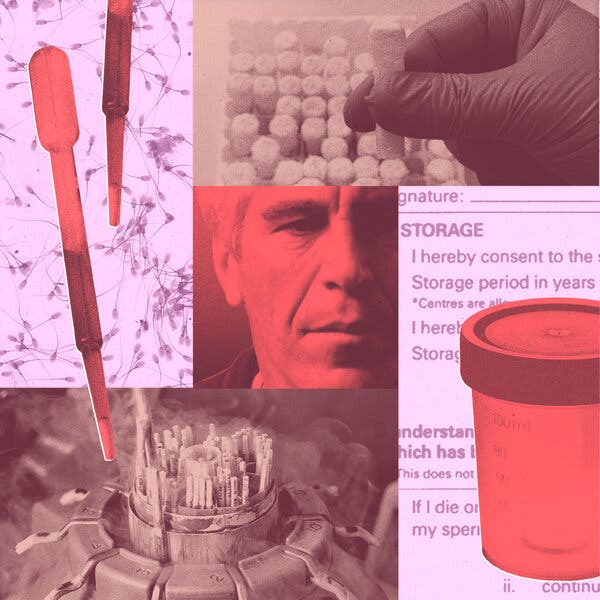
Jeffrey Epstein passed away in 2019, yet his genetic material raises intriguing questions. According to emails and records released by the Justice Department, Epstein had been storing his sperm for several years before his death. These documents reveal that he did not wish for the cryobank to dispose of the sperm upon his passing.
Epstein deposited his sperm at California Cryobank before October 2012 and renewed his contract in 2016. An email from 2012 notified him about an impending renewal payment, which confirms his long-term storage arrangement. The 2016 contract, bearing his signature and dated May 9, detailed the terms of this storage.
The agreement stated that if Epstein died, control of his sperm would transfer to his estate or a designated legal representative. This arrangement was not public knowledge until the Justice Department shared the files earlier this year.
“The control of one’s genetic material after death is a complex legal issue,” noted Kimberly Mutcherson, a professor at Rutgers Law School specializing in reproductive technology and bioethics.
Presently, it is uncertain whether Epstein’s sperm is still being preserved or its location. CooperCompanies, the owner of California Cryobank since 2021, stated that they “do not currently store any samples associated with Jeffrey Epstein” but declined further comments. Epstein’s estate also did not respond to various requests for information.
There is no record of when Epstein initially banked his sperm. He pleaded guilty in 2008 in Florida for soliciting prostitution from a minor and was awaiting trial for sex trafficking charges when he died by suicide in a Manhattan jail in 2019.
The ethical considerations of accepting genetic material from a convicted sex offender are debated within the fertility sector. Mutcherson pointed out that this case presents significant ethical questions for the industry.