An estimated 30,000 Fulani militants are active in Nigeria, primarily targeting Christian communities, according to a significant new report. The U.S. Commission on International Religious Freedom (USCIRF) highlights that disturbances caused by these militants resulted in the highest number of deaths among religious communities over the past year.
The USCIRF report states that these herders have targeted Christian farming communities across the Middle Belt and increasingly in southern regions, committing acts such as burning homes and churches, along with kidnapping, rape, and murder.
“Violence by Fulani militants caused the highest number of deaths among all religious communities in Nigeria over the last year,” the report noted.
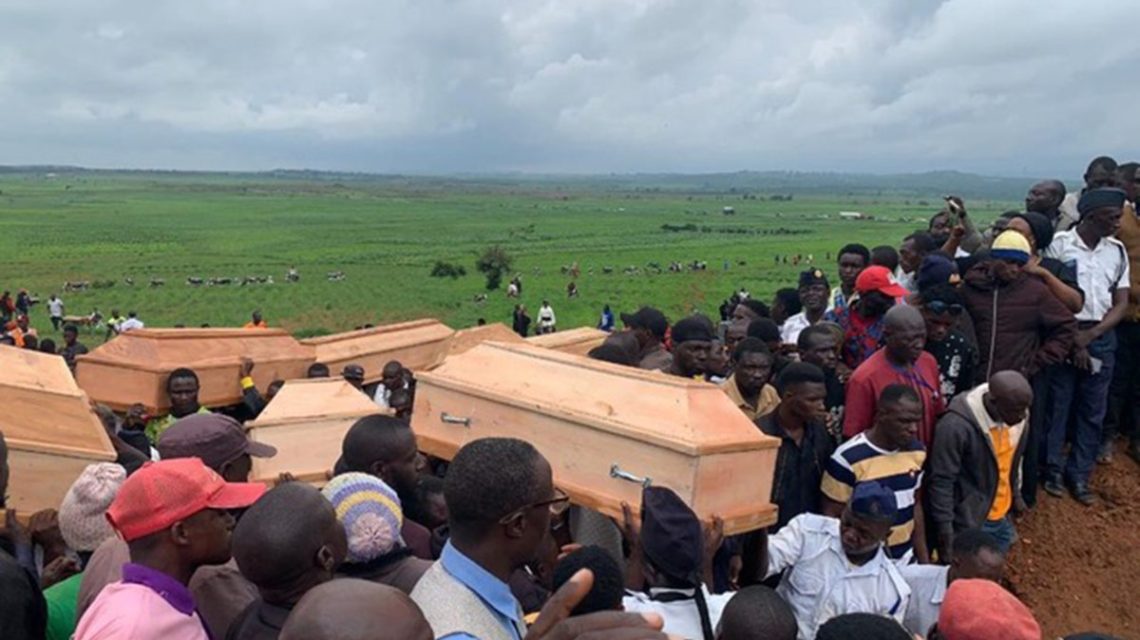
Funerals for around 27 Christians killed by Fulani tribesmen took place in Bindi village, Plateau State, Nigeria, on July 28, 2025. Despite joint military operations by the U.S. and Nigerian forces against terrorist groups like Boko Haram, experts suggest different strategies are necessary for dealing with the Fulani violence.
Sterling Tilley, a former counterterrorism expert at the State Department, cautioned against military interventions in the farmer-herder conflict, as they may exacerbate instability. He emphasized the need for political action from Nigeria to resolve the crisis.
Recent protests in Benue State, following an attack by Fulani militants that killed 218 people, underscore the urgency of the situation. This attack left around 6,000 people displaced.
Secretary of War Pete Hegseth addressed U.S. military actions, highlighting President Donald Trump’s previous orders to protect Nigerian Christians targeted by ISIS.
Christians, comprising about 48% of Nigeria’s population, face serious threats from Fulani militants, who often increase attacks during significant Christian holidays like Christmas or Easter. However, the report also acknowledges that Fulani militants sometimes attack other Muslims, demonstrating the complexity of their motives.
Henrietta Blyth, CEO of Open Doors UK & Ireland, reiterated the severe impact of Fulani violence on Christian communities, sharing stories of families experiencing loss and slavery. Her organization is not affiliated with the report but confirms its findings.
Blyth noted: “It is too simplistic to say all perpetrators are religiously motivated.” She stressed the urgent need for protection and opportunities for displaced Christians to rebuild.
The USCIRF report criticized the responses of Nigerian federal and state authorities, describing them as frequently inadequate. Tilley mentioned that political considerations impact government responses, due to the Fulani’s influence as a voting bloc. This influence causes hesitation in enforcing measures against the militants.
Nigerian officials have been contacted for comment, but no response was available at the time of publication.
 Latin American Deportees in Congo: Return to Home Countries Amid Challenges
  Controversy Surrounds Stabbing Incident of British Student
  Royal Cottages and Controversies: Financial and Legal Revelations
  Oak Lawn Librarian Supports Library Projects in Zimbabwe
  World Cup Anticipation: US Men’s National Team and Norway’s Viking-Themed Campaign
  Family Searches for Missing Auburn Student in Japan After Disagreement Over AI