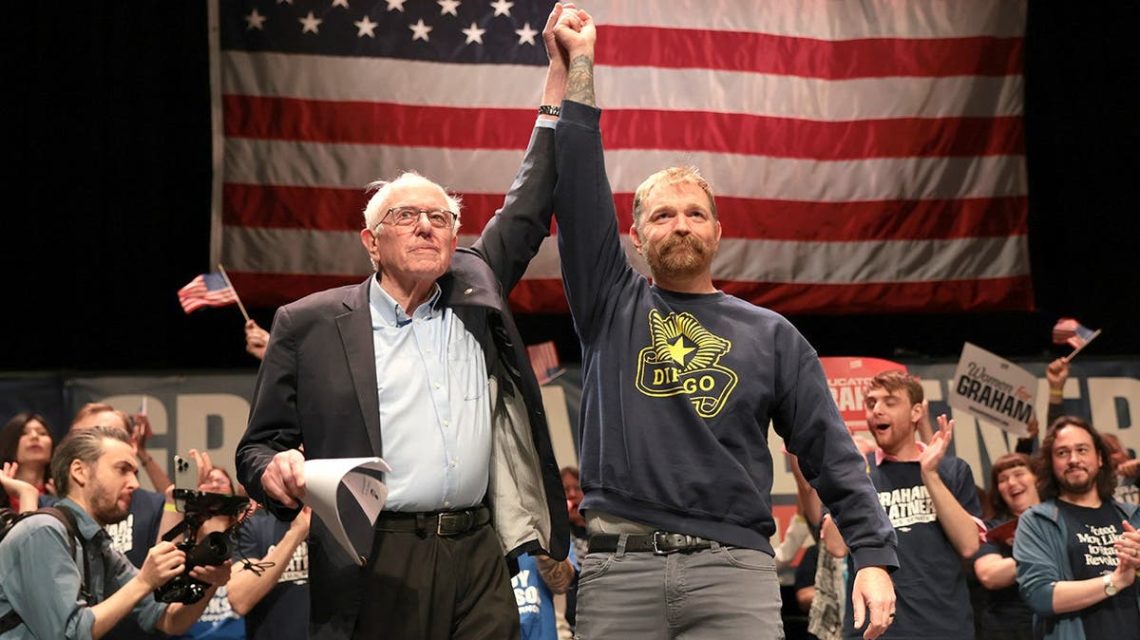
Graham Platner, a controversial Democrat, secured the party’s nomination for the U.S. Senate in Maine. He overcame several scandals that began with the revelation of a tattoo associated with Nazi imagery. This tattoo is a ‘Totenkopf,’ a symbol linked to Nazi S.S. troops.
Despite this history, major broadcast networks initially failed to cover the controversy extensively. Reports emerged from sources like National Public Radio, omitted discussion on his tattoo while highlighting his contentious social media presence. These platforms focused on his derogatory online remarks and support from high-profile Democrats, such as Senator Elizabeth Warren, which sustained his populist appeal.
New scandals surfaced on May 31, revealing Platner’s involvement in sexting with multiple women, despite being recently married. This situation unraveled further when his wife, Amy, alerted campaign officials. Reports about this incident appeared in The Wall Street Journal.
Media outlets questioned Democrats on the possible implications of Platner’s controversies. CBS’s Margaret Brennan and NBC’s Kristen Welker both pressed questions about Platner’s suitability, underlining the potential repercussions for the Democratic Senate aspirations in Maine. ABC’s Jonathan Karl also highlighted concerns about the overshadowing scandals affecting the Democratic efforts to gain a Senate seat.
Platner had shared the stage with Senator Bernie Sanders in Orono, Maine, showcasing Democratic unity. Analysts noted that broadcast networks often target Republican candidates in midterm elections. They cited previous examples such as Delaware’s Christine O’Donnell and Missouri’s Todd Akin, suggesting Platner’s treatment would differ if he were a Republican.
On June 5, new allegations arose, with ex-girlfriends accusing Platner of toxic and abusive behavior. Networks like CBS and ABC covered these claims, with CBS anchors recounting Platner’s self-portrayal as a reformed individual with regrets about his past.
ABC’s Selina Wang described the physical abuse allegations while downplaying the Nazi tattoo issue, and NBC cautiously covered claims of domestic violence, providing Platner’s denial of any physical aggression.
Commentators like PBS NewsHour’s David Brooks offered harsh criticism, describing Platner as morally inadequate. Nonetheless, Jonathan Capehart maintained the necessity of supporting Platner to unseat Republican Sen. Susan Collins.
NPR’s Tamara Keith downplayed Platner’s scandals, framing them as inevitable complexities. On the day of the primary, CBS co-host Gayle King noted the negative narratives surrounding Platner’s relationships.
Following Platner’s primary victory, NBC’s Ryan Nobles observed how controversies seemingly reinforced his connection with the Democratic base. They poised him to present his progressive agenda in the upcoming election period. Late-night talk show hosts like Jimmy Kimmel quipped about Platner’s win amid scandals, culminating in humor directed equally at Platner and his opponents.
 Spencer Pratt Escalates Tensions in Los Angeles Politics
  Analysis of Trump’s Executive Order on Federal Employees
  Texas Leads in Proposed Legislation for Other Conservative States
  The Effectiveness of Government-Imposed Age Restrictions on Social Media for Children
  Voter Attitudes Shift on San Francisco’s CEO Tax Initiative
  Trump Administration Expands Investigation into Migrant Children