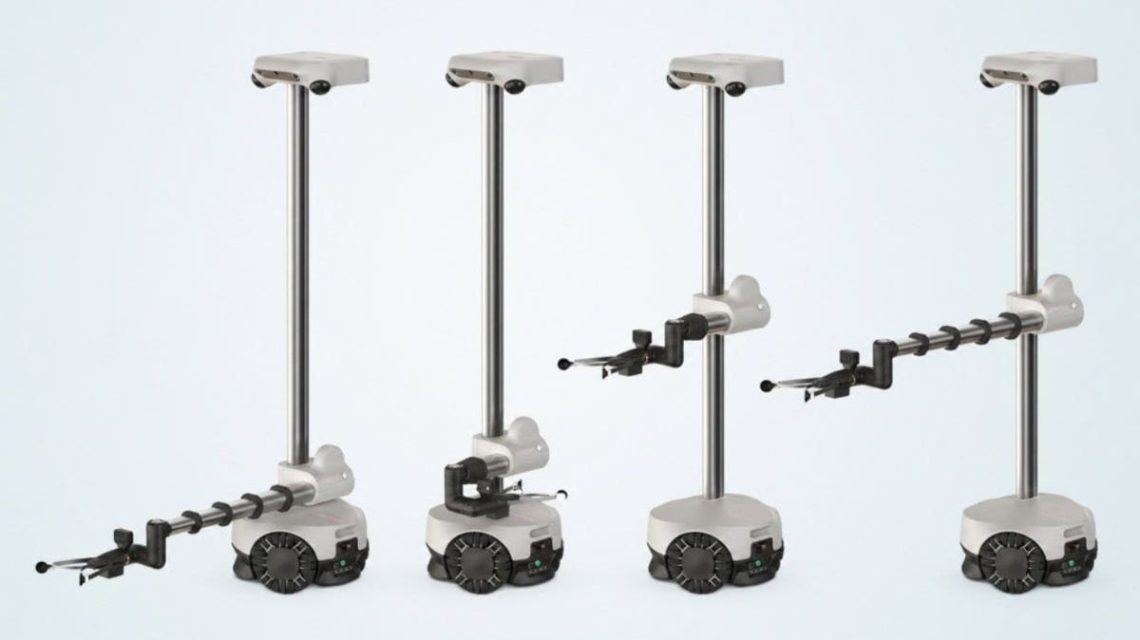
A new development in home robotics, Hello Robot’s Stretch 4, offers a practical solution for domestic tasks, prioritizing utility over humanoid aesthetics. With many companies crafting robots resembling humans, Stretch 4 adopts a different approach by rolling, which might sound mundane but is strategically advantageous. Homes typically have challenging interfaces like rugs, cords, and narrow paths, which wheels navigate more effectively than legs.
The Design and Function of Stretch 4
Stretch 4 combines a wheeled base, a lifting column, and an extendable arm, which allows it to reach items in various environments. It focuses on safe mobility and practical assistance in homes and workplaces. The robot’s safety-focused design is important for real-world conditions where homes have unpredictable layouts and furniture arrangements.
Stretch 4 could assist in situations similar to the household chores managed by Rosie from ‘The Jetsons.’
Technical Innovation and Control
Stretch 4 is equipped with innovative technologies like mapping, autonomous navigation, and VLM grasping demos. These advancements make it currently suitable for research, development, and laboratory use, as mentioned in its technical specifications. Despite this, real-home deployment is anticipated in the future. Human oversight during operations remains crucial for safe and effective functioning within domestic settings.
Advantages of Wheeled Design
While humanoid robots get much attention, their complexity involves balancing and managing multiple moving parts, posing potential risks in home environments. Stretch 4’s wheeled design offers a simpler and potentially safer alternative, particularly in homes adapted for mobility aids like wheelchairs. This approach questions the necessity of robotic legs if rolling can serve the purpose more efficiently.
Stretch 4 excels in tight spaces with its omnidirectional base, capable of moving in any direction without prior adjustment. This capability, drawn from powered wheelchair technology, enhances its maneuverability around everyday obstacles like furniture and narrow hallways.
Enhanced Sensor Technology
The robot’s advanced sensors, including lidar and wrist-mounted depth cameras, allow it to carefully interact with its environment by accurately detecting obstacles. Choosing richer sensor data over simpler camera setups ensures that Stretch 4 can respond adaptively to changes in its surroundings, enhancing its utility and safety.
Role of Human Involvement
Though possessing autonomous features, Stretch 4 still involves humans for direct control or supervisory roles. This balance is key in overcoming the challenges faced by fully autonomous robots in personal and variable household settings.
Target Audience and Cost Considerations
Initially, Stretch 4 may serve those with severe mobility impairments. It has shown potential in aiding individuals like Henry Evans, who has tested assistive robots for personal use. Safety and practicality remain priorities, as home robots must coexist with people, pets, and varying conditions safely.
Priced at $29,950, Stretch 4 currently targets the research and enterprise sectors rather than the average home consumer, subject to certain restrictions and certifications. Early adoption by research bodies is expected to refine the system before a broader domestic release.
Conclusion and Reflection
The first significant home robot may not resemble human figures but rather focus on functional design. Emphasizing safety and assistance, Stretch 4 demonstrates why straightforward solutions might meet everyday needs more effectively. For families managing care for those with limited mobility, a robot like Stretch 4 could enhance independence by handling tasks that are often challenging.
Overall, the selection between humanoid aesthetics and functional utility becomes clear with Stretch 4. Hello Robot’s direction reflects a grounded mission: developing robots that operate safely in home environments, making task assistance a viable reality.
 The Rise of Prediction Markets: Risk and Reward
  Papal Reflections on AI and Its Implications
  AI Investments Contribute to Rising Prices
  AI Companies Urged to Pause Development Amid Rapid Advancements
  SpaceX Secures $920 Million Monthly Deal with Google
  Meta and YouTube Ordered to Pay Damages in Landmark Social Media Lawsuit