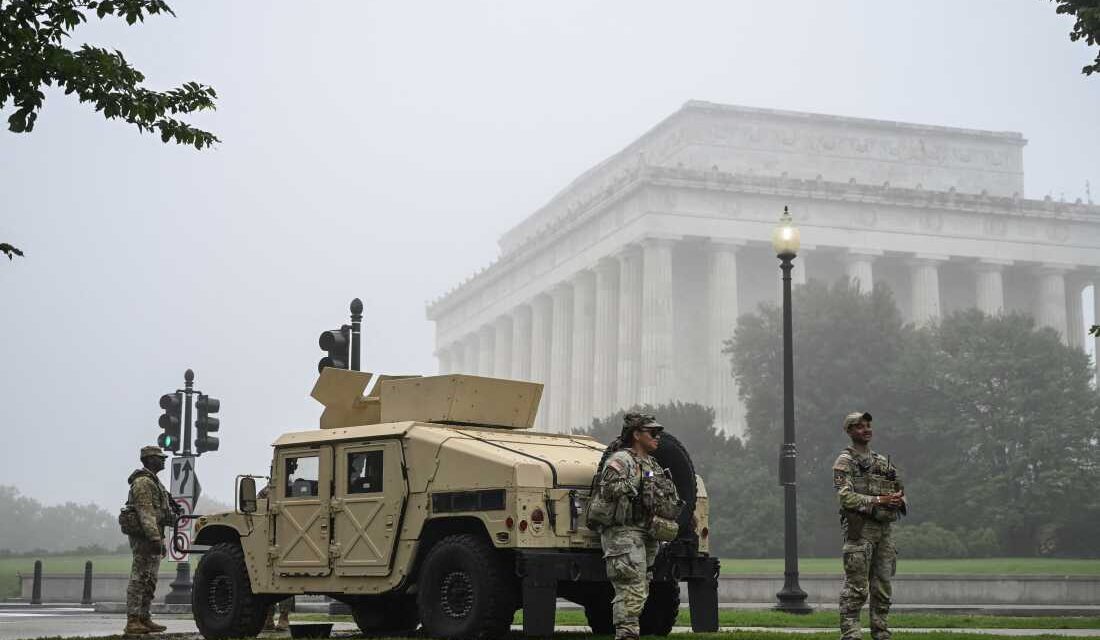
The deployment of National Guard members in Washington, D.C. on Memorial Day aimed to address crime in the area. This move, initiated by President Trump, has led to a reduction in petty property crimes. However, it has had minimal impact on violent crime rates, according to an analysis by the nonpartisan Niskanen Center.
The study emerged shortly after federal officials announced plans to double troop numbers in D.C. for a summer “surge”. This increase is timed with America’s upcoming 250th birthday celebrations. Last August, Trump deployed the Guard as part of the Safe and Beautiful Task Force. The force includes federal law enforcement, such as immigration enforcement officers, working with local police. This initiative has been implemented in cities like Memphis and New Orleans.
Currently, around 2,800 National Guard members are stationed in D.C. from the city itself and numerous other states with Republican governors. Unlike some of Trump’s other deployments during his second term, he holds the authority over the Guard in D.C. While the Guard cannot make arrests, they may detain individuals. Many troops are armed and engage in “high visibility patrols”. Their main role is to make their presence known, allowing D.C. police to focus on high-crime areas. However, the study found this strategy largely ineffective in redirecting police resources.
The analysis noted a 24% reduction in “opportunistic” crimes, like property crimes and vehicle break-ins, due to the Guard’s presence. Yet, it had no impact on violent crimes, which were declining before Trump’s administration. The report described the deployment as a “blunt and expensive instrument,” noting the immediate shock from the visible presence of uniformed personnel.
The Congressional Budget Office reported the deployment costs roughly $1.5 million per day. Richard Hahn, study co-author, mentioned, “The deployment is not a failure, they’ve achieved some success, but alternative, more cost-effective policing strategies could yield better outcomes.”
In response to NPR’s inquiry, White House spokesperson Abigail Jackson dismissed the study’s findings. She claimed the Task Force improved city life, yet offered no evidence to support this.
The timeline for the “summer surge” remains unclear. Assistant Attorney General Colin M. McDonald emphasized a commitment to improving safety in the capital, stating, “We aim for perfection and will continue efforts to protect our nation’s capital.” Task force officials were contacted for further clarification, but no immediate response was received.
 Justice Department Withdraws Plan for $1.8 Billion Fund
 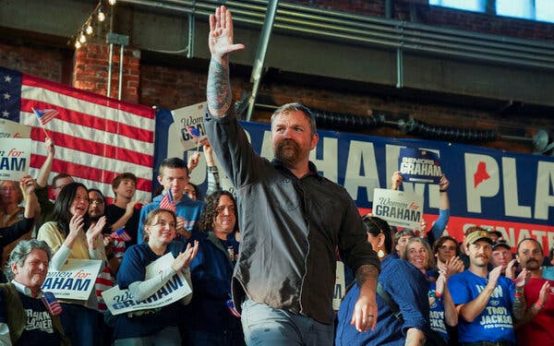 Democratic Concerns Grow Ahead of Maine Senate Primary
  Latin American Deportees in Congo: Return to Home Countries Amid Challenges
  Federal Judge Invalidates Trump-Era Immigration Policy
  Debate Over White House Ballroom Construction
  Scrutiny Surrounds Graham Platner Amid Maine Senate Primary