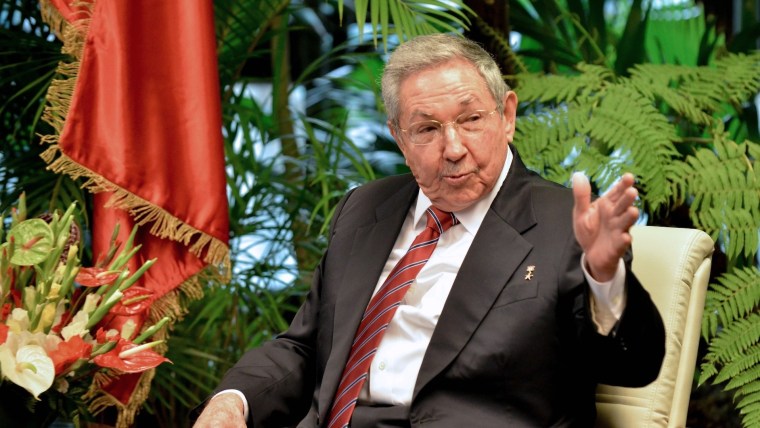
The U.S. Justice Department has indicted former Cuban President Raúl Castro, 94, in connection with the 1996 shooting of two civilian planes. This event resulted in the deaths of four Cuban exiles. According to Acting U.S. Attorney General Todd Blanche, Castro faces charges of conspiracy to kill U.S. nationals, murder, and destruction of aircraft.
Five Cuban fighter pilots, also involved in the incident, received indictments. The allegations, unveiled during a news conference at Miami’s Freedom Tower on May 20, Cuban Independence Day, claim that Castro and his co-defendants conspired, leading Cuban military aircraft to fire on civilian planes, killing four Americans.
As per the indictment, orders to shoot down the planes followed a command chain with Raúl and Fidel Castro as decision-makers. The announcement was met with applause in downtown Miami, where officials honored the four Cuban American victims—three U.S. citizens and one U.S. legal resident.
The planes belonged to Brothers to the Rescue, a group formed in 1991 by Cuban American pilot José Basulto. The group aimed to rescue Cubans fleeing the island by raft. However, Cuban claims of airspace violations by these planes have been a point of contention. Reviews by international bodies concluded that the four men died due to actions by Cuban agents in international airspace without standard interception procedures.
At that time, Raúl Castro was Cuba’s defense minister. The incident added tension to U.S.-Cuba relations, leading to new sanctions. Thirty years on, the call for Castro’s prosecution has remained strong among Cuban American lawmakers and victim’s families.
According to Blanche, the focus on the incident has persisted for years. The recent progress, he attributed to newfound evidence presented to the grand jury. While details remain scarce, the willingness to pursue legal action against Castro persists.
Despite hopes, Cuba’s extradition of Castro appears unlikely. Still, Blanche suggested that the U.S. might take action, hinting at the possibility of Castro’s appearance in a Miami court.
Cuba condemned the indictment, with President Miguel Díaz-Canel accusing the U.S. of manipulating the event’s details. Several Cuban American politicians advocated for the indictment, seeing it as an initial step toward justice.
In Cuba, Castro maintains influence even after stepping down as president in 2018 and from the Communist Party in 2021. His upcoming birthday celebrations continue in the country, blending into the backdrop of recent political tensions.
Meanwhile, U.S. pressure on Cuba remains intense. The Trump administration has emphasized the need for changes, paralleling actions against Venezuela. Cuba’s economic struggles have been exacerbated by fuel shortages, with frequent power outages affecting essential services, eliciting frustration among its residents.
The Cuban government’s response to U.S. sanctions has been firm, accusing them of attempts to undermine the island’s resolve. Such tensions underline the complex dynamic between the two nations.
 U.S. Military Awaits Pentagon’s Clarification on Troop Levels in Europe
  Xavier Becerra Advances in California Governor Race
  Graham Platner’s Campaign Amid Controversy
  South Carolina GOP Primary Heats Up as Trump Endorses Evette
  Potential Ebola Outbreak in Central Africa Raises Concerns of Rapid Spread
  Federal Judge Overturns Trump-Era Immigration Policy