
The Democratic candidates vying for Michigan’s U.S. Senate seat engaged in a lively debate on Wednesday, focusing on who should lead the state as its next senator. The forum hosted by the United Auto Workers (UAW) revealed distinct views on corporate political action committees (PACs) and their influence.
When posed with a question about the impact of corporate money in politics, two candidates—physician Abdul El-Sayed and state Senator Mallory McMorrow—stated their campaigns do not accept contributions from corporate PACs. In contrast, Rep. Haley Stevens, whose campaign has received funding from corporate PACs including those connected to major companies like Ford, General Motors, and Walmart, avoided a direct answer. Instead, Stevens emphasized her commitment to overturning the Citizens United decision, a 2010 Supreme Court ruling that relaxed campaign finance constraints.
During the forum, Stevens’ campaign circulated a ‘rapid response’ email underscoring her advocacy for legislation aimed at diminishing the influence of large sums of money in politics and enforcing anti-corruption measures. ‘I’m not a millionaire, and I don’t own stock,’ Stevens remarked. ‘My campaign is grassroots, with 95% of my donations being $200 or less, coming from everyday workers like grocery clerks, nurses, and factory line workers. I cannot be bought.’
McMorrow, who previously accepted corporate PAC donations in her state campaigns, criticized Stevens for her reluctance to directly answer the question. She stressed the importance of transparency about political influences, especially regarding pension benefits.
The issue of corporate money in politics underscored the ideological differences among the candidates, even as they shared a common support for organized labor. Held as part of the UAW’s biannual Community Action Program conference in Washington, D.C., the forum was the first time the three candidates appeared together, vying to earn the union workers’ votes crucial in Michigan—central to the U.S. auto industry.
The event’s dynamics were affected by the absence of former Rep. Mike Rogers, the leading Republican candidate for the seat, as his place was marked by an empty chair. Rogers later contested claims that he was invited to the forum. Meanwhile, Samantha Cantrell, representing the National Republican Senatorial Committee, criticized the Democrats for supporting environmental policies perceived as detrimental to Michigan’s economy.
The Senate race was sparked by Sen. Gary Peters’ decision not to run for a third term. The primary set for August 4 is gaining national interest, with pundits keenly observing how it will steer the Democratic Party amid its search for identity. Polls indicate a tight race, with no clear frontrunner.
LaShawn English, the UAW Region 1 director, rallied the audience before the debate, calling on political leaders to fight as ardently for union members as the UAW itself does. English emphasized the significance of the midterm election outcomes for the working class.
El-Sayed, who has embraced the Democratic Party’s progressive wing, boasts endorsements from prominent figures like Sen. Bernie Sanders. He reiterated his long-held refusal to take money from corporate PACs—a policy he has stood by since his previous gubernatorial bid. El-Sayed vocalized his support for Medicare for All, clarifying his stance amid criticism from McMorrow. ‘If you want someone different, someone who will fight tooth and nail for better health and social justice, then maybe I’m your guy,’ he concluded.
Stevens, maintaining more centrist positions, is closely allied with the Democratic establishment, enjoying backing from figures like former House Speaker Nancy Pelosi. Her focus at the forum was on countering Republicans like Rogers and former President Trump, linking them in her critiques. Stevens highlighted her previous efforts during the economic crisis to rescue Detroit’s Big Three automakers as evidence of her commitment to Michigan’s future.
Taking a conciliatory stance, McMorrow positioned herself between El-Sayed and Stevens, offering a balance that avoids excessive corporate influence while delivering results. She introduced a new legislative proposal aimed at prohibiting companies with state tax incentives from engaging in stock buybacks. El-Sayed dismissed such conditions, advocating for an all-out ban on stock buybacks instead.
The discussion touched on voting rights, with candidates uniting in their opposition to recent radical suggestions from Trump about managing elections at the national level. Each candidate cited efforts to bolster voting rights, with El-Sayed sharing his experiences in opposing federal immigration enforcement tactics that could mirror an attempt to militarize election controls.
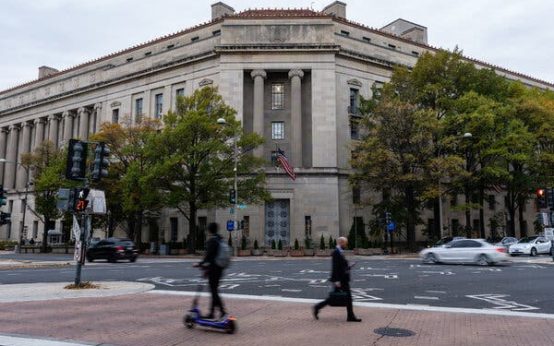 Justice Department Withdraws Plan for $1.8 Billion Fund
 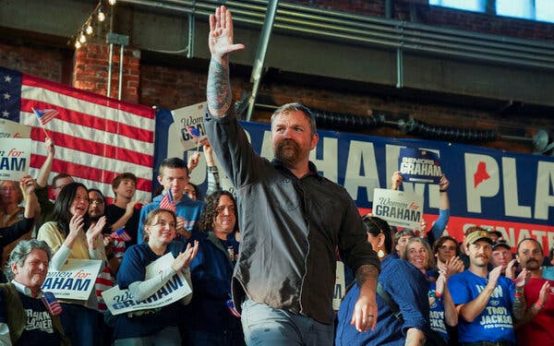 Democratic Concerns Grow Ahead of Maine Senate Primary
  Latin American Deportees in Congo: Return to Home Countries Amid Challenges
 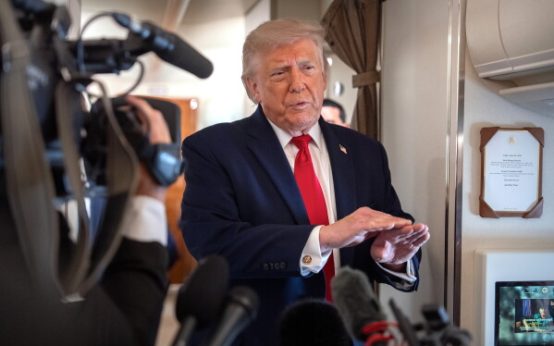 Federal Judge Invalidates Trump-Era Immigration Policy
  Debate Over White House Ballroom Construction
  Scrutiny Surrounds Graham Platner Amid Maine Senate Primary