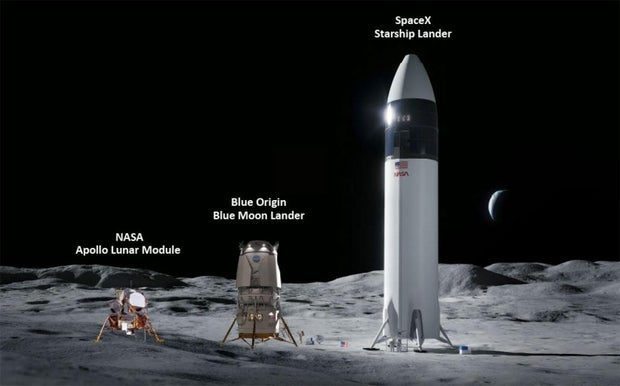
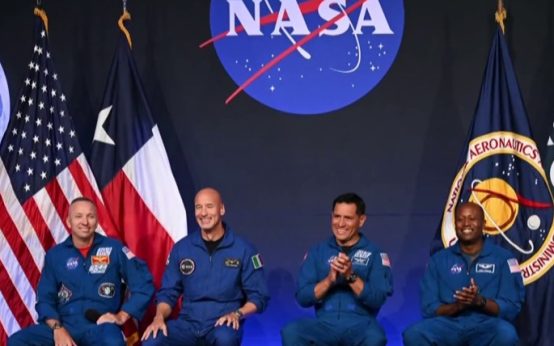
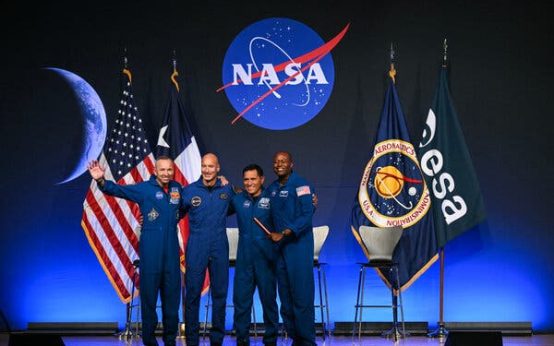
NASA introduced the four astronauts chosen for the upcoming Artemis III mission at the Johnson Space Center in Houston. This event marks the beginning of extensive training for the team, set to last over a year. The Artemis III mission aims to launch next year, focusing on Earth orbit operations to refine docking and rendezvous processes with the moon landers from SpaceX and Blue Origin. This step is crucial before the U.S. attempts another moon landing in 2028.
Objectives of Artemis III
The Artemis III crew must master procedures necessary for lunar orbit operations. The mission follows a similar trajectory to NASA’s Apollo 9 flight in March 1969, where astronauts tested the lunar module in Earth orbit. This mission occurred after a successful orbit mission, Apollo 8, in 1968. Further, Apollo 10’s lunar orbit tests paved the way for Apollo 11’s historic moon landing in July 1969.
The Artemis program completed a successful lunar flyby with Artemis II, sending astronauts Reid Wiseman, Victor Glover, Christina Koch, and Canadian Jeremy Hansen around the moon in April.
Plans for a Moon Landing by NASA
Currently, Artemis III is the sole test flight planned before the 2028 moon landing attempt. By then, at least one lunar lander should have achieved an uncrewed moon landing. NASA’s Artemis III announcement happens amid Blue Origin’s recovery from a damaging launch pad explosion on May 28 that affected their New Glenn rocket, essential for the Blue Moon Mark II lander.
Blue Origin’s Cape Canaveral launch site underwent significant repair work, with the company optimistic about resuming flights by year-end. This mishap delayed flights of Blue Moon Mark I, crucial for preparing the larger Mark II. Timing is critical for launching the Mark II lander ahead of Artemis III.
SpaceX faces challenges with its Super Heavy-Starship model, necessary for their lander. The company has yet to announce a date for an orbital test flight, but NASA moves forward with Artemis III.
If only one lander is ready, the mission will continue. If neither is available, NASA will develop an alternative plan to maintain the program’s momentum. By 2028, NASA intends to have astronauts back on the moon, countering China’s ambitions to send taikonauts there by decade’s end.
The Future of the Artemis Program
NASA aims to create a near-permanent lunar presence with Artemis, reinforcing its status as a global leader in space exploration. They plan to deploy robotic landers and lunar satellites, along with more Artemis missions, proceeding to two astronaut landings annually. This will lay the groundwork for a lunar base near the south pole by 2029-2030.
The south pole’s ultra-cold, shadowed craters may hold comet-borne ice deposits, offering water, air, and fuel. With habitats and energy stations in place, rotating astronaut teams can sustain prolonged lunar missions, similar to long-duration missions on the space station.
Challenges remain with rocket and lander readiness, possibly pushing Artemis III to 2028 and later missions further. Decisions on additional test flights between Artemis III and the lunar landing are pending.
 NASA Faces Criticism Over All-Male Artemis III Crew Selection
  NASA Reveals Crew for Artemis III Mission
  NASA’s Artemis III Crew Announced: All-Male Team for Moon Mission
  Prada Unveils New Astronaut Garment for Artemis Mission
  Space Startup Aims to Launch Orbital Power Grid
  Blue Origin Recovers from New Glenn Rocket Explosion