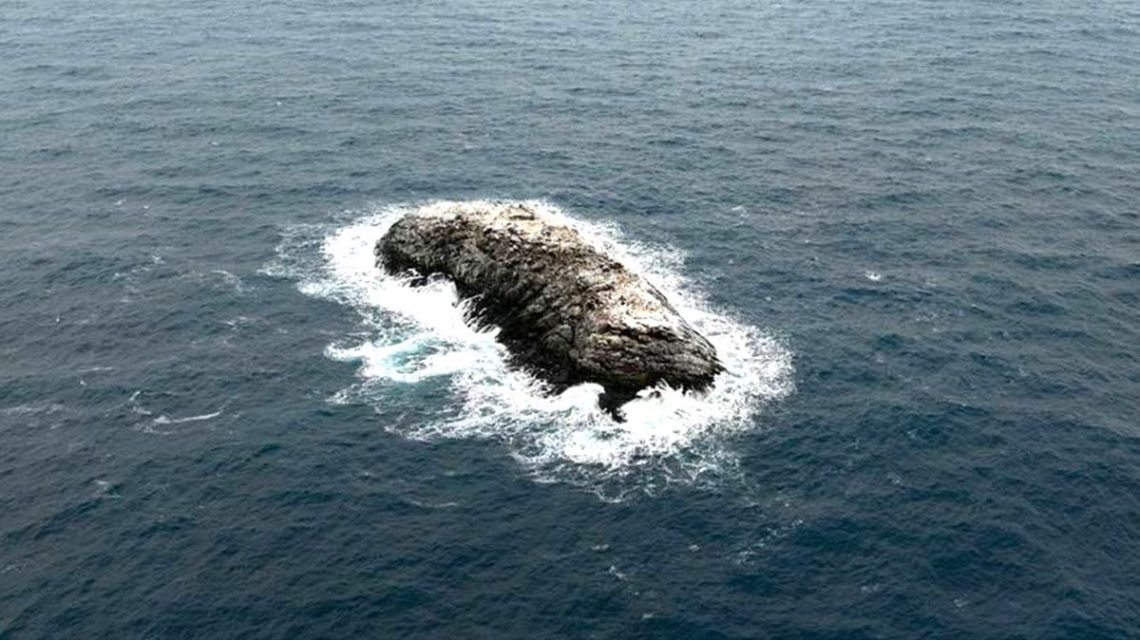
Researchers have discovered an island in Antarctica’s Weddell Sea, once thought to be a danger zone. This revelation comes from the Alfred Wegener Institute (AWI), a German polar research center, in an announcement made in April. The island was found during an expedition on the AWI icebreaker Polarstern.
Expedition Discovery
Initially studying the rapid decline of sea ice, researchers sought shelter from severe weather on Joinville Island. There, they noticed what seemed first to be an iceberg. Simon Dreutter, a bathymetry data engineer at AWI, noted that a nautical chart marked the area as hazardous but did not specify the details.
“On our route, the nautical chart showed an area with unexplored dangers to navigation, but it wasn’t clear what it was or where the information came from,” Dreutter said.
Upon further inspection, Dreutter realized it was likely a rocky landform. Using drone imaging and echo sounding technology, scientists confirmed the island’s size and elevation, finding it rises over 50 feet above sea level. The island measures approximately 426 feet long and 164 feet wide.
Mapping and Analysis
The research team, using the Polarstern vessel as their base, completed a comprehensive mapping of the island’s seabed. This effort marked the region’s first detailed survey.
The island appears similar to surrounding icebergs from above. Yet, the AWI explains that many nearby uncharted shoals may clarify its previous danger designation. A spokesperson mentioned that the area’s underwater terrain varies sharply, with abrupt depth changes affecting navigation.
“Most areas are modeled from satellite data in low resolution,” the AWI representative stated. “Therefore, many areas, especially inshore and nearshore, can be considered white spots or gaps in the map. In consequence, also nautical charts only have a patchy data coverage.”
Naming and Future Exploration
The island’s official naming requires submission to the Scientific Committee on Antarctic Research (SCAR). Though exploration seems exhaustive, less than 25% of the Weddell Sea is fully mapped. This leaves unexplored areas open for further discoveries.
The AWI highlighted that in spite of satellite observation advancements, discovering landforms in Antarctica remains significant. The representative underscored the potential for more discoveries beneath the ocean surface.
 Limited Interest in Arctic National Wildlife Refuge Oil Auction
  Confronting the Truth Behind Sustainability Buzzwords in the Food Industry
  The Aftermath of Santa Rosa Island’s Fire
  Largest Seizure of Illegal Cockroaches in Australia
  Flesh-Eating Fly Returns to the United States Causing Concern
  Australia’s Largest Seizure of Exotic Invertebrates: Over 100,000 Cockroaches Confiscated