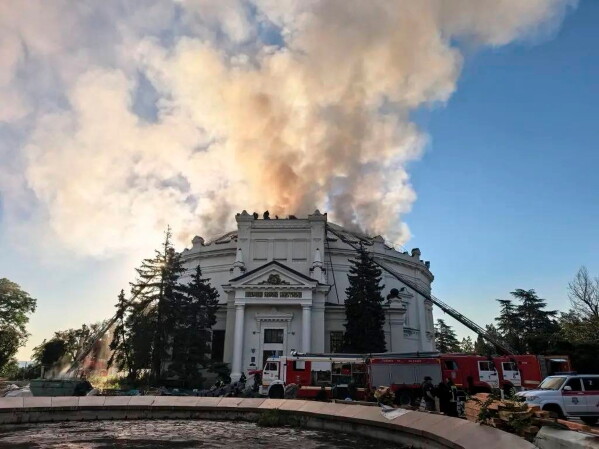
Pakistan launched a series of airstrikes on Afghanistan, ending a brief period of calm. The strikes targeted the eastern provinces of Khost, Kunar, and Paktika. According to Afghanistan’s government spokesperson, Zabihullah Mujahid, the attacks resulted in the deaths of 13 people, including 11 children, a woman, and an older man, while injuring 14 other civilians.
Pakistan confirmed the operations, stating they were aimed at militant hideouts and linked to recent attacks in Pakistan. Pakistan claims the strikes killed 26 militants. Casualty figures often differ between the two nations.
Fighting between Pakistan and Afghanistan has been intense since February. Afghanistan had retaliated against earlier Pakistani airstrikes by launching attacks of its own. International peace talks have been unsuccessful in achieving a lasting truce.
Pakistan accuses Afghanistan of providing sanctuary to militants, notably the Pakistani Taliban (Tehrik-e-Taliban Pakistan, or TTP). This group is independent but allied with the Afghan Taliban, which has ruled Afghanistan since 2021. Kabul denies these allegations.
In Khost, hundreds gathered to mourn the loss of nine family members, including seven children aged 3 to 15. Talib Gul, a mourner, stated that only two daughters from his uncle’s family survived. The airstrike resulted in the family’s house collapsing.
Afghanistan’s foreign ministry protested against Pakistan’s airstrikes, accusing them of violating Afghan airspace and targeting civilians. They summoned Pakistan’s chargé d’affaires to voice opposition.
Pakistan’s information minister, Attaullah Tarar, stated on social media that the strikes hit border areas used as militant hideouts. Four targets were eliminated, including a training center and an ammunition cache.
These attacks followed a recent assault by suspected Pakistani Taliban militants on a security post in Pakistan’s Khyber Pakhtunkhwa province, resulting in casualties among security personnel. Pakistan claimed to have killed eight attackers.
The cross-border conflict continues to strain relations, with each side accusing the other of harboring terrorists. The border has seen increased tensions since October, severely affecting trade and travel.
Both nations had engaged in China-hosted peace talks promising to avoid further escalation. China, along with other allies, continues to encourage peace efforts. Security analyst Masood Khan believes that enforcing a decree by Afghanistan’s Taliban leader, Mullah Haibatullah Akhundzada, could be key to reducing tensions. He has ordered the TTP to cease attacks on Pakistan.
Efforts are ongoing to reopen the border, which has been closed for months, causing significant disruption to trade and impacting thousands of lives.
 Senators Seek Clarity on US-Iran Agreement
  Iran’s World Cup Journey After Politically Charged Match
  Iran’s Struggle for Independence and Global Realignment
  Oil Flow and Global Economy: The Path to Recovery After Conflict
  Venezuela Signs Energy Agreement with General Electric
  Police Raid at Jiangyou Church in Sichuan Province Sparks Outcry