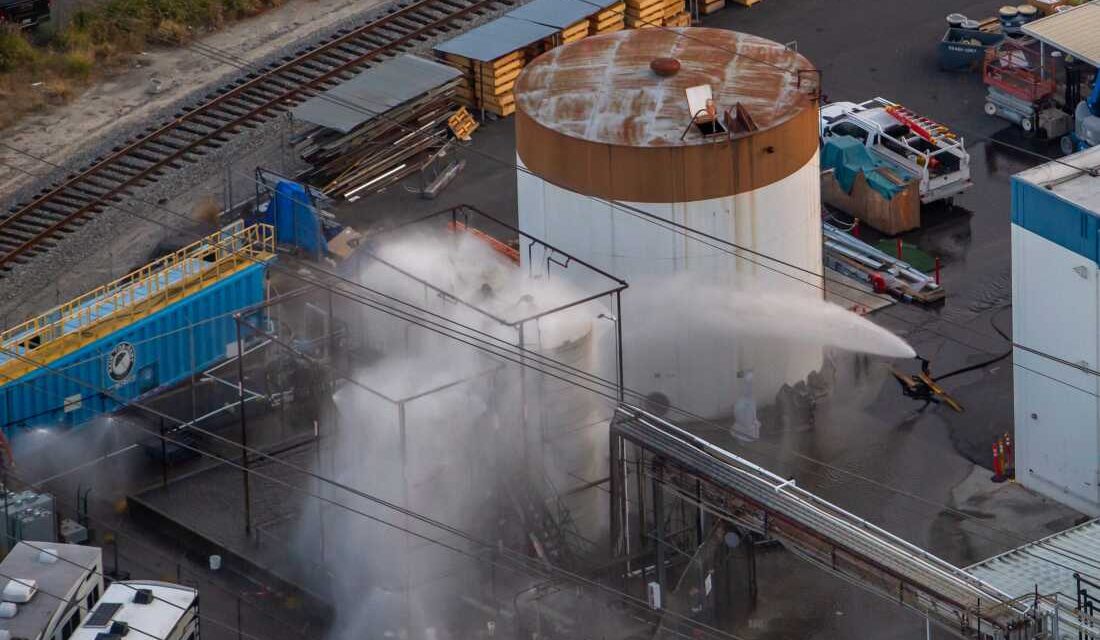
On May 23, 2026, aerial images showed water being sprayed on a 34,000-gallon tank at GKN Aerospace in Garden Grove, California. This tank faces risks of leaking or even exploding. A faulty tank at this aerospace plant poses chemical dangers.
Community Under Evacuation
Currently, around 50,000 Garden Grove residents are under evacuation due to a risky situation at a nearby aerospace plant. Emergency teams face challenges managing this potential crisis.
Tank Developments Overnight
Overnight, a chemical tank, located at the plant’s southeast corner, seemed to crack. The tank contains approximately 7,000 gallons of methyl methacrylate, a chemical used in resin and plastic manufacturing. Firefighters identified a possible crack while assessing the situation, according to TJ McGovern, interim county fire chief for the Orange County Fire Authority.
Potential Benefits of a Crack
The incident started on a Thursday when the chemicals in the tank exceeded safe temperatures. Methyl methacrylate is a clear, volatile liquid known for its exothermic reactions. In some instances, this can lead to explosions, similar to an incident in the UK in 2009 where an explosion caused significant factory damage.
The damaged tank in California has started to bulge. To prevent further danger, water is continuously sprayed to cool it down. Incident commander Craig Covey suggested that a crack allowing the chemicals to leak could be the best scenario, as the material outside the tank poses less of an explosion risk.
Health and Environmental Risks
GKN Aerospace mentioned they are taking action to reduce leak risks. Methyl methacrylate can irritate the skin and eyes and cause respiratory and neurological issues. Long-term exposure may result in lung and organ damage. Environmental impacts of a spill are uncertain but likely harmful. Containment barriers are prepared, and firefighters have used sand to block the chemical from storm drains and waterways.
Evacuation and Safety Measures
Those evacuated check in at a shelter after orders to leave due to potential chemical leaks and explosions. Fire Chief McGovern emphasized the need for a safety clearance before residents can return home. The community is being evacuated to prevent exposure to potential blasts and fumes. Environmental monitoring stations have detected no fumes so far.
McGovern remains hopeful as the crack might reduce pressure within the tank. Though not out of danger yet, current assessments are promising.
 Largest Seizure of Illegal Cockroaches in Australia
  New Threat to U.S. Cattle Industry: The Screwworm Infestation
  Military Training Exercises Cause Stir in California Cities
  Manhunt Underway After Reported Shooting in Lansing, Illinois
  New World Screwworm Fly Returns to Texas, Poses Threat to Cattle Industry
  DOJ Investigates Arizona State University’s DEI Practices