
A small hospital in Tennessee that was devastated by Hurricane Helene is set to be reconstructed in an area that could face flooding even with a less severe storm, according to an analysis by KFF Health News. Ballad Health announced in January that it would allocate approximately $44 million to rebuild the 10-bed Unicoi County Hospital on farmland behind a Walmart in Unicoi, Tennessee. This location is about seven miles from the original site, which was overtaken by catastrophic flooding on September 27, 2024.
During the hurricane, floodwaters inundated the Unicoi County Hospital, cutting off power and forcing the evacuation of patients and staff to the roof. However, experts from Fathom and First Street, two leading climate data companies, have warned that the new site also presents significant flood risks. They predict that a 100-year flood could submerge much of the site under more than two feet of water.
The proposed site is so obviously a flood plain geomorphologically,” commented Oliver Wing, chief scientific officer at Fathom. “You don’t need a model to see that.” Wing noted that while the new site could be more prone to flooding, the situation could be mitigated through construction of elevated structures or barrier embankments.
Ballad Health has confirmed the site for the hospital’s reconstruction but has not provided details on measures to counteract potential flooding. Molly Luton, a spokesperson for Ballad, mentioned collaboration with geotechnical professionals, Zurich Insurance Group, and Nashville architecture firm Earl Swensson Associates to ensure safety. FEMA is providing around $7.4 million for rebuilding efforts.
FEMA has been the principal authority on flood risk assessment for decades, using flood maps to guide construction regulations. However, these maps are often outdated and fail to consider climate change impacts, as is the case in Unicoi, where FEMA’s last update in 2008 does not label the new site as a flood hazard zone.
Chad Berginnis, executive director of the Association of State Floodplain Managers, emphasized the importance of considering Fathom and First Street’s data and recommended constructing hospitals to withstand a 1,000-year flood. Based on standards from the American Society of Civil Engineers and Google Earth elevation data, this could require elevating the land by at least 8 to 18 feet.
It’s going to require some elevation, and there is going to be some cost, but, my God, you just lost your dang hospital,” Berginnis mentioned, highlighting the urgency of protective measures.
The destruction of the Unicoi County Hospital led to KFF Health News investigating flood risks for hospitals, identifying over 170 facilities at risk for dangerous flooding. Among these, at least 39 are situated near waterways that could overrun their banks similarly to Unicoi’s situation during Hurricane Helene.
Ballad Health, a major healthcare provider in the region, manages Unicoi County Hospital and other facilities across Tennessee and Virginia. The new hospital location is subject to scrutiny due to land ownership connections with Tennessee state Rep. Renea Jones, whose family is selling the land to Ballad.
The original Unicoi County Hospital was built along the flood-prone Nolichucky River in 2017 by Mountain States Health Alliance, which later became Ballad. Despite levees built to protect the facility, Hurricane Helene overpowered these defenses, resulting in 12 feet of floodwater that forced roof evacuations.
Angel Mitchell, a survivor airlifted during the 2024 flood, expressed frustration over the decision to rebuild in a flood-prone area, emphasizing the limited options for local residents due to Ballad’s monopoly. “We want to go somewhere to heal, not somewhere to worry,” Mitchell said.
KFF Health News data editor Holly K. Hacker and South Carolina correspondent Lauren Sausser contributed additional insights to this report.
 Researchers Escorted Out of Diabetes Conference for Criticizing Trump Administration
 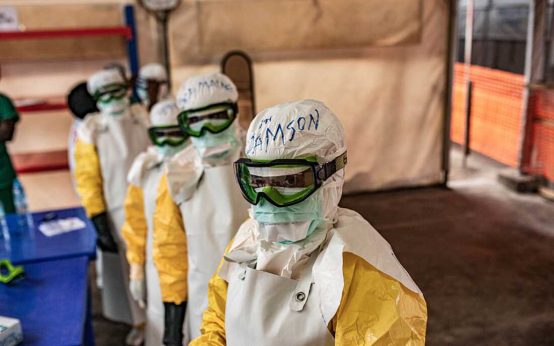 Ebola Outbreak in Africa: A Serious Concern
 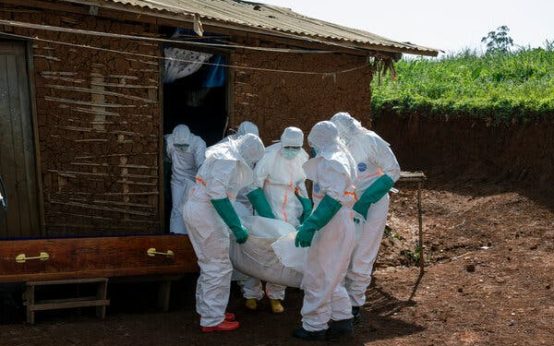 Gold and the Ebola Outbreak in Congo’s Mining Towns
  House Passes Bill for Veterans’ Benefit Increase
 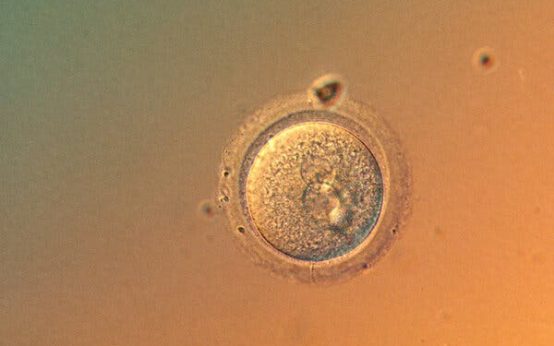 Gene Editing in Human Embryos at Columbia University
  Melinda French Gates Commits $215 Million for Global Women’s Health