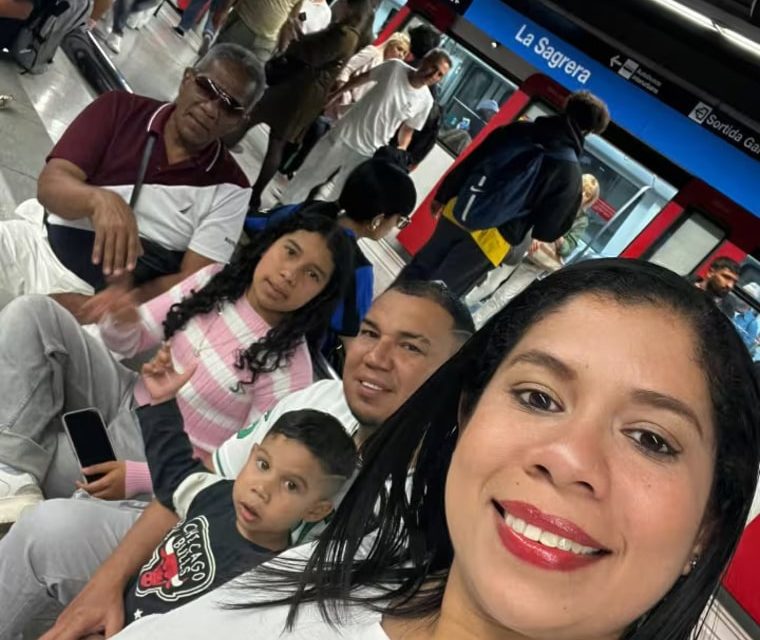
Thousands of undocumented immigrants in Spain await a possible change in their status. Among them is Nariola Romo’s family from Colombia. Originally, their plan was to move to the United States. However, financial hurdles led them to Spain instead. Nariola sees their journey as divinely guided, feeling fortunate to avoid the U.S.’s current immigration struggles. In Spain, she’s nearing legal status, offering her family a new chapter.
The Spanish government is implementing a large-scale regularization process that could affect over 500,000 undocumented immigrants. If successful, adults will gain a one-year work and residence permit, requiring proof of employment for renewal. Minors will receive a five-year status. The contrast with the U.S., which under former President Donald Trump, pursued aggressive detention and deportation policies, is stark. Applications for Spain’s program opened on April 16, and drew more than 43,000 requests within three days, eventually climbing to 549,596 in just a month.
Spanish Prime Minister Pedro Sánchez expressed that this move is a “normalization” of immigrants’ roles in society. About 500,000 immigrants might benefit. Romo’s family aims to take advantage of this chance. After leaving Colombia in 2024 due to threats from criminal gangs, they’ve faced numerous challenges. Yet, Romo, who left teaching for warehouse work and tutoring in Spain, feels optimistic. Spain’s welcoming stance provides a possible new beginning.
“Emigrating is an act of bravery,” said Romo. “You leave everything behind, but Spain has been a welcoming nation.”
Diadji Nguirane and his family from Senegal face different circumstances. Living in Spain for two years, Nguirane awaits the process’s completion, as it may allow him to shift from unofficial work to a stable job. His partner, Maimouna Gueye, currently supports the family through her work at a local hospital. Nguirane hopes to gain similar employment. Although his daughters already hold legal status, this change will help Nguirane contribute more significantly.
The regularization seeks to include those like Gueye’s family who stress the unfamiliarity of their homeland and prioritize safety and stability in Spain.
To join the regularization program, immigrants must meet several criteria, including a valid passport, continuous presence in Spain, and a clean criminal record. A new element—the vulnerability certificate—might be required to testify to their hardships. Spain has taken similar steps before, regularly adopting such measures to adjust its undocumented population.
The move can also help Spain’s aging demographic by adding to its workforce. By doing so, it aims to support the country’s Social Security system. Immigration advocates argue this is a necessary strategy for countries facing aging populations. However, right-wing opposition terms the move irresponsible. Politicians like Isabel Díaz Ayuso criticize it as a tool for demographic manipulation, although beneficiaries of the program won’t gain voting rights.
For families like Romo’s and Nguirane’s, the new policy could mean deeper integration into Spanish life. They hope to establish permanence and contribute positively to the society that offers them a fair start.
 Latin American Deportees in Congo: Return to Home Countries Amid Challenges
  Controversy Surrounds Stabbing Incident of British Student
  Royal Cottages and Controversies: Financial and Legal Revelations
  Oak Lawn Librarian Supports Library Projects in Zimbabwe
  World Cup Anticipation: US Men’s National Team and Norway’s Viking-Themed Campaign
  Family Searches for Missing Auburn Student in Japan After Disagreement Over AI