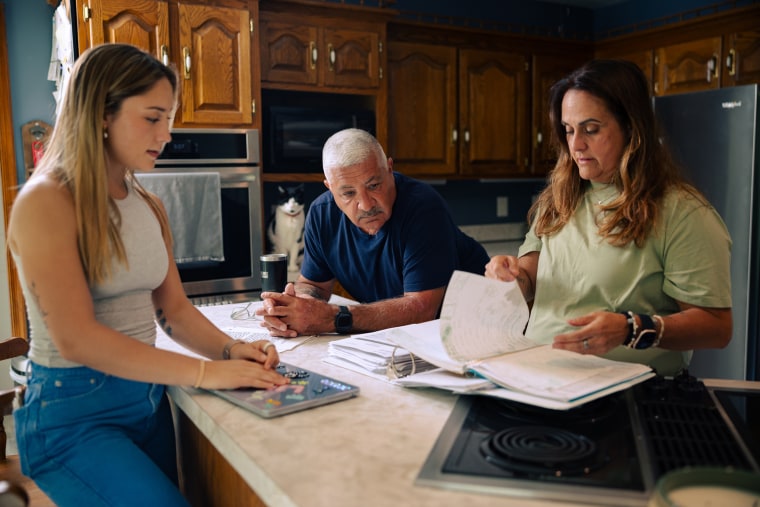
On June 9, 2026, Rachel Levasseur finally found a treatment that helped her manage a complex form of obsessive-compulsive disorder (OCD) after seven years of searching. This disorder left her with constant fears of being a threat to others, prompting her to attempt suicide multiple times. Last year, her parents turned to a therapist at Sheppard Pratt in Maryland. This psychiatric hospital offers a self-pay, residential treatment called The Retreat, which assembles a personalized care team of specialists for each patient.
After a year in the program, 24-year-old Levasseur began showing signs of improvement. She no longer attempted suicide during her time there, and her social engagement increased. However, her insurance provider, CareFirst BlueCross BlueShield, contributed only a small amount towards her treatment. Unable to sustain the nearly $3,000 daily cost, her parents ended her treatment early in March.
“It’s just confusing how insurance can’t recognize that I am getting better finally,” Levasseur expressed. “They’re just focused on the money instead of my life.”
Her parents, Larry and Kandy Levasseur, currently owe around $1.3 million to the hospital. This figure remains despite taking out a second mortgage and exhausting retirement savings to fund her initial treatment. The hospital and insurance company declined to comment due to privacy laws, although Levasseur permitted her medical information to be discussed.
This situation underscores how difficult it is to secure high-quality mental health care covered by insurance. An American Psychological Association survey revealed many psychologists don’t accept insurance due to low reimbursements and denied coverage. Levasseur’s condition has worsened outside the specialized program, and although she currently resides in an insured inpatient unit at the hospital, her return to The Retreat is contingent on resolving the debt.
Levasseur’s OCD stemmed from childhood fears of germs and illness, often leading to suicidal thoughts. Complicating her situation is autism spectrum disorder, which contributes to rigid thought processes and difficulty in identifying irrational thoughts. Before the program, she needed constant supervision from her parents, who took turns monitoring her wellbeing day and night.
“We basically took shifts where I would watch her through the day,” Larry stated. “I’m a little bit heavier of a sleeper than Kandy, so she would take the night and we would have to check on her every few minutes to make sure she was OK and alive.”
While other treatments focused on specific symptoms of Levasseur’s condition, Sheppard Pratt’s program addressed her issues more comprehensively. Her parents credit the program for her survival over the past year.
Despite their knowledge that the specialized program wasn’t covered by their insurance, the Levasseurs believed that CareFirst might make an exception. They were told that if Levasseur was receiving care unavailable elsewhere, the insurance might cover the expenses. Although CareFirst initially covered $521 of the $3,300 daily cost, they later refused to adjust the payment.
The family attempted to negotiate through Maryland’s insurance administrative channels without success. Sheppard Pratt expressed willingness to enter a single case agreement, but the state’s Employee Benefits Division highlighted the lack of negotiation between state and providers.
The Levasseurs asserted they weren’t presented with in-network facilities offering comparable care. They requested recommendations from their insurance, which were not forthcoming.
“When I got to The Retreat, it was different, because no one was giving up on me,” Levasseur noted. “It just felt like much more of a place where people were very focused on me getting better, and I had a lot more of individualized support.”
Her childhood bedroom bears testimony to her struggle, adorned with motivational messages. Among them is a newspaper clip saying, “The World is Not Better Without You.” An E. coli toy serves as a reminder of her OCD onset when she believed she might infect others.
The program’s therapy diverged from standard methods. While typical dialectical behavior therapy was ineffective, radically open dialectical behavior therapy resonated with Levasseur. This approach helped her confront suppressed emotions and shift from black-and-white thinking patterns.
Levasseur and her family believe that the program, while costly upfront, might eventually yield savings for their insurer by preventing prolonged treatment. She hopes insurance will recognize the potential benefits of covering her stay at The Retreat thoroughly enough to secure lasting progress.
For support during crises, call or text 988, visit 988lifeline.org, or refer to SpeakingOfSuicide.com/resources.
 Rising Abuse of Over-the-Counter Medications Among Teens
  Vermont’s New Regulation on Medical Practice Investments
  China Pioneers First Commercial Brain Chip Amid Privacy Concerns
  Navigating Complex Relationships with Therapeutic Insights
  Supporting a Loved One Through Cancer: What You Can Do
  Impact of Declining SNAP Benefits on Children in the U.S.