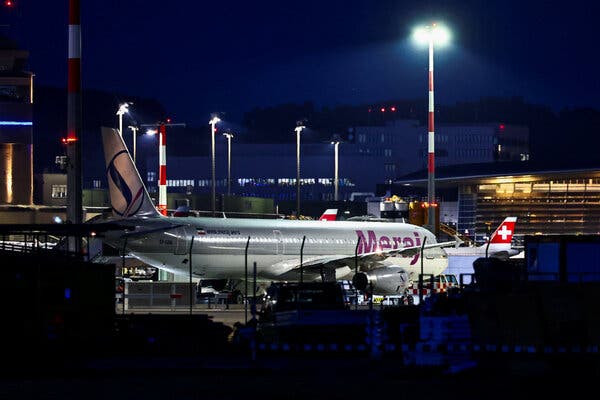
The upcoming phase of negotiations to halt the conflict in Iran is slated to kick off on Sunday, amidst ongoing clashes in Lebanon and renewed uncertainties concerning the Strait of Hormuz.
An Iranian delegation arrived at Zurich International Airport in Switzerland on Saturday, signifying the commencement of discussions aimed at solidifying a preliminary deal to conclude the conflict in Iran.
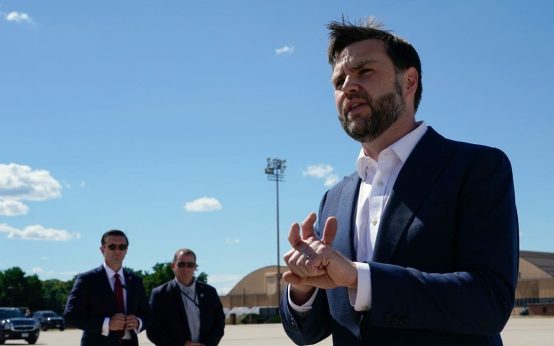
Vice President JD Vance made an early arrival in Switzerland on Sunday to head a negotiating team that comprises President Trump’s special envoys, Steve Witkoff and Jared Kushner, who were already present in Switzerland. Iranian officials, including Gen. Mohammad Bagher Ghalibaf and Foreign Minister Abbas Araghchi, formed part of the earlier arriving delegation.
Mr. Vance informed reporters prior to departing the United States that he would partake in the peace talks in Switzerland for a short duration of “a day or two.”
Pakistan has undertaken the role of mediator in the peace process. Its foreign ministry revealed that “technical talks” would commence on Sunday, involving Pakistani and Qatari representatives. Pakistan’s delegation includes Prime Minister Shehbaz Sharif and Army Chief Field Marshal Syed Asim Munir.
The dialogue is occurring during a sensitive period, with the conflict between Israel and Hezbollah in Lebanon posing challenges to broader peace efforts and the maintenance of the Strait of Hormuz’s shipping lanes. Scheduled U.S.-Iranian talks were delayed due to continued hostilities between Israel and Hezbollah.
Iran accused Israeli strikes of breaching the agreement. Additionally, Iran’s military asserted on Saturday that they had closed the Strait of Hormuz in retaliation, although the U.S. military confirmed continued marine traffic, asserting that Iran does not control the strait.
The negotiations face numerous complex issues, as the interim agreement between President Trump and Iran deferred the resolution of Iran’s nuclear program to future discussions. The pact also did not address Iran’s missile program nor the matter of the Strait of Hormuz’s accessibility.
Esmail Baghaei, spokesperson for Iran’s foreign ministry, indicated that the trip aimed at ensuring adherence to commitments from the U.S. side. He emphasized that negotiations for a final agreement would proceed only if Iran perceives the U.S. as honoring the deal.
Iran has alleged that the U.S. failed to control hostilities between Israel and Hezbollah, which persisted despite a cease-fire declaration in Lebanon. The U.S.-Iranian agreement mandates cease-fire on all fronts, including Lebanon, yet neither Israel nor Hezbollah have formally committed to this pact.
Mr. Vance expressed hope for progress regarding the nuclear issue and Lebanon cease-fire during the talks, acknowledging the likelihood of other topics arising in discussions with Iranian representatives.
Reporters Sanam Mahoozi, Zolan Kanno-Youngs, and Yan Zhuang contributed to this report.
 Ceasefire Leads to Diplomatic Challenges for the U.S.
  Caught in Cambodia’s Scam Machine: Part 1
  Vice President JD Vance Engages in Iran Negotiations in Switzerland
  Paraguay’s Almiron Ejected from World Cup Match for Rule Violation
  Bolivia’s President Declares State of Emergency Amid Widespread Protests
  Japan Dominates Tunisia 4-0 in World Cup Match