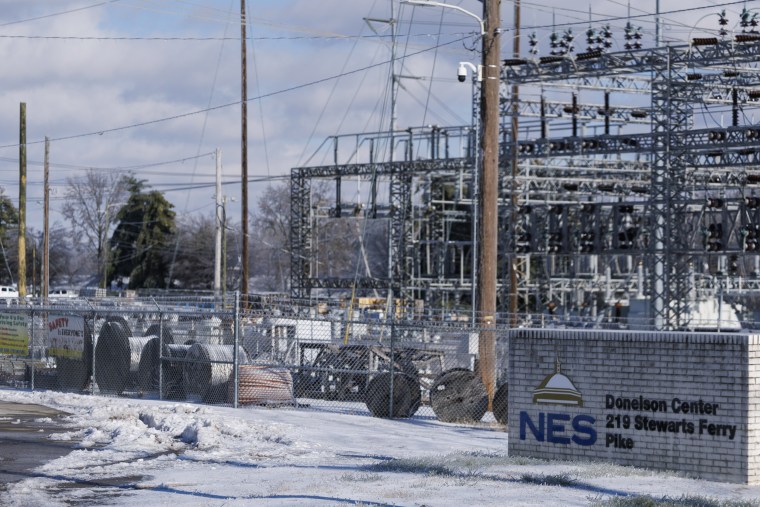
The recent ice storm in Tennessee has left tens of thousands of homes without power, turning into a contentious political issue as residents endure prolonged outages. The storm, which severely affected the Nashville area, exposed vulnerabilities in the Nashville Electric Service (NES) and stirred a debate on utility management.
Some Republican figures argue that the utility’s priorities, such as diversity and tree management policies, are at fault for the inadequate response to the storm. In contrast, there is a general consensus, cutting across party lines, that NES failed to handle the storm effectively by not having enough resources to deal with damages like fallen trees, which are crucial for power restoration. Nearly 6,000 customers are still without electricity nearly two weeks after the storm struck.
The fallout from the storm has been tragic. In Davidson County, a 39-year-old man and a 92-year-old man tragically died from suspected carbon monoxide poisoning, highlighting the severity of the situation.
“Right now, we are in active recovery. We have plenty of time to do after-action review and evaluate things we could have done better.” — Teresa Broyles-Aplin, NES CEO
Democrat Mayor Freddie O’Connell, who appointed the NES board, initially supported the utility but later called its response “unacceptable” and initiated a formal review. Meanwhile, Republican leaders have pointed fingers at NES’s policies, with Senator Marsha Blackburn claiming that the focus on “woke policies” and Diversity, Equity, and Inclusion (DEI) has led to essential duties like keeping the power running being neglected.
Republican House Speaker Cameron Sexton has demanded significant changes at NES, citing reasons such as their “pro-tree canopy policy” and DEI initiatives, suggesting that these policies resist more aggressive tree trimming that could prevent outages during storms. NES CEO Teresa Broyles-Aplin, however, defended the workers’ efforts during the unprecedented storm.
This issue has intensified the continuous friction between Nashville’s city government and the Republican-controlled state Legislature. In prior instances, the Legislature has intervened in local governance matters, such as disbanding the city’s community police oversight board. Now, the NES’s handling of tree trimming and budget allocations is under scrutiny due to reports that it may have reduced spending in this area.
Despite the political disputes, many affected residents are more concerned with immediate issues like warmth, school conditions, and food. Erica Moore, who had to stay in a hotel for nearly two weeks due to the outage, expressed frustration primarily over NES’s poor communication, which left customers in the dark figuratively and literally.
As the power restoration efforts continue, with promises of completion by Monday, the anecdotes of residents like Stefani Mugenyi highlight the challenges faced by those living through these outages. With little access to news, the back-and-forth debate remains largely peripheral to their immediate concerns.
This crisis has spurred legislative proposals from Democrats, like State Rep. Jason Powell, to enhance grid-resilience planning for utilities, with a sharp rejection of Republican claims linking the crisis to DEI initiatives.
 Pentagon Reduces Recognized Religious Affiliations
  U.S. Military Awaits Pentagon’s Clarification on Troop Levels in Europe
  Xavier Becerra Advances in California Governor Race
  Graham Platner’s Campaign Amid Controversy
  South Carolina GOP Primary Heats Up as Trump Endorses Evette
  Federal Judge Overturns Trump-Era Immigration Policy