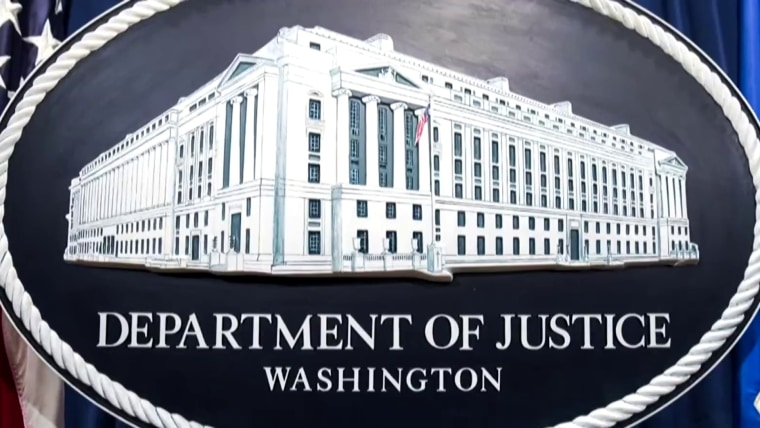
The Trump administration has indicated a shift away from the proposed $1.8 billion fund, announced by the Justice Department. This fund aimed to provide financial support to allies of President Donald Trump who were seen as victims of ‘lawfare’ and ‘weaponization.’
This decision follows opposition from Senate Republicans. Many Republicans joined Democrats in threatening to block the fund. According to Sen. Ted Cruz, R-Texas, around half of the Republican conference was prepared to vote against it.
The Justice Department referred to a federal judge’s ruling that temporarily blocked the fund. Though disagreeing with the decision, the department stated it would comply with the court’s ruling. This temporary order was issued until a full assessment by the court. A hearing on the matter is set for June 12.
“Until the administration fully abandons the scheme, we will be in court challenging it,” said Skye Perryman, president and CEO of Democracy Forward.
The fund’s announcement sought to revive a ‘reconciliation’ bill. This bill aimed to secure funding for ICE and the Border Patrol until the end of Trump’s term. These agencies were excluded from an earlier Department of Homeland Security appropriations bill. The push for this bill faltered weeks before the Memorial Day recess due to the fund.
On Capitol Hill, Democrats vowed to combat the fund’s revival. They plan to use amendments in the reconciliation bill and propose standalone legislation. Senate Democrats will push legislation to prohibit such a slush fund in the future.
Senate Majority Leader John Thune, R-S.D., stated the best resolution would be for the administration to shut down the fund on its own. He noted uncertainty about whether Republicans would support specific legislation to block the fund.
In a private meeting, many Republicans expressed dissatisfaction with the Justice Department’s approach. Ted Cruz mentioned that numerous senators criticized the attorney general, expressing concerns about the perception of self-dealing.
Republicans have a slim majority in the Senate with a 53-47 margin, and an even narrower advantage in the House. Several Republicans criticized the fund, and three other suits have been filed: two in Washington, D.C. and another in the Southern District of California.
A federal judge in Florida asked for further briefings related to the fund after retired judges claimed it resulted from ‘collusion’ and ‘fraud.’ The Justice Department was tasked with appointing five commissioners to oversee the fund but made no announcements on this front.
Sen. Chuck Schumer argued that the fund could divert taxpayer money to unwarranted recipients. He emphasized that Democrats would not cease efforts until the fund was completely dismantled. “The first amendment I will offer when pushing the reconciliation bill will be to ban the fund permanently,” Schumer stated.
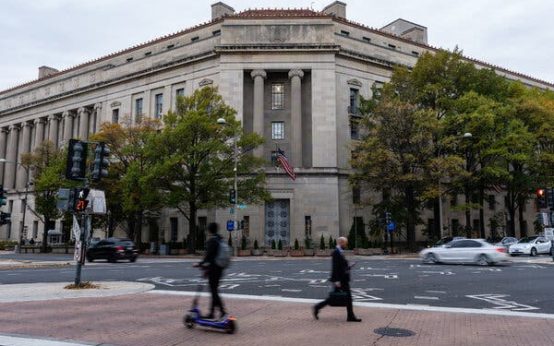 Justice Department Withdraws Plan for $1.8 Billion Fund
  Democratic Concerns Grow Ahead of Maine Senate Primary
  Latin American Deportees in Congo: Return to Home Countries Amid Challenges
  Federal Judge Invalidates Trump-Era Immigration Policy
  Debate Over White House Ballroom Construction
  Scrutiny Surrounds Graham Platner Amid Maine Senate Primary