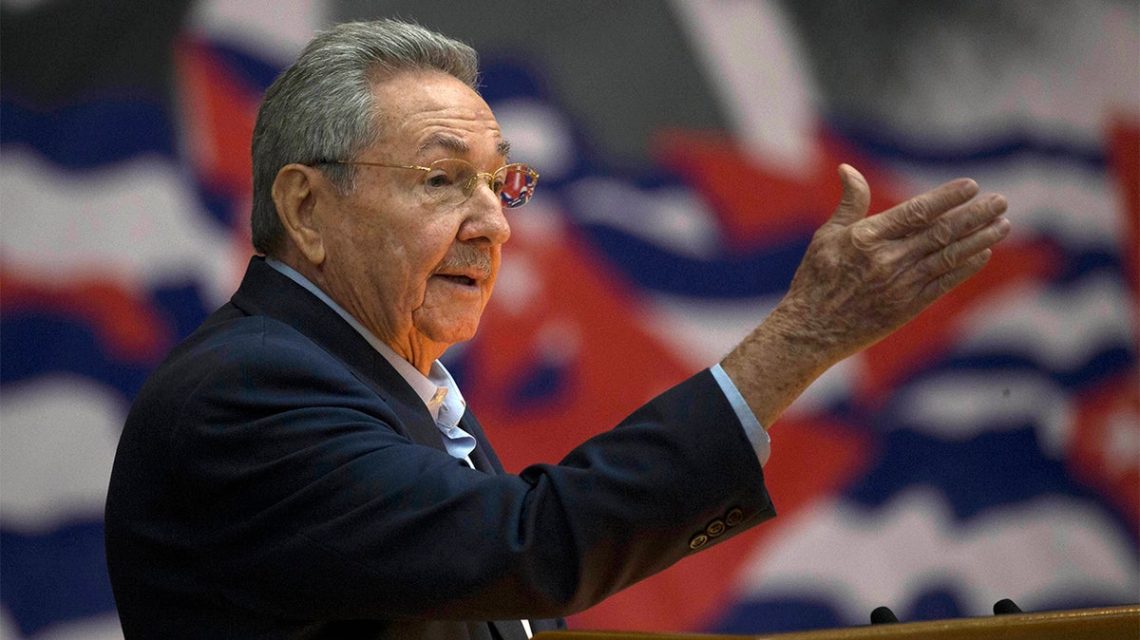
The Trump administration’s decision to indict former Cuban leader Raúl Castro has sparked comparisons to the previous pressure campaign against Venezuelan leader Nicolás Maduro. The White House is stepping up economic pressure, direct appeals to Cubans, and increasing military visibility in the Caribbean.
Indictment and Military Presence
The indictment, linked to the 1996 downing of two civilian planes that killed three U.S. citizens, has led to questions about a Venezuela-style strategy against Cuba’s communist regime. The USS Nimitz Carrier Strike Group has been operating in the Caribbean, showcasing military assets like fighter aircraft and guided-missile destroyers.
This strategy resembles the administration’s earlier approach to Venezuela, which started with indictments, escalating into sanctions and increased military actions. Federal prosecutors recently charged Castro and other Cuban officials with involvement in the 1996 shootdown.
Cuba’s Broader Context
At the time, Castro was Cuba’s defense minister. U.S. prosecutors claim he authorized operations against planes linked to Brothers to the Rescue, an organization opposing Havana’s government. Cuban jets shot down unarmed aircraft over international waters, leading to international condemnation.
Christine Balling, a Cuba expert, believes the indictment positions Castro symbolically like Maduro. During Trump’s earlier campaign, the U.S. charged Maduro with narcoterrorism, imposed oil sanctions, and supported opposition efforts.
While some speculate on military intervention in Cuba, Balling doubts a similar operation will occur due to Castro’s age. Still, it signals strong opposition to Castro’s regime.
Political Commentary
The White House has not commented, but Secretary of State Marco Rubio urged Cubans to recognize their government’s failure, citing Cuba’s elites’ enrichment amid economic collapse. Balling suggests these remarks aim to counter Havana’s propaganda.
Trump, when asked about future tensions, denied escalation plans. Analysts read this, along with Rubio’s statements, as an attempt to foster internal pressure against the regime.
Potential Consequences and Current Conditions
Balling warns that destabilizing Cuba could lead to mass migration crises. The island is already facing blackouts and fuel shortages as U.S. pressure increases.
Despite rising rhetoric, Washington maintains limited communication with Havana. CIA Director John Ratcliffe visited for discussions and proposed $100 million in humanitarian aid, potentially distributed by independent groups instead of the government.
Cuba’s military, once formidable, is now weakened by economic struggles and old equipment. Frank Mora noted the military’s decline compared to its Soviet-backed days.
Analysts caution that Cuba’s military may be frail, but isolating its regime without causing further instability is complex. GAESA, a military-linked conglomerate, controls much of Cuba’s economy, complicating isolation efforts.
Cuba is increasingly seen as a broader security threat. Rubio accused Cuba of hosting Chinese and Russian intelligence activities.
While no military plans are announced, the combination of legal charges, economic pressures, and military presence suggests the White House is exploring the Maduro pressure model closer to U.S. borders.
 Latin American Deportees in Congo: Return to Home Countries Amid Challenges
  Controversy Surrounds Stabbing Incident of British Student
  Royal Cottages and Controversies: Financial and Legal Revelations
  Oak Lawn Librarian Supports Library Projects in Zimbabwe
  World Cup Anticipation: US Men’s National Team and Norway’s Viking-Themed Campaign
  Family Searches for Missing Auburn Student in Japan After Disagreement Over AI