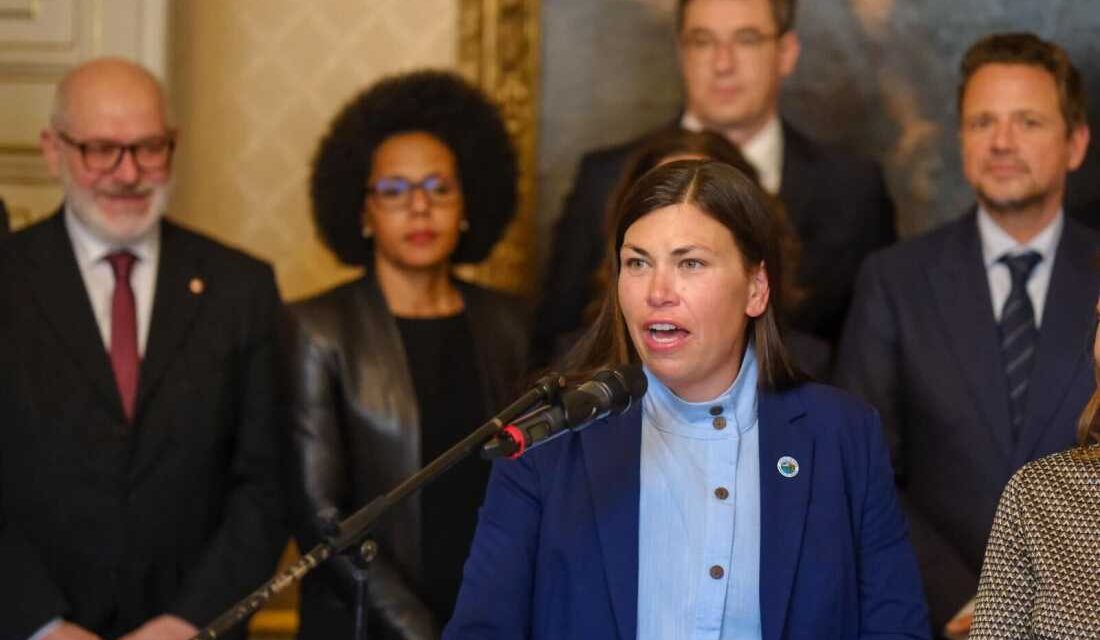
Lacey Beaty, the mayor of Beaverton, Oregon, represented her city at the recent Pact of Free Cities meeting in Bratislava, Slovakia. This gathering included notable figures such as Omar Al-Rawi from the Vienna City Council, Audrey Pulvar, deputy mayor of Paris, and the mayors of Budapest and Warsaw.
For years, right-wing populists in the U.S. have been collaborating with counterparts across the Atlantic. An example is former President Trump’s relationship with ex-Hungarian Prime Minister Viktor Orbán. In response, ten mayors from liberal U.S. cities, including Boston, Chicago, San Antonio, and Cincinnati, have joined the Pact of Free Cities, aiming to defend democracy and tackle authoritarianism.
Cincinnati Mayor Aftab Pureval expressed concerns about the impact of the Trump administration on democratic values and international relationships, emphasizing the importance of collaboration with European cities. The Pact, founded by the mayors of Bratislava, Budapest, Prague, and Warsaw in 2019, advocates for progressive values and collective problem-solving in the face of challenging national governments.
Lessons from Budapest
Budapest Mayor Gergely Karácsony shared how Hungarian voters recently ousted Orbán after 16 years in power. A significant moment came when the Hungarian government’s attempt to ban the Budapest Pride parade was met with mass protest. The parade became a symbol for freedom of speech and assembly, highlighting Orbán’s vulnerabilities and playing a role in his defeat.
Challenges and Strategies
Lacey Beaty, reflecting on her participation in the Pact’s meeting, noted that cities in the U.S. and Europe face similar issues, such as federal funding cuts due to political disagreements. Beaty described how the Trump administration’s attempts to cut funding impacted Beaverton over its DEI policy. In Budapest, Karácsony faced similar pressures on city services, responding with messaging on garbage trucks blaming Orbán’s party for funding issues.
This tactic highlights the importance of clear communication from mayors to their residents about federal government actions to avoid misplaced blame on local officials.
Political Reactions
The White House, through spokeswoman Abigail Jackson, criticized the U.S. mayors for engaging in what she termed publicity stunts. Meanwhile, forging ties with like-minded international politicians is not a new practice. CPAC, for instance, has been establishing connections with European right-wing populists for years.
CPAC Chairman Matt Schlapp cited Nigel Farage’s impact on British politics as an example of the influence such relationships can bring. Meanwhile, the Pact of Free Cities’ gatherings serve as forums for exchanging strategies among city leaders facing right-wing populist pressures.
Despite Schlapp’s skepticism about the direct benefits for European mayors from American counterparts, he acknowledged the potential value in organizing and learning to build grassroots support effectively.
 Justice Department Withdraws Plan for $1.8 Billion Fund
  Democratic Concerns Grow Ahead of Maine Senate Primary
  Latin American Deportees in Congo: Return to Home Countries Amid Challenges
  Federal Judge Invalidates Trump-Era Immigration Policy
  Debate Over White House Ballroom Construction
  Scrutiny Surrounds Graham Platner Amid Maine Senate Primary