
Brooklyn Beckham’s recent social media post about his family tensions has put estrangement into the public eye, emphasizing a growing trend. According to surveys, the number of individuals experiencing family rifts has been increasing over the years. A study from Cornell University highlights that over a quarter of Americans, translating to approximately 67 million people, report being estranged from a family member.
One such example is Laura Wellington from Connecticut, who has gained attention on social media under the moniker “Doormat Mom.” Unlike the gradual nature of many estrangements, Wellington’s experience was quite sudden and unexpected. Initially involved in her daughter’s wedding plans, she was unexpectedly uninvited. As Wellington recounted to Fox News Digital, when she attempted to reach out, her daughter and her daughter’s fiancée cut off all contact in 2024.
“I was completely blindsided,” Wellington shared, describing the unique pain of being excluded. To process and share her experience, Wellington turned to TikTok. “I spoke my mind without directly mentioning my daughter,” she explained. Her bold message resonated with many, leading to an influx of responses from around the globe. This interaction underscored a shared need for support among parents facing similar circumstances.
“The pain of being cut off — it’s a pain you can’t describe unless you feel it.” – Laura Wellington
Since her initial post in August 2024, Wellington’s social media following has grown significantly, reaching nearly 150,000 across TikTok and Instagram. Her story has drawn both sympathy and criticism, yet it sheds light on the broader issue of parent-child estrangement.
The Reality of Family Estrangement
The phenomenon of estrangement is reportedly becoming more normalized, often seen as a way to address family conflicts without outright abuse or neglect. Wellington expressed concern about the rising tendency to sever ties as a first response, influenced by political, cultural differences, and shifting societal narratives.
“There’s a lack of foundation and traditional family values…today, cutting off your parent is the first go-to, not the last,” she remarked.
Reinforcing this perspective, New York City psychotherapist Jonathan Alpert noted that political identity often drives estrangement more than abuse or neglect. “Parents are cut off because of who they voted for, what news they watch or the views they express,” he said, emphasizing that what was once disagreement now becomes a form of moral injury.
Consequences and Considerations
Alpert outlined the emotional toll on parents experiencing estrangement, often leading to profound grief and confusion. Conversely, while estranged adult children might feel initially empowered, they might later confront unresolved emotions and difficulties in other relationships.
Importantly, there’s a distinction between setting boundaries and cutting ties completely. Alpert explained, “Boundaries enable a continued relationship with limits, whereas estrangement ends the relationship entirely.”
Advice for Parents Facing Estrangement
For parents grappling with estrangement, Wellington advises against forcing reconciliation, noting that pursuing a relationship might be counterproductive. “Chasing after them may lead to losing your autonomy,” she said, advising parents to allow their children to make their own choices.
Instead, she encourages focusing on personal fulfillment: “Create a life you’re proud of. If they return, they’ll see you’re thriving.” Maintaining hope, Wellington believes in the potential for future reconnection, acknowledging her platform’s role in helping others.
Psychotherapist Alpert concurs that reconciliation is possible but may be hampered by social and political reinforcements. Ultimately, successful repair relies on a shared belief in the resilience of relationships amidst differences.
 The Collaboration of Polly Wales and Castro Smith in Jewelry
  Best Breathable Work Boots for Hot Weather
  Celebrate America’s 250th Birthday with Commemorative Products
  Embrace Nature: The Touch Grass Challenge
 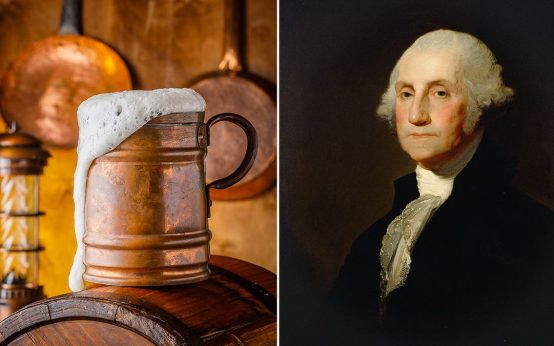 George Washington’s Historic Beer Recipe Revived by NYPL and TALEA Beer Co.
  A Comprehensive Guide to the Best Oral Care Products