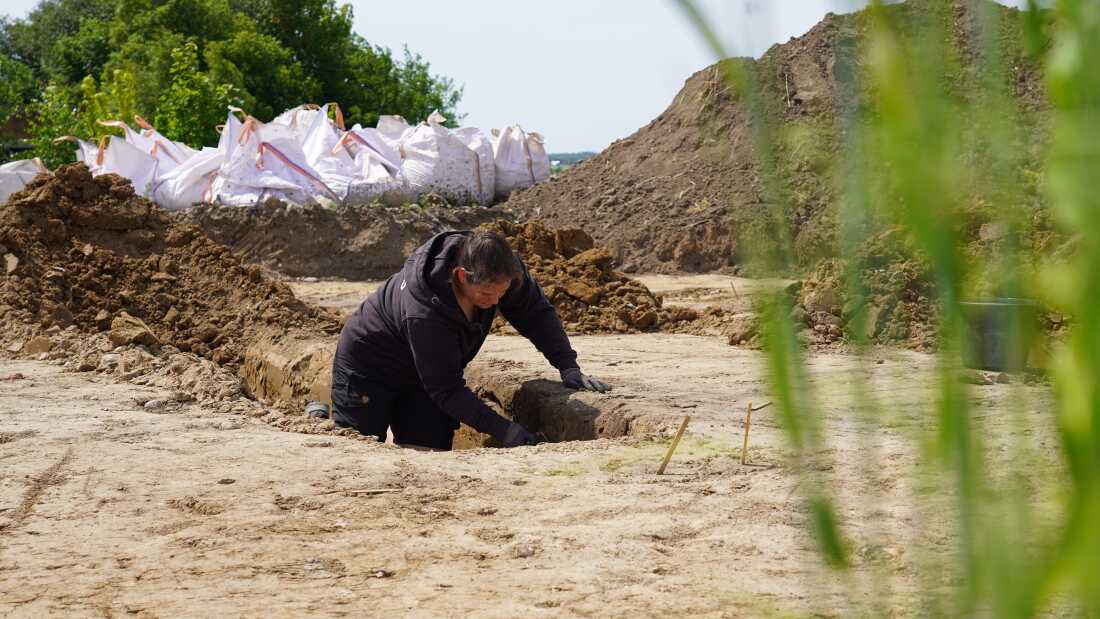
Archaeologists have identified a significant Viking Age textile production site in Denmark. This groundbreaking discovery highlights the complexity and sophistication of Viking society. Experts from the Moesgaard Museum revealed that the site, which exceeds 100,000 square meters, housed areas for flax processing and more than 80 pit houses. These semi-submerged structures served both as workshops and dwellings in Viking times.
Located in Søften, about 10 kilometers north of Aarhus on the Jutland peninsula, the site dates back to the late Iron Age and early Viking Age, spanning from around A.D. 600 to 950. Liv Stidsing Reher-Langberg led the extensive 10-month excavation, noting the unique focus on textile production at this settlement.
We have spindle whorls, we have weight looms; that tells us about what has been going on in the pit houses,said Reher-Langberg.
The site also contained silver coins, glass beads, and pottery. Archaeologists discovered distinct areas for crafts and production, alongside a solitary residential building. This arrangement suggests the oversight of a powerful individual managing resources and production.
Previous discovery efforts, aided by metal detector enthusiasts over the last thirty years, uncovered several silver coins in the vicinity. Prior to launching construction work for a new road and industrial area, trial excavations began, capturing archaeologists’ attention.
We could see in the trenches that it just keeps on going, with these houses and pit houses and textile production features,Reher-Langberg explained.
Moesgaard Museum historian Kasper Andersen noted that this site aids understanding the area’s economic, cultural, and political framework. During the Viking Age, Aarhus — historically known as Aros — operated as a royal and trade hub. Supporting this, another nearby site in Lisbjerg, once home to noble families, was excavated last year.
Goods from settlements like Søften entered an international trade network, Andersen proposed. He emphasized the importance of viewing the production site as part of a larger system rather than an isolated venture.
When you have a production site of this scale, it cannot be only because of the local area. It needs to be understood as part of a greater network, a much bigger international perspective,Andersen said.
Future carbon dating and pollen analysis may provide insights into the exact nature of textile production at the site. The Viking Age, spanning A.D. 793 to 1066, saw Norsemen engage in significant raids, colonization, and trade across Europe and briefly North America.
Andersen further remarked that the discovery at Søften challenges stereotypes of Vikings as solely uncivilized raiders.
To have a place like Søften, you need a very well-organized society with a production line, and you also need a market to have the production. The textiles from Søften go into a market that’s much bigger than just the local area,he concluded.
 Viking Age Textile Production Site Uncovered in Denmark
  Rubin Observatory’s Mission to Find Planet 9
  The Mystery Behind Coho Salmon Deaths: A Tire Chemical Culprit
  Astronomers Study Ancient Interstellar Comet
  Legacy of François Englert: Higgs Boson Discovery
  The Impact of Funding Cuts on Medical Innovations